Heat and UV Roof Damage Repair in Fayetteville, AR
Repair sun, heat and UV damage on commercial roofs in Fayetteville, AR: chalking, shrinkage, blistering and brittle sealant, with coating options.
Heat does its work quietly. A roof does not leak the week the sun cooks it. It loses flexibility a summer at a time, until a seam that held for years opens during a cool snap or a flashing cracks the first time a unit vibrates. By the time the stain shows on a ceiling, the damage is old. A property manager who knows what sun damage looks like can fix the small items before they become the large one.
July highs average 88.7 F at Fayetteville's Drake Field, readings above 100 F turn up about three times a year and the all-time record stands at 111 F. A dark roof surface runs well above the air temperature on those days, and it takes that heat every day of the season, then cools overnight and does it again.
Signs of sun damage: what to look for on the surface
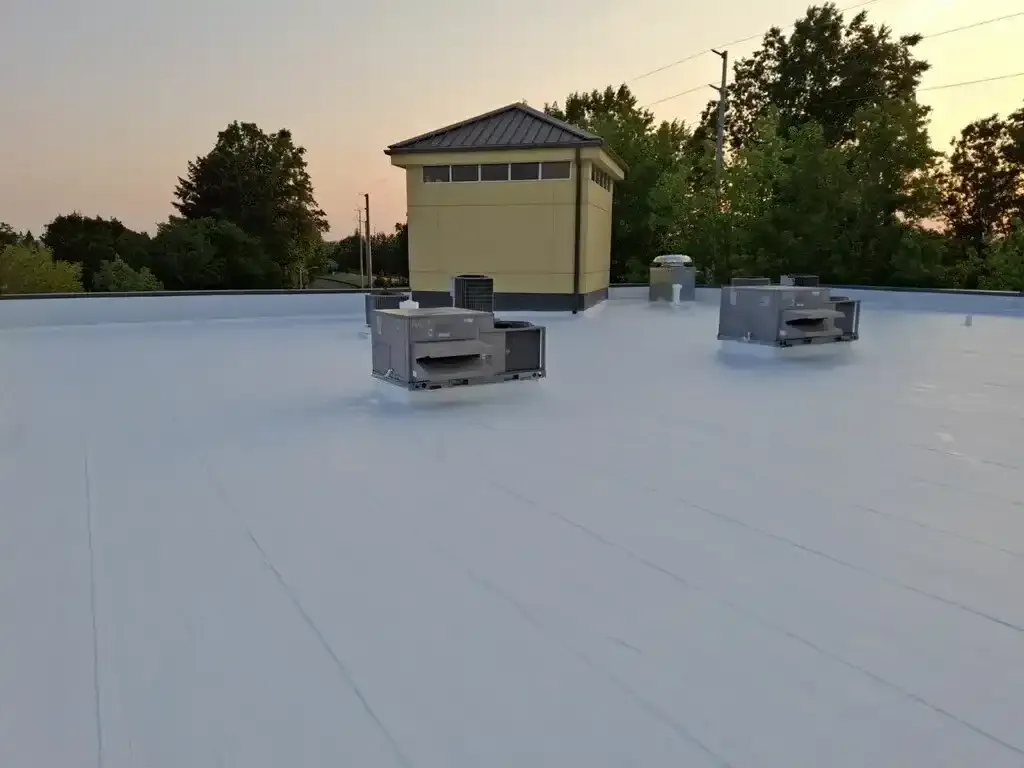
Each roof type shows heat and UV wear in its own way. Single-ply membranes chalk, shrink at corners and pull away from walls. Modified bitumen and cap sheets lose granules, blister and craze. Built-up roofs alligator, with a cracked pattern like dried mud. Coatings fade, peel and thin out. Sealants harden, shrink and crack. Plastic vent covers, skylight domes and rubber boots turn brittle and split.
We walk the roof and look at the surface in raking light, then at the details, since sealants and boots usually fail first. A hand wipe on a membrane shows chalking. A fingernail on a sealant shows hardness. We photograph typical areas and compare sun-exposed zones to shaded ones, because the difference shows how fast the surface is aging. Areas near exhaust vents and dark equipment screens often wear faster, and we mark them for closer attention.
Shrinkage and movement: the cycle that opens joints
Roofs move. A membrane expands in the afternoon and contracts overnight, and over years the cycle pulls on every edge, seam and fastener. Aged membranes shrink as plasticizers leave, and they tug at corners and flashing terminations. Metal edging moves too, and the fasteners at the ends of long runs back out.
The winters add their own cycle: Fayetteville has roughly ten days a year with highs below freezing. The swing between summer and winter, and between day and night, is the engine behind most sun-related failures. Repair follows the symptom: re-seal and re-fasten terminations, patch shrunken corners with welded or adhered pieces, replace brittle boots and add expansion details where long runs of metal need room to move. A seam failure repair is often part of the same walk, and so is a check of flashing at walls and curbs, since hardened sealant shows there first.
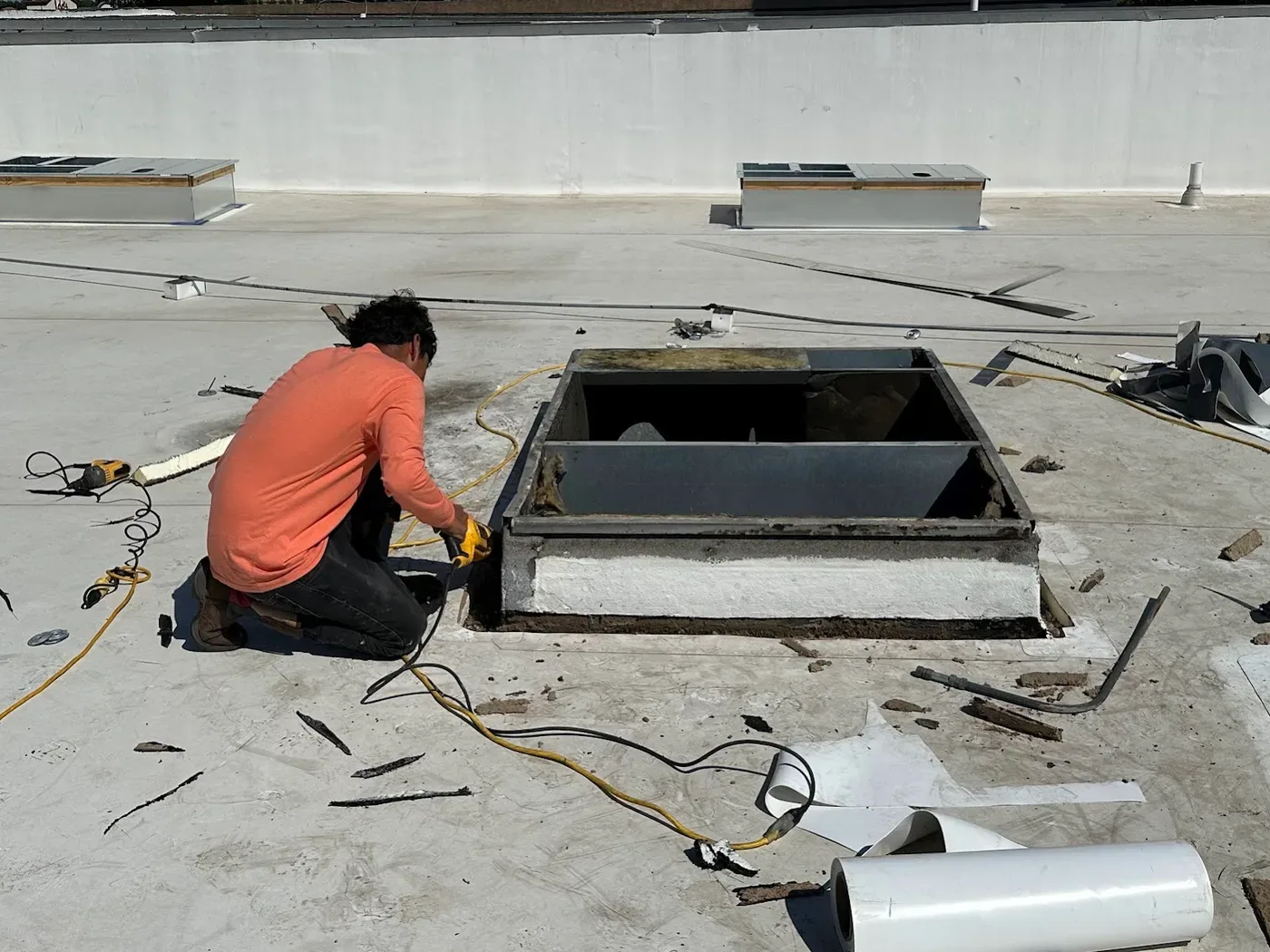
Thermal movement also works on fasteners and on the deck itself. Fasteners in a mechanically attached system can back out as the membrane tugs, leaving a raised bump that wears through under foot traffic. We press along fastener rows, note any that have lifted and reseat or replace them with plates that spread the load. Where a bump has already worn the membrane, we patch it and add a walk pad so it is not stepped on again.
Coatings: when a reflective layer extends life
If the membrane is sound but tired, a reflective coating can slow further damage. It cools the surface, protects against UV and seals small cracks. The base must be dry and clean, and the insulation must be healthy. A roof coating restoration follows repairs to seams, flashings and penetrations, then adds a primer and one or more coats suited to the roof.
Two systems are common. Silicone roof coatings hold up well to ponded water and UV, while acrylic coatings are often chosen for good drainage and cost. We test adhesion on a small patch before committing. A coating does not fix a wet roof, and a moisture scan decides whether the base is ready. The result, when conditions are right, is a roof that runs cooler and lasts longer.
Preparation decides how long a coating lasts. We clean the surface with a wash, let it dry fully and repair every defect before the first coat. Seams are covered with fabric and mastic, flashings are reinforced and ponded areas are fixed or accepted as part of the plan. A coating applied in the heat of the afternoon can skin over and trap solvent, so we apply in the cooler hours and track the surface temperature. The finished thickness is measured, not guessed, and the record goes in the roof file.
When replacement is the better call
Some roofs are past coating. A membrane that is brittle and cracked across the field, seams that open across large areas or insulation that has gone wet will not take a coating or a long-lasting patch. In those cases, replacement or a recover over dry insulation gives the owner a fresh start with a warranty, and the cost of waiting rises as water enters.
We present the options with cost drivers: the system, the deck, the insulation, the number of penetrations and the access. A cool roof installation in a new system brings a reflective surface from the start, which can ease cooling loads in summer. A large single-level retail property such as the mall in Fayetteville, with about 820,000 leasable square feet, gets a zone-by-zone survey before anyone decides between repair and coating, with sun-exposed zones compared against shaded ones.
A summer plan: inspect, shade the weak spots and keep records
Heat damage is predictable, which means it can be planned for. A spring walk catches sealants and boots that will not survive another summer. A late-summer walk records how the surface has aged, with photos taken from the same spots each year so the change is easy to see. Walk pads protect the membrane where technicians go, and reflective coatings or white membranes on new work reduce heat load. A short list of repairs each year costs far less than a large one at the end of the roof's life.
The Fayetteville Industrial Park lies east of Fifteenth Street, and any industrial building there with rooftop units needs sealant checks around the curbs each year, since hardened sealant at a curb is among the first signs of heat damage. Owners in Rogers and Springdale can add their roofs to the same schedule. A preventive roof maintenance visit leaves a dated record that shows how fast the roof is aging.
A single late-summer walk costs little next to a wet ceiling, and the notes from it tell the owner whether next year's money belongs on the roof or elsewhere.
Questions About Heat and UV Roof Damage Repair
Commercial Roofing Questions
How can I tell if my roof has UV damage?
Look for chalky residue on a membrane, lost granules, cracked sealant, brittle boots and curling edges. A walk with a hand wipe and a fingernail test finds most of it.
Does a white roof last longer in this heat?
A reflective surface runs cooler and slows some aging, so it can extend life. The effect depends on the system, the insulation and the maintenance.
Can sun-damaged membrane be repaired?
If the damage is local, yes. Brittle corners, cracked boots and open sealant can be fixed. Widespread brittleness points to coating or replacement.
When is the best time to work on a hot roof?
Early morning in summer, when surfaces are cooler. Some products will not cure properly at high temperatures, so we schedule around the heat.
Will a coating stop leaks from sun damage?
Only after the failed details are repaired. A coating seals small cracks and adds protection, but it does not replace a missing flashing or a wet insulation repair.
Related Commercial Roofing Pages
Read how we handle this work in Fayetteville, AR
Read how we handle this work in Fayetteville, AR
Read how we handle this work in Fayetteville, AR
Read how we handle this work in Fayetteville, AR
Read how we handle this work in Fayetteville, AR
Read how we handle this work in Fayetteville, AR
Read how we handle this work in Fayetteville, AR
Read how we handle this work in Fayetteville, AR