Emergency Roof Repair in Fayetteville, AR
Round-the-clock emergency roof repair in Fayetteville, AR: tarping, dry-in and storm documentation for commercial buildings after wind, hail or tornado damage.
The phone rings at 4:00 in the morning, and the building manager at the other end is standing in a lobby with water coming through the ceiling. Storm lines in Northwest Arkansas can move through overnight, so the first sign of damage is often a call from an alarm company or a night-shift supervisor. That first hour sets the cost of everything that follows. Water in the insulation, on the deck and in the ceiling grid multiplies the bill with every hour it is left alone.
We answer emergency calls around the clock, all week, including holidays. The point of that call is to stop the water, protect the interior and give the manager what the adjuster will ask for. Permanent repair is a conversation for daylight.
First hour: what happens when you call
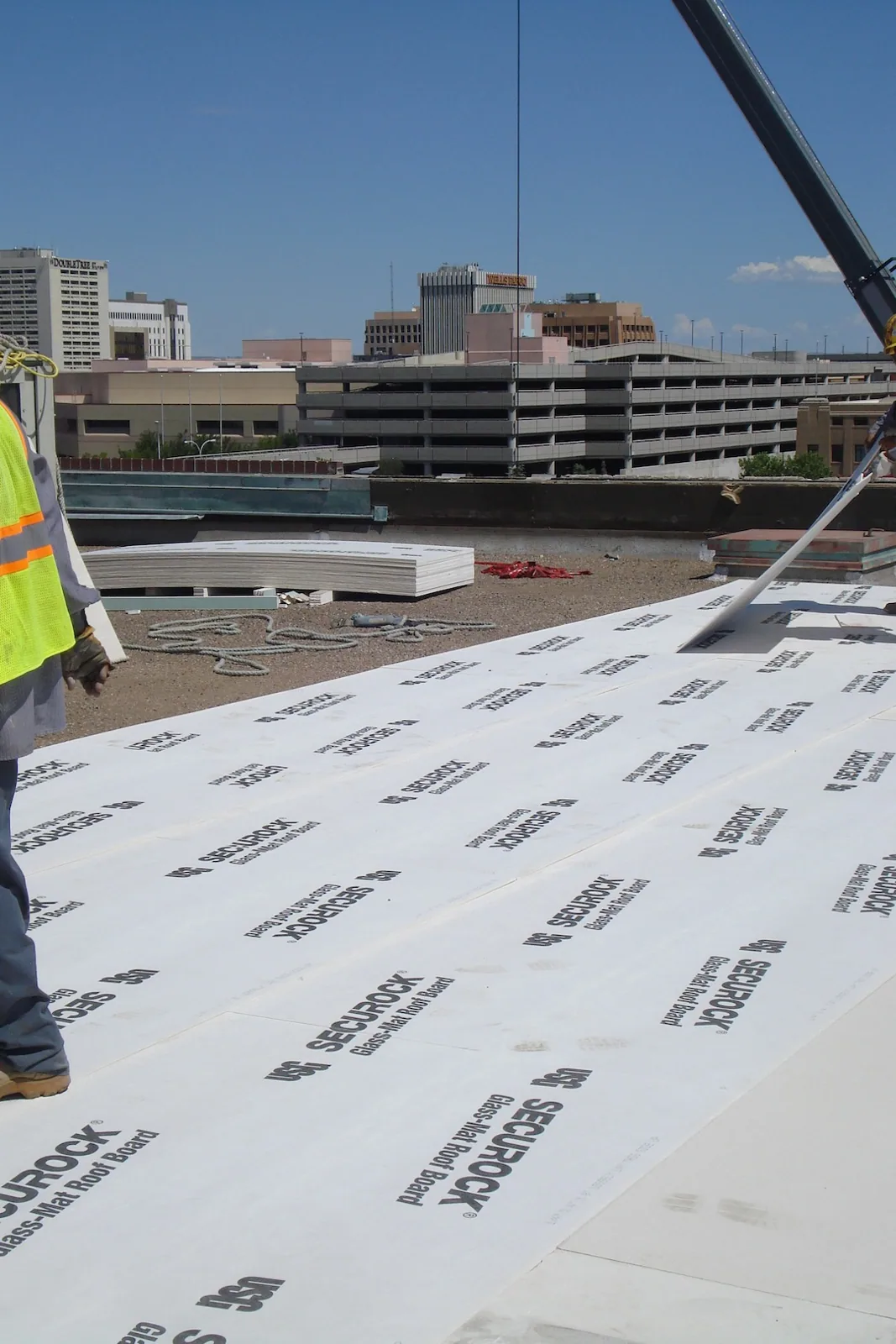
We ask where the water is entering, what the roof is made of, whether anyone is hurt and whether power or equipment is at risk. Then we dispatch a crew with tarps, temporary membrane, sealant, fasteners and lumber for securing loose edge metal. If the roof is unsafe, with sagging deck or a damaged structure, the crew keeps off it and works from the inside and the perimeter until a structural check is done.
On arrival, the crew walks the roof, photographs the damage before touching anything, and marks the openings. The photographs matter. They show the adjuster what the storm did, separate that from long-standing conditions, and protect the owner from disputes later. Only then do we place the dry-in, so the record is complete and the building is covered.
If the building is part of a larger campus or a multi-site portfolio, tell the dispatcher which roofs share an owner. We triage across all of them, because storm damage rarely stops at the property line. A walk of the neighboring roofs often finds a second opening that has not leaked yet, and catching it the same night is far cheaper than the claim that follows.
Storms: what Northwest Arkansas actually throws at roofs
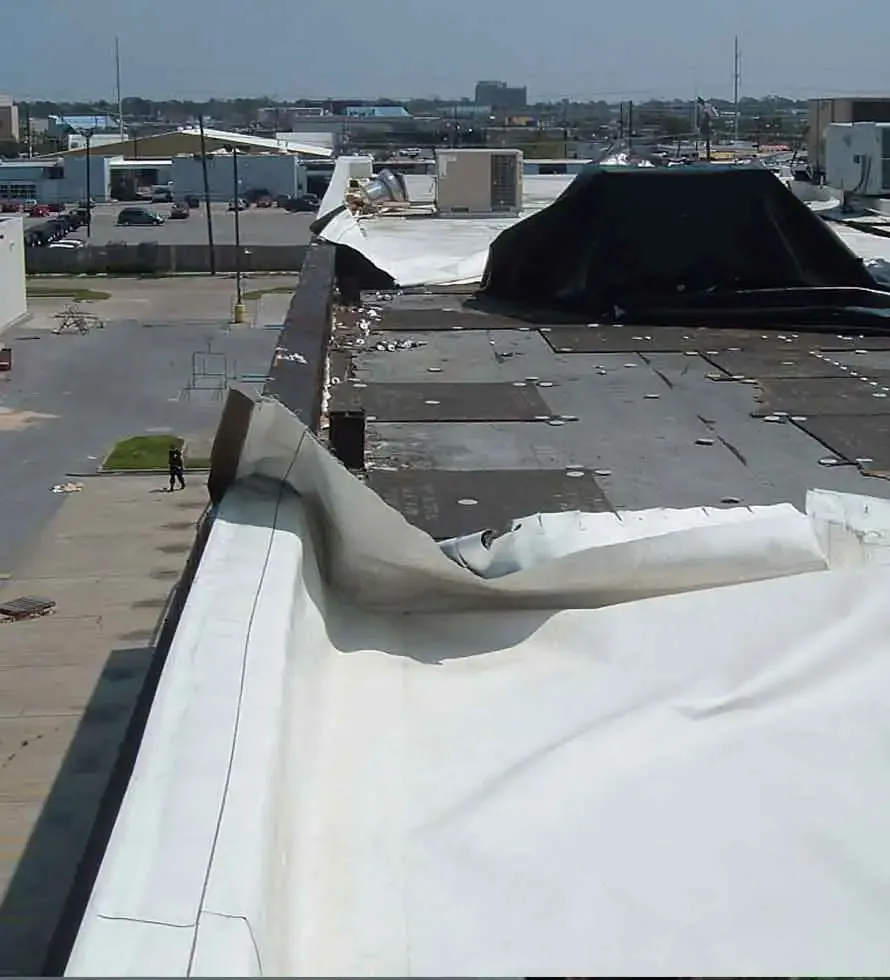
Hail is the first spring threat on the list. The May 2020 storm dropped stones up to 3.00 inches east of Fayetteville, with smaller hail in the same area, and large hail can punch holes, split seams and crack flashing in a single pass. Wind is the second hazard. When an EF3 tornado crossed Springdale on March 30, 2022, it destroyed a large metal building near Highway 412, took out a hangar at the Springdale airport and tore a wall and part of the roof from the city maintenance shop there.
Cold is the third. Fayetteville Drake Field recorded minus 20 degrees on February 16, 2021, and a deep freeze like that cracks stressed seams, splits pipes and turns small gaps into ice dams. Different storms leave different damage, so the emergency crew looks for the pattern that matches the event instead of treating every call the same.
Dry-in: what a temporary repair is and is not
A tarp or temporary membrane is a bandage. It keeps rain out while the permanent repair is planned, and on a typical commercial roof it should hold for days to a few weeks, not months. We secure it with battens or ballast so wind does not lift it, and we seal around penetrations and edges, because water finds the gaps in a quick job faster than it finds the damaged area.
Inside, we recommend moving inventory, covering equipment and pulling soaked ceiling tile before it falls. If insulation is wet, we flag it for removal, since leaving it in place under a new membrane is how a repair turns into a recurring leak. When the weather clears, the permanent work follows the same rules as any planned repair, and bigger damage may call for tornado damage repair scope or hail damage repair.
Claim records: what the adjuster will want
An insurance claim starts with a date, a cause and a record. We photograph each damaged area, note the roof type and the apparent age, write down what was done to dry the building in and keep receipts for materials and labor. That package supports a claim, and it keeps the owner from paying twice if coverage questions come up. Our claim documentation support carries the paperwork from the emergency visit through the final repair.
Do not wait for the adjuster before protecting the building. Most policies expect the owner to prevent further damage, and a documented emergency dry-in does exactly that. Keep the photographs, the invoice and a note of the weather event, and send them with the claim.
After the emergency: turning a tarp into a roof
Once the roof is dry, the next step is a full assessment. Hail leaves bruises that show up later, wind loosens fasteners across more of the roof than the visible hole, and tornado debris can puncture the membrane in places that nobody checked. A full inspection after the emergency sorts what needs repair now from what can wait, and puts a price on both. After a tornado like the one in Springdale, edge metal and flashing well away from the visible damage deserve the same scrutiny.
Questions About Emergency Roof Repair
Commercial Roofing Questions
How fast can a crew be on the roof after I call?
Response time depends on the storm, the distance and how many buildings were hit at once. After a large event, many owners call at the same time, so the crew triages by risk: active water intrusion into occupied or critical space comes first. We tell you an arrival window when you call and update it if the situation changes, rather than promising a number we cannot keep.
Does an emergency repair void the manufacturer warranty?
Temporary dry-in should not, as long as it is done with compatible materials and does not damage the membrane. Permanent repairs on a warrantied roof are another matter and usually need the manufacturer's approved methods. We document the temporary work, pull the warranty paperwork if you have it, and plan the permanent repair so the coverage is kept in place.
What do we do in the room under the leak while the crew is on the way?
Keep people out of areas under active leaks, shut off power to wet circuits if it is safe, and move what you can away from the water. Photograph the damage from the inside and note the time it began. If you can reach the roof safely, do not go up in wind or lightning; let the crew assess it. Have the roof age and any warranty paperwork ready if you know where it is.
Can you repair the roof the same night?
We can stop the water the same night in most cases. A permanent repair usually waits for dry conditions, because adhesives and welded seams need a clean, dry surface. If the damage is small and the weather allows, a permanent fix may be possible quickly. The crew will tell you which situation you are in before they start.
Is a deep freeze an emergency for a commercial roof?
It can be. When a cold snap like the February 2021 freeze drops temperatures far below normal, ice can pry open laps and flashing, and thawing then sends water into places that were tight the week before. Frozen drains also hold meltwater on the roof. If you see new stains after a thaw, call as you would after a storm. We clear drains, stop the entry and note the freeze as the cause, which helps if insurance is involved.
Related Commercial Roofing Pages
Read how we handle this work in Fayetteville, AR
Read how we handle this work in Fayetteville, AR
Read how we handle this work in Fayetteville, AR
Read how we handle this work in Fayetteville, AR
Read how we handle this work in Fayetteville, AR
Read how we handle this work in Fayetteville, AR