Data Center Roofing in Fayetteville, AR
Data center and server room roofing in Fayetteville, AR: leak prevention above critical space, storm checks, access control and low-risk repair and replacement.
Nobody wants a roofer on top of a building whose job is to stay up. A data hall or a server room carries power, cooling and network gear that a single drip can take down, and an operations lead looking at a roof plan thinks first about what happens if water gets in. In Northwest Arkansas, where Walmart's home office and more than 1,100 prospective vendors with offices in the region all depend on connected systems, a server room can sit in almost any building, under a roof like any other, and that roof is asked to do one thing: keep water out of critical space.
In Fayetteville, AR we inspect, repair and replace roofs on data and telecom buildings, with a work plan that treats access, hot work and water as risks to manage.
Server rooms also live inside ordinary buildings. A suite on the top floor of an office building or a telecom room in a distribution center has the same exposure under a roof that was designed for something else. The first task is to find out which roof sits over which room, and mark it on the plan.
Roof types: low-slope roofs with heavy equipment
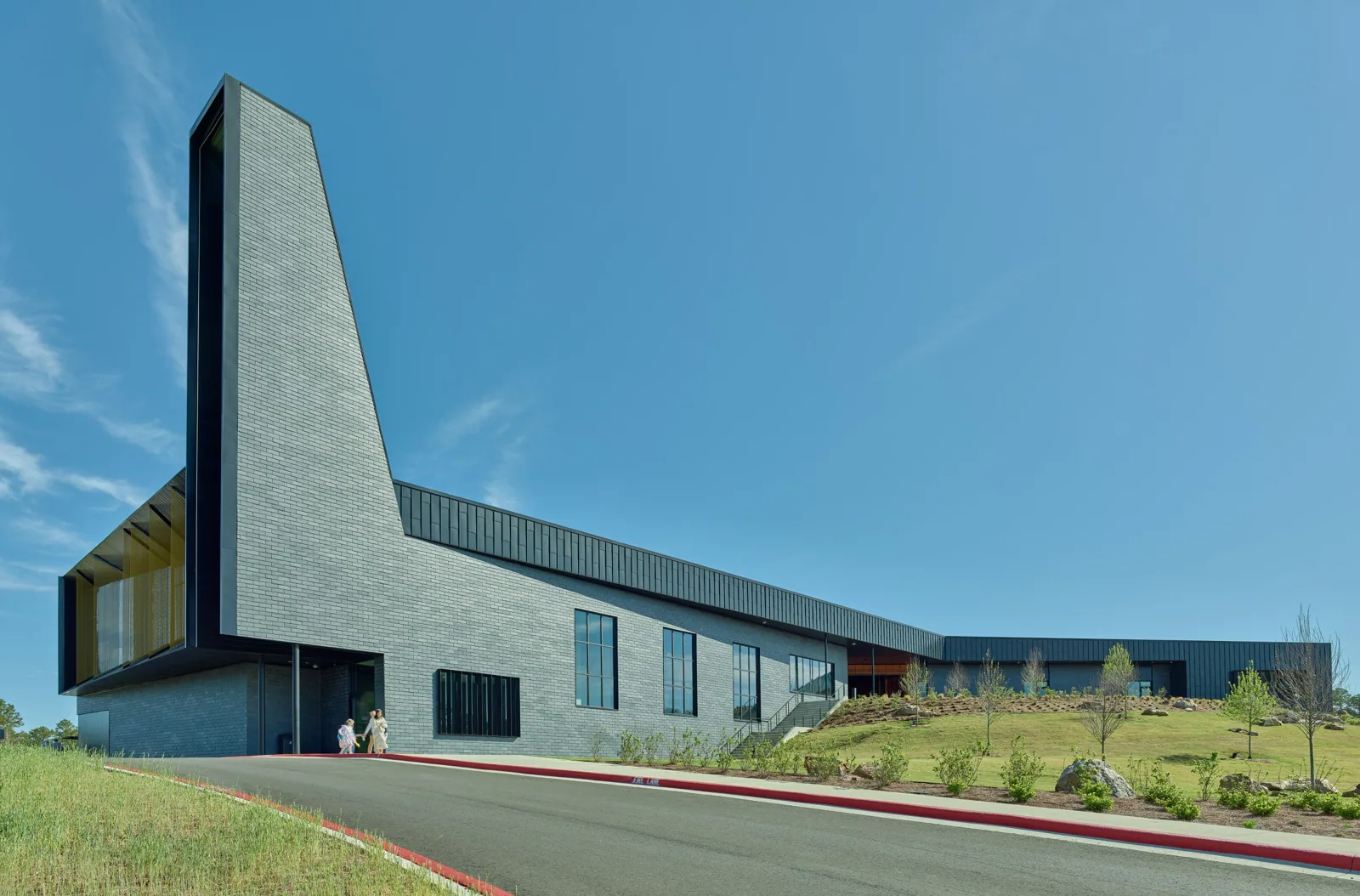
Data buildings commonly have low-slope roofs carrying rooftop cooling units, generators' exhaust, chillers, dry coolers, satellite dishes and cable penetrations. The roof is a mechanical yard as much as a weather surface. Each piece of equipment sits on a curb or rail, and each one is flashed into the membrane.
A single-ply system such as TPO or PVC is common, and many owners add redundancy: a cover board, a protected membrane assembly or a secondary drainage path. We look at the weak points first, which are curbs, penetrations, drains and edges, and we map every one.
Redundancy is worth adding at replacement. A cover board protects against punctures from foot traffic, a thicker membrane resists hail and a second drain path keeps a clogged outlet from becoming a pond. Those upgrades cost a little against the whole job and a great deal less than a loss.
What operations reports: a drip near a rack
Any sign of water near equipment is an urgent call. Operations protects the equipment, shuts down what it must and calls for a roof response. We find the source quickly, which on a roof full of equipment means tracing from the interior stain to the nearest curb, penetration or drain, and we make a temporary repair that stops the water.
Permanent repairs follow with planning. Documentation matters here: dated photographs, a note of the cause, the repair made and the area dried. The record goes to the facility file for compliance and insurance.
Leak detection is a growing option. Moisture sensors under the membrane or in the deck can warn of water before it reaches the ceiling, and some owners combine them with periodic infrared scans. We run the infrared scans and tie any sensor locations to the roof plan.
Cost of waiting: the risk is not the roof
The cost of a roof leak in a data building is the cost of what is under it. Water is patient: 46.96 inches fall at Drake Field in a year, over about 113 days of measurable rain, and a weak flashing is tested each time. A repair that costs little now can prevent a loss that costs a great deal, and a replacement planned in a quiet season beats a rush job after a failure.
We give the manager the repair cost, the replacement path and a view of what each carries in risk, without drama. A roof condition report puts those into a form that risk and facilities teams can use.
Insurers pay attention to roofs above critical space. A written inspection history, repairs on a schedule and a replacement plan help at renewal, and a gap in the record can raise questions. We keep the file current after each visit.
Storm week: tornado, hail and power
In March 2022 Springdale took an EF3 tornado with an estimated 145 mph peak wind along a 5.2-mile path, and the city maintenance shop at the airport had a wall and part of its roof torn away. Hail is the other spring hazard. Severe weather is a regional fact, and critical buildings plan for it.
The May 2020 NWS Tulsa log put 3.00-inch stones east-northeast of Fayetteville. After any storm line we check the roof for displaced equipment covers, bruised membrane and loose edge metal, and we document the findings. A wind damage repair done at once reduces the chance of a second event.
Power and cooling equipment on the roof is the first thing a storm tests. Dry coolers, condensers and exhaust housings loosen under wind, and a loose panel can open a path for rain. We tighten, reseal and replace fasteners after each storm line.
Access: badging, escort and hot work
Critical facilities control who goes where. A roofing crew needs advance rosters, identification, escort rules and a defined path from the gate to the roof. We ask for those rules at the start, build lead time into the schedule and keep a named supervisor on site with the access list.
Hot work and open flame are avoided over critical space, and mechanical fasteners or cold-applied systems are favored where the building permits. Fumes are managed by locating air intakes before the roof opens. Work is done in sections that dry in daily, and an occupied-building reroof is planned with the facility team, not around them.
Delivery of material and removal of debris are planned with the same care as access. Trucks may need inspection at the gate, laydown areas must avoid generator yards and fuel storage, and cranes need clearance from overhead lines. We list each delivery with a time and a route.
Questions About Data Center Roofing
Budget: planning a roof replacement around uptime
Replacement on a critical building takes planning months ahead of the work. Owners set a window, agree on freeze periods and arrange backup arrangements for any shutdown of rooftop equipment. A capital plan that ranks each roof by condition lets the owner choose the quietest season for each.
Critical buildings follow the same codes as everyone else, the 2021 International Building Code through Arkansas's fire prevention code and the ASHRAE 90.1-2007 listing for energy, and the building official confirms insulation on a replacement. Owners near Bentonville and along I-49 can keep the same report format for each building.
Quarterly or twice-yearly maintenance visits keep small items small. A visit in fall clears drains and checks flashing before winter, and a spring visit looks for freeze damage and storm effects. Each one adds to the file.
Commercial Roofing Questions
How do you protect equipment during roof work?
We work in small sections, dry in daily, cover or avoid air intakes and keep hot work away from critical space. The facility team approves the plan before the crew arrives.
Can rooftop equipment stay running during a reroof?
Usually, with careful sequencing. We flash around live equipment where possible and schedule any shutdown with operations. Curbs and supports are checked first.
What record do risk managers want after a leak?
Dated photographs, the cause, the area affected, the repair made and the drying confirmation. We prepare all of it for the facility file.
Does a data building need a different membrane?
Often it needs the same membrane with better details: more redundancy, protected assemblies and extra attention to curbs. The weak points matter more than the sheet.
How soon should a roof be checked after a severe storm?
As soon as it is safe. We look for displaced covers, bruised membrane and loose trim, and we document damage with dated photographs.
Related Commercial Roofing Pages
Read how we handle this work in Fayetteville, AR
Read how we handle this work in Fayetteville, AR
Read how we handle this work in Fayetteville, AR
Read how we handle this work in Fayetteville, AR
Read how we handle this work in Fayetteville, AR
Read how we handle this work in Fayetteville, AR
Read how we handle this work in Fayetteville, AR
Read how we handle this work in Fayetteville, AR