Roofing for Manufacturers in Fayetteville, AR
Roof repair, recover and replacement for manufacturing plants in Fayetteville and Northwest Arkansas, scheduled around production lines and shutdown weeks.
A plant manager thinks about a roof in terms of lines, shifts and shutdown weeks. If water drips on a conveyor, a panel board or a pallet of finished goods, the cost is measured in lost output before it is measured in roofing dollars. So the first thing we ask is what sits under each part of the roof and what it costs to stop it. The roof plan follows from that answer, and so does the budget conversation with finance.
Northwest Arkansas has a deep manufacturing and processing base. In Springdale, Tyson Foods, George's, Cargill Meat Solutions, Rockline Industries and Kawneer are among the largest employers, and Fayetteville has its own Industrial Park east of Fifteenth Street. Those operations differ from each other, and so do their roofs, which is why we start with a walk and not a template.
Under the roof: what the process does to the deck
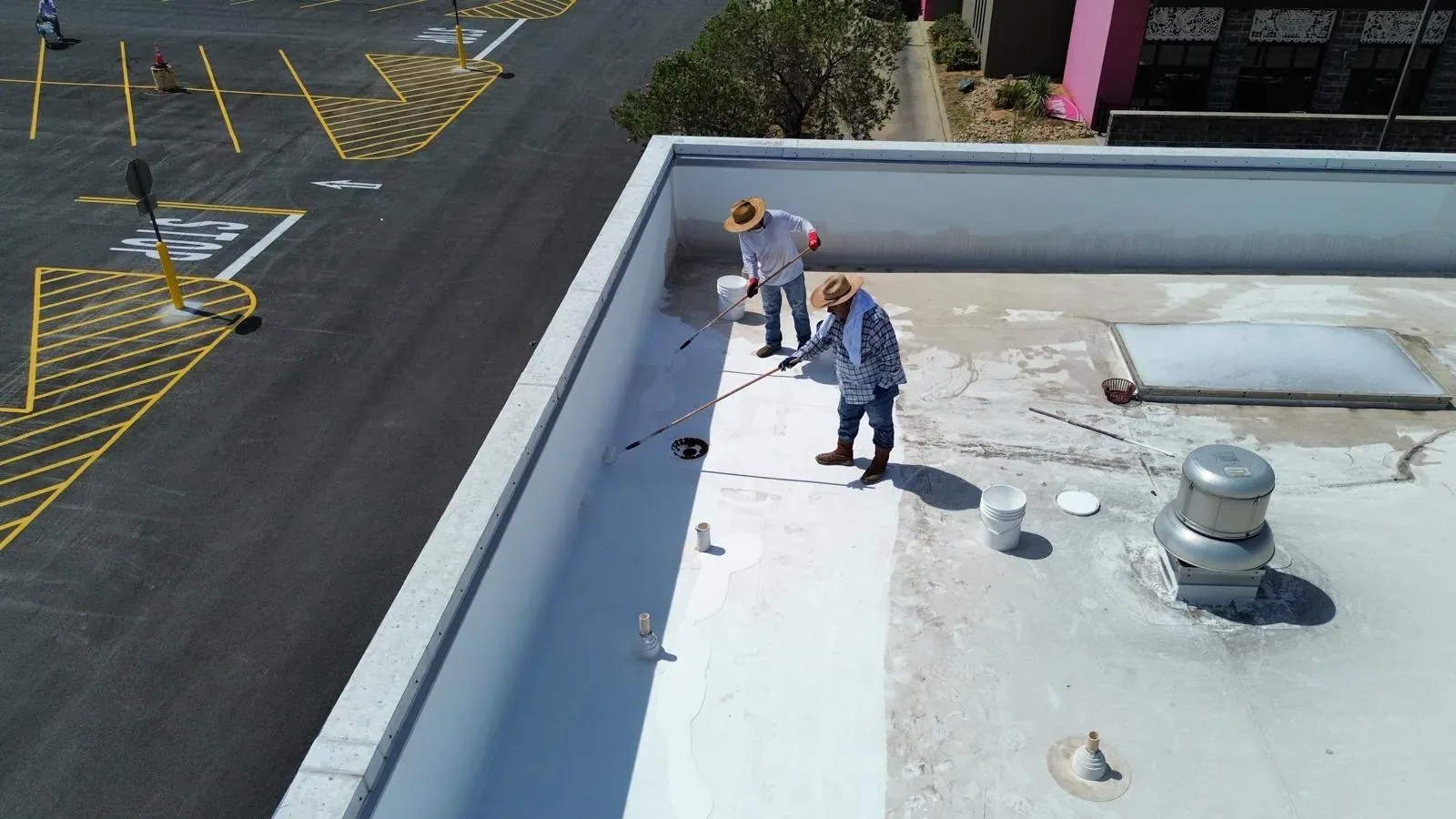
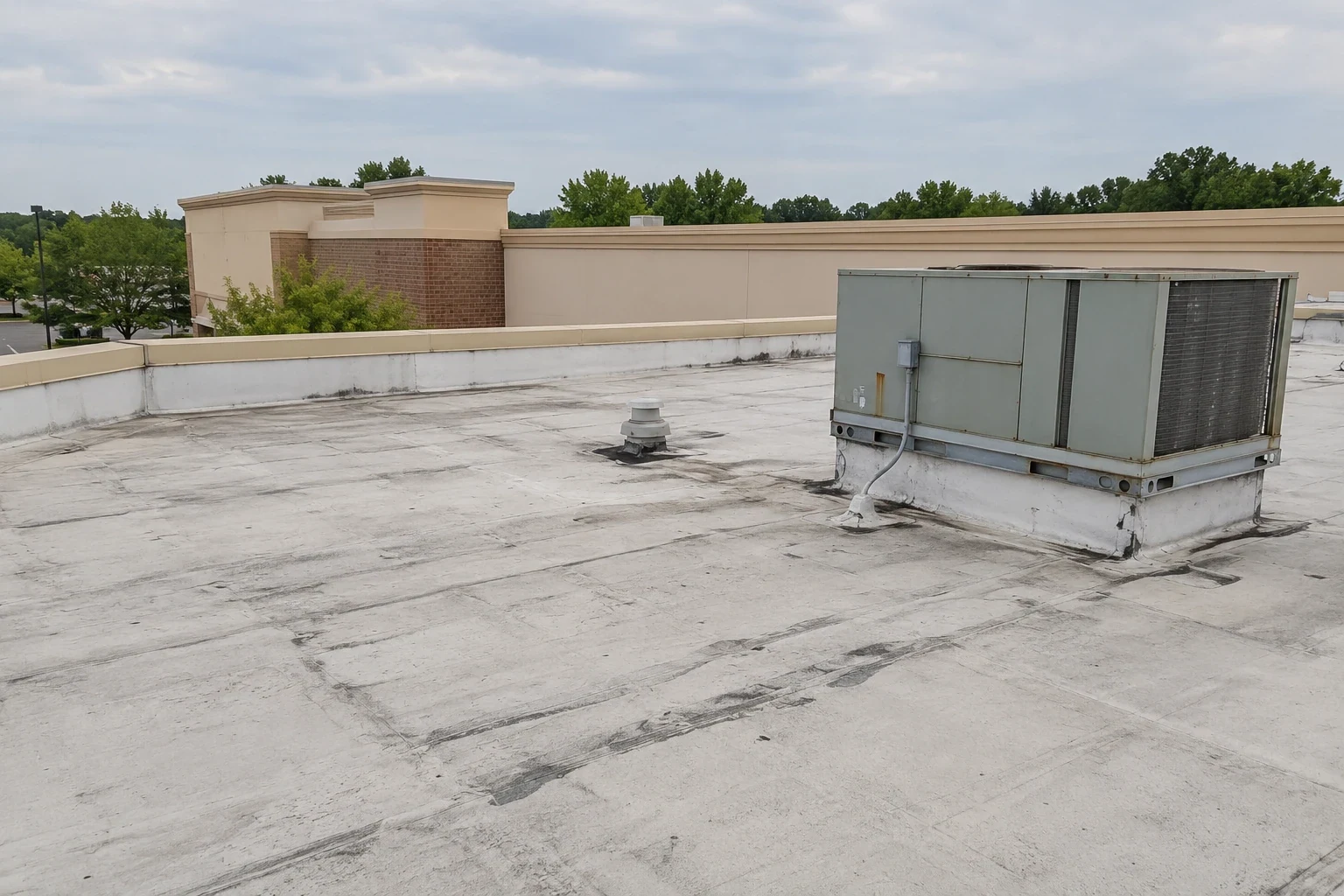
Manufacturing roofs live harder lives than office roofs. Exhaust stacks put heat and chemicals on the membrane. Wash-down areas push moisture into the building, and that moisture can condense on the underside of a metal deck and drip like a leak when it is not one. Heavy rooftop equipment concentrates loads on small areas, and service traffic wears a path across the surface. We add walk pads where technicians go and mark them on the sketch.
We look at all of it. On the roof we check for chemical staining, softened membrane around vents, rust on the deck edges and crushed insulation under equipment feet. Inside, if the plant allows, we look at the underside for condensation. A true roof leak and a condensation problem call for different fixes, and the wrong repair wastes the money, so we sort them out before anyone prices a patch. If the deck is rusted through near a wash-down area, the repair starts with the deck and ends with the membrane, in that order.
Shutdown windows: fitting the work to your calendar
Most plants have a few weeks a year when lines slow or stop, and roof work that makes noise or dust fits best there. For other work we phase the job so production continues under sections that are not open. We map the roof to the floor plan, mark which bays cannot take interruption and put the first work over areas that can.
For a large manufacturing plant roof, the sequence matters as much as the method. Material should arrive in the right order, the dumpster should sit where trucks can still reach the dock and the crew should have a clear route that avoids forklift lanes. We write that into the plan, review it with your maintenance and safety leads and adjust. Your lockout and safety rules apply to us on the roof as they do to anyone else.
Supply and shipping shape the plan too. A plant that runs trucks in and out all day cannot give up a dock for a crane pick, so we look for a staging area that leaves the main lanes open. Companies in the same chain, such as the logistics and 3PL operators that move their goods, run on the same clock, and a roof job that blocks a dock for a day can ripple through a delivery week.
Metal buildings: wind, fasteners and what a tornado teaches
Many plants are metal buildings, and those roofs fail in specific ways: loose fasteners, open laps, worn sealant, corroded panels and gutters packed with debris. A metal roof with a failing coating or open seams can be restored or retrofitted without a full tear-off, depending on the panel and the substrate. A metal roof retrofit adds a new layer over the old and can avoid downtime inside.
The EF3 tornado that hit Springdale on March 30, 2022 destroyed a large metal building near Highway 412 and damaged a city shop at the airport. No roof is built to survive a direct hit, but edge metal, fastener pattern and panel condition decide how a roof behaves in lesser wind. We check those details during every walk and show the manager what to repair before storm season.
Edge metal and gutters deserve particular attention. Wind finds the perimeter first, and a loose cap or a missing fastener at a corner is where uplift begins. We tighten and reseal what we can on the visit, and we list what needs replacement with a price. When a plant expansion is underway, we work with the general contractor so new roof ties into the old without gaps, and so the warranty on each part stays clear.
Rain, freeze and heat: the annual stress cycle
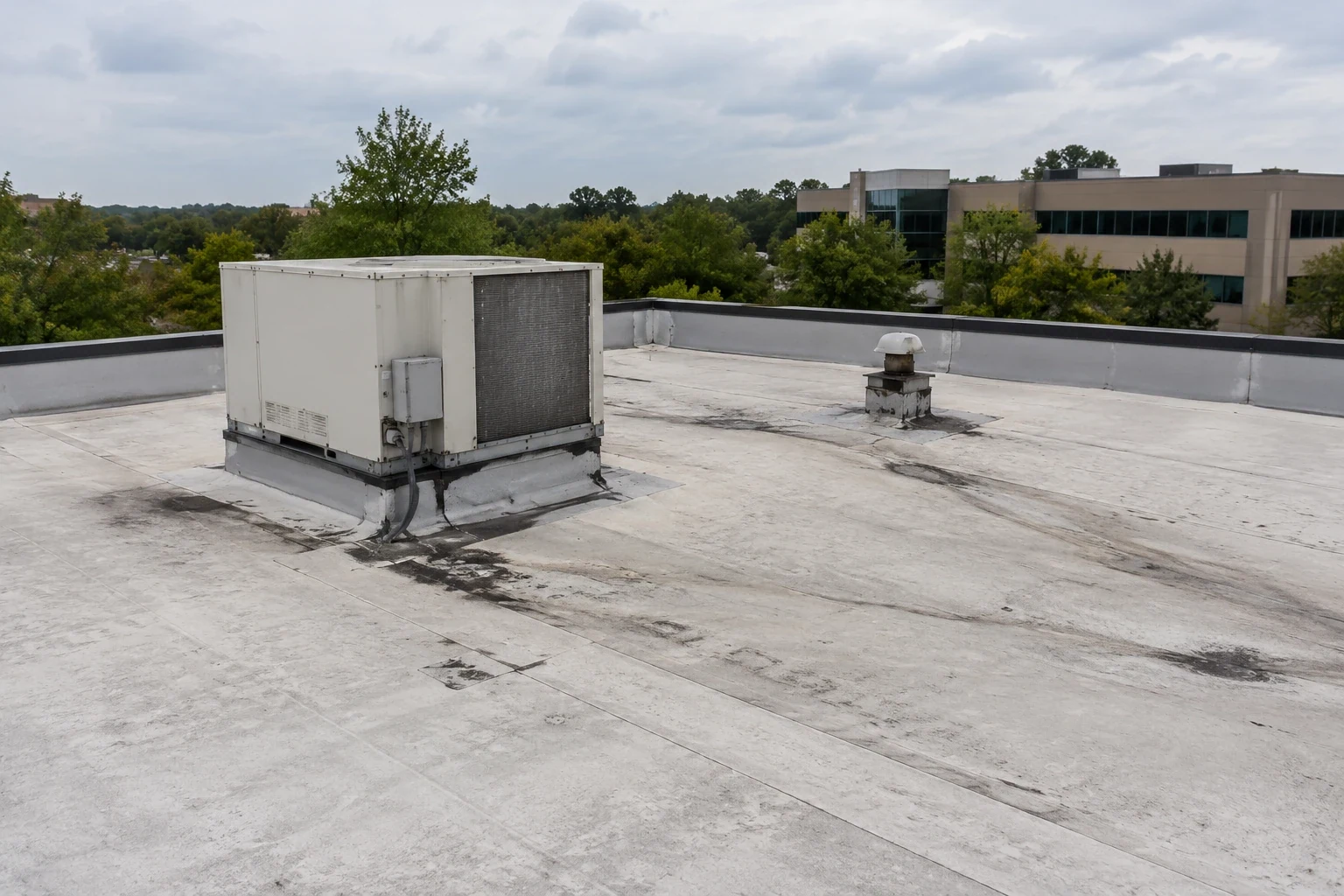
Fayetteville collects close to 47 inches of rain in a year. Winters bring about 6.5 inches of snow and some ten days when the high stays below freezing, and summers can reach above 100 F a few days a year. That range moves a roof. Membranes expand and shrink, sealants harden, laps open and fasteners back out. A plant with a long roof sees the effect at every joint.
A maintenance visit before spring storms and another after summer catches what the swing did. Preventive roof maintenance keeps drains clear, seams tight and sealant fresh, and the visit leaves you with a short list and photos. Fixing a seam in March costs a fraction of drying a wet floor in June, and the dated record helps if a storm claim is filed later.
Repair, recover or replace: how to decide on a plant roof
A large plant roof is a major capital item, so the decision deserves evidence. We scan for moisture, take cores to confirm the layers and rate each section. If the insulation is dry and the base is sound, a coating or a roof recover can add years. If the insulation is wet over big areas, replacing those sections is the sound answer, and the cost of waiting is higher than the cost of the work.
We write the options with cost drivers and a recommended order, so you can plan the reserve. Plants with multiple sites can fold roofs into one calendar through a multi-site program. Owners who lease their buildings should loop in the landlord; the same file works for both. Operators in Springdale or Fayetteville can call for a first walk.
Questions About Manufacturers
Commercial Roofing Questions
Can the roof be replaced while the plant is running?
Often, in sections. We close in each section before the end of the shift, keep material off truck routes and coordinate with maintenance on exhaust and intakes. Some work, like hot tie-ins near process vents, is best placed in a shutdown.
How do you tell condensation from a leak?
By looking at timing and pattern. Leaks follow rain and show near seams or penetrations. Condensation follows temperature and humidity swings and shows across large areas of the deck. A moisture scan and an interior look settle it.
Will chemicals from our exhaust damage a new membrane?
Some membranes resist certain chemicals better than others. We ask what the exhaust carries and choose a system and a protection detail accordingly. Walk pads and splash guards protect the area around vents.
Do you coordinate with our safety rules?
Yes. We follow your sign-in, lockout and fall protection rules, share the crew list ahead of time and attend your safety briefing before going on the roof.
What does the report give us?
Photos, a roof sketch with equipment marked, a rating by section and priced options for repair, restoration and replacement. It fits a capital request without rewriting, and the same photos can go to the plant's insurer or its lender if either asks.
Related Commercial Roofing Pages
Read how we handle this work in Fayetteville, AR
Read how we handle this work in Fayetteville, AR
Read how we handle this work in Fayetteville, AR
Read how we handle this work in Fayetteville, AR
Read how we handle this work in Fayetteville, AR
Read how we handle this work in Fayetteville, AR
Read how we handle this work in Fayetteville, AR
Read how we handle this work in Fayetteville, AR