
Cold Storage Roofing in Fayetteville, AR
Cold storage and freezer building roofing in Fayetteville, AR: vapor control, wet insulation, ice and condensation problems, with repair and replacement costs.
A leak in a freezer building does not look like a leak. The water that gets in through a roof opening hits a ceiling kept below freezing, turns to ice, builds up on the underside of the deck and shows up weeks later as frost on the product or a patch of wet floor. By then the insulation above has been soaking for a long time. The roof over a cold room is part of the refrigeration system, and a roofing failure costs electricity every hour it goes uncorrected.
In Fayetteville, AR we inspect and repair roofs on cold storage and freezer buildings, and we put the cost of waiting beside the cost of repair.
Food processors and their suppliers are a large part of the regional economy, and cold buildings sit alongside plants and distribution space. The roof questions overlap, but the cold side adds moisture control and energy to the list, and that changes the repair choices.
Roof types: thick insulation and a vapor layer
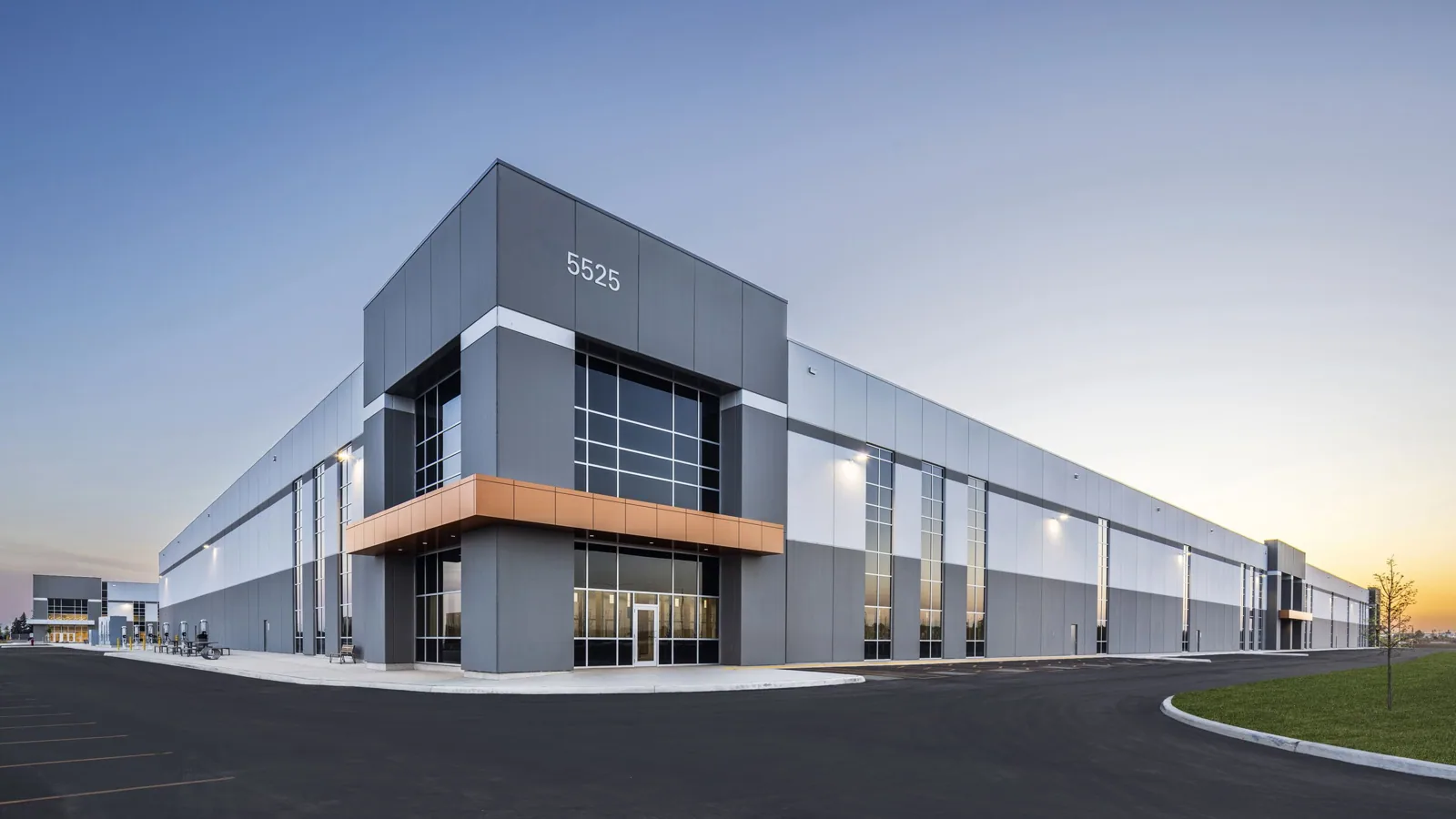
Cold storage roofs usually carry far more insulation than an ordinary warehouse, often several layers of rigid board over a vapor retarder, topped with a single-ply, metal or built-up weather surface. The vapor retarder keeps warm moist air from reaching the cold side of the assembly. If it fails, moisture condenses inside the insulation, which loses value as it gets wet.
The roof surface above is a normal roof with an abnormal job. Seams, flashing, curbs and penetrations for refrigeration lines need to be tight, because anything that lets water in feeds the freezing problem. We check the membrane, the edge metal and the penetrations before we look at anything else.
Penetrations deserve a second look. Refrigeration lines, conduit and drain pipes pass through a thick assembly, and each one needs a sealed boot and a continuous vapor seal inside. A boot that cracks in summer heat lets humid air in, and the moisture condenses in the cold insulation below. We check each boot, each curb and each condenser stand on the walk.
What the operator reports: frost, drips and rising power bills
The first signs are rarely a drip. Operators notice frost on the ceiling, ice around a fixture, a patch of wet floor near a dock door or a refrigeration load that climbs without explanation. Any of these can point to wet insulation above, and a roof scan can confirm it.
We use an infrared moisture survey to find wet insulation, followed by core cuts to confirm. If the vapor retarder has failed, the fix reaches beyond a patch. The written findings state where moisture is, how far it extends and what a repair or section replacement would cost, with the cost of delay beside it.
The best time to look is when the problem is visible. Frost patterns on the ceiling, ice on fixtures and drips near dock doors all help locate wet zones, and we ask the operator to photograph them and note the date. Those images guide the roof scan.
Cost of waiting: wet insulation and the power bill
Wet insulation conducts heat, so the refrigeration plant works harder to hold temperature. Annual precipitation at Drake Field comes to 46.96 inches across about 113 rainy days, so a weak spot in the roof is tested again and again. Water stays in the insulation, and in a cold building it freezes and thaws in the assembly, which damages the board.
July highs average 88.7 degrees at Drake Field, and the record of 111 shows how hot a roof surface can get over a cold room. In summer the roof surface is hot, the room below is cold and the vapor pressure is at its worst. We give the manager a number for repair now and a number for waiting through another season.
Condensation can mimic a leak. A cold deck under a warm, humid roof sheds water on the inside surface even with a sound membrane. We compare moisture readings with rain events to tell the two apart, and the fix for condensation is a vapor or ventilation correction rather than a patch.
Winter and storm weeks: ice, snow and hail
Winter brings roughly 10 days of sub-freezing highs, about 6.5 inches of snow and, on February 16, 2021, a record low of minus 20 degrees. Snow melts at the roof surface from rooftop heat and refreezes at drains and edges, so ice dams and blocked scuppers are a winter concern. Hail up to 3.00 inches in the NWS Tulsa log for May 2020, east-northeast of Fayetteville, can bruise a membrane over a cold building as easily as any other.
After a storm we check seams, flashing and drains, and we photograph and map what we find. A hail damage repair record gives the adjuster a clean file and helps the owner prove the date.
Operations: working without losing the cold chain
A cold building cannot be opened to the weather. We work in small sections, dry in each one the same day and keep the ceiling intact below. If insulation has to be removed, new board and vapor retarder are installed before the section is closed, and the crew avoids opening more than can be sealed. Refrigeration lines, condensers and electrical gear on the roof are marked in advance.
Docks stay in use, so lifts and staging avoid dock aprons and fire lanes. An occupied-building reroof in a cold building needs a closer schedule than most, and we write it out with the operations manager before the crew arrives.
Hot work is avoided over refrigerated space, and solvent-free adhesives and mechanical fasteners are preferred where the building allows. Fire watch and a clear plan for foam insulation, which burns, are part of the safety talk with the operator.
Questions About Cold Storage Roofing
Budget: insulation, vapor control and energy code
Replacement scopes carry more cost than a standard roof because of the extra insulation and the vapor retarder. The capital plan should show the repair path and the replacement path with likely lives. Cold buildings carry more insulation than the code minimum, but the minimum still applies. Arkansas uses the 2021 International Building Code and lists ASHRAE 90.1-2007 for energy, and the building official confirms the assembly.
Springdale's largest employers include Tyson Foods, George's and Cargill Meat Solutions, and owners of cold buildings in Springdale, Fayetteville Industrial Park or near distribution centers can keep one report format across their sites.
Power use is an easy metric to track. If the refrigeration load drops after a roof repair, the owner has an answer to the question of whether the work paid back. We suggest the plant manager keep the pre- and post-repair readings with the roof file.
Commercial Roofing Questions
How can wet insulation be found in a freezer building?
An infrared scan at dusk shows wet areas by their heat signature, and core cuts confirm. We map the wet zone on the roof plan, with moisture readings at each cut.
What does a vapor retarder do in a roof?
It stops warm moist air from reaching the cold side, where it would condense. If it fails or is punctured, the insulation takes on moisture and loses value.
Can we repair a cold storage roof without defrosting?
Often, since work is done from the roof. The ceiling below stays closed, and we dry in each section. Refrigeration lines and electrical gear are marked first.
Why do power bills climb with a roof leak?
Wet insulation conducts heat, so the refrigeration plant has to work harder to hold temperature. A roof scan often explains an unexplained climb.
Does hail matter more over a cold building?
A bruised or punctured membrane lets water into insulation that is expensive to replace, so damage costs more. We inspect after storm lines.
Related Commercial Roofing Pages
Read how we handle this work in Fayetteville, AR
Read how we handle this work in Fayetteville, AR
Read how we handle this work in Fayetteville, AR
Read how we handle this work in Fayetteville, AR
Read how we handle this work in Fayetteville, AR
Read how we handle this work in Fayetteville, AR
Read how we handle this work in Fayetteville, AR
Read how we handle this work in Fayetteville, AR
