Modified Bitumen Roofing in Fayetteville, AR
Modified bitumen roofing in Fayetteville, AR: SBS and APP cap sheet repair and replacement for older buildings, with hail, fire-safety and cost notes.
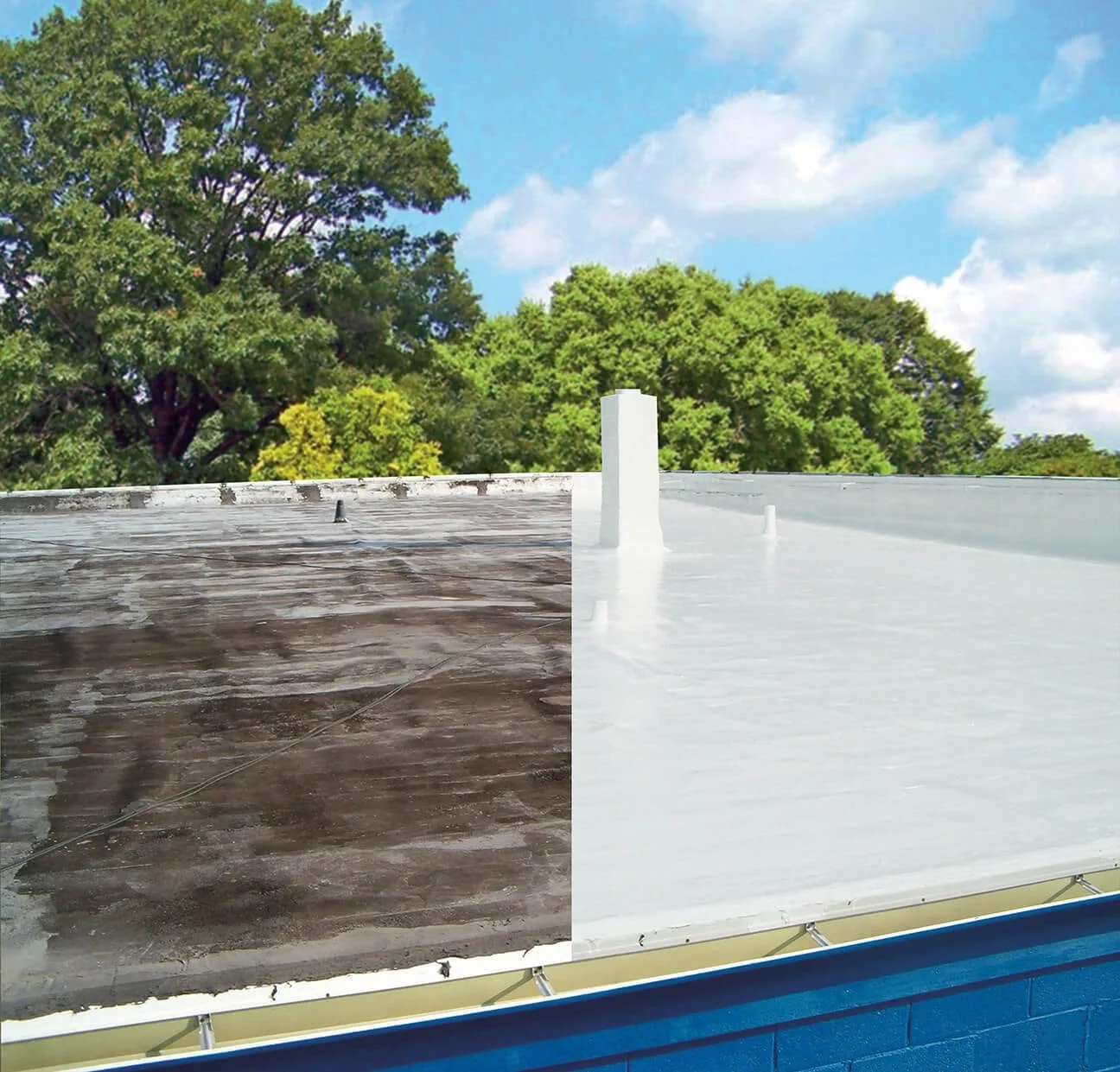
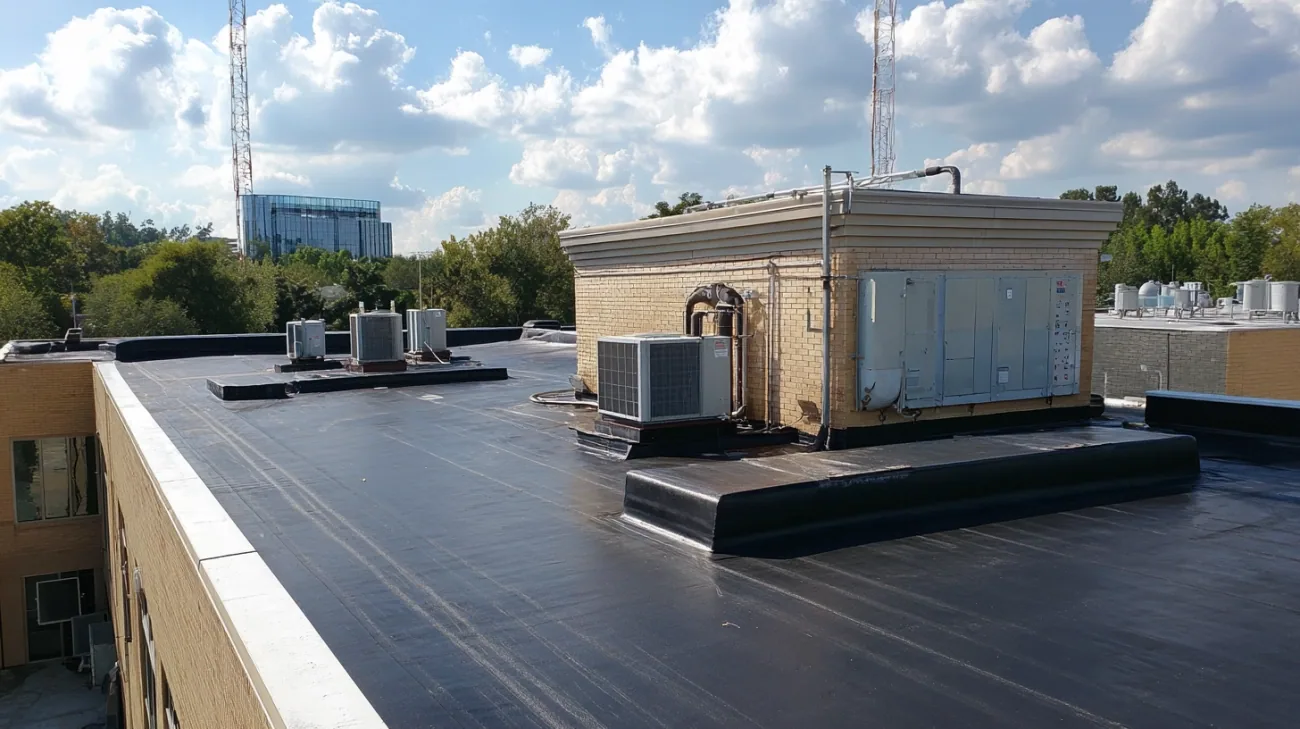
A modified bitumen roof has a surface you can see wearing: the granules thin out, a ridge appears over an old seam, a blister rises near a drain. On an older building the system gives a manager early warning that a flat sheet of rubber or plastic does not. In Fayetteville, AR a mod bit roof also has to take hail, and the May 2020 storm east of town dropped stones up to three inches across.
We repair, recover and replace modified bitumen, and we sort the work into repair now and plan for later, with a number on each.
The system has a long track record on commercial roofs, and a well-kept one can serve for many years. What it asks in return is a regular look at laps, flashing and surfacing. Owners of older downtown buildings, such as those around the Square, benefit most from a regular schedule.
What it is: asphalt made tough with polymers
Modified bitumen is asphalt blended with polymers, then reinforced and rolled into sheets. SBS rubber-modified sheets stay flexible in the cold, while APP plastic-modified sheets resist heat and ultraviolet light. Most systems use two or more layers: a base sheet and a granule-surfaced cap sheet that takes the weather.
Installers join the layers in several ways. Torch-applied sheets are heated until the bottom melts onto the surface below. Cold-applied systems use adhesive. Self-adhered sheets stick with a factory-applied adhesive layer. Each has a different cost, a different fire-safety profile and a different tolerance for cold or damp weather.
Reinforcement matters. Polyester mats stretch and resist tearing, fiberglass mats are stable and cheaper, and composite mats combine the two. We name the reinforcement and weight in each quote, since two sheets with the same name can behave very differently once the roof moves with the seasons.
Fit: older buildings downtown and on the hill
The Downtown Fayetteville Historic Square was added to the National Register of Historic Places in 1974 and holds buildings from 1886 to 1911, among them the 1911 Old Post Office and the 1908 Lewis Brothers Building. On a building of that age with a low-slope roof, any chimneys, vent pipes and old skylights need careful flashing. Modified bitumen handles that kind of detail work well, since sheets can be cut, layered and torched or glued into corners.
It also suits roofs that get foot traffic from service techs, because the granulated surface resists wear. A built-up roof is a similar multi-layer option, and a rubber membrane is the lighter alternative.
Parapet walls and counterflashing deserve more attention than the field. Where a parapet is brick, it holds water in the mortar joints after rain, and the base flashing at the wall takes the brunt. We repoint where needed, replace cracked counterflashing and use reglets or termination bars that actually hold the sheet.
Fire safety: torches near old wood and brick
An open flame on a roof is the biggest risk in this trade, and an older building can have wood decking, tar-papered cavities and shared walls. We tell managers when torch work is off the table. Cold-applied or self-adhered systems avoid the flame, and many insurers and owners prefer them on older structures. If a torch is used, a trained crew keeps a fire watch for an hour or more after the last pass and checks the cavities by hand.
Hot work also affects tenants. Smoke, fumes and smells can enter through vents, so we locate intakes before any work begins. A cooler, quieter method costs more per square, yet far less than a fire.
Cold-applied adhesives need dry, mild weather, and self-adhered sheets need clean, warm surfaces to bond. In February, when the record low of minus 20 degrees was set, neither would cure properly. We schedule these systems for spring and fall stretches and keep a weather plan for each day.
Hail and heat: what the cap sheet takes
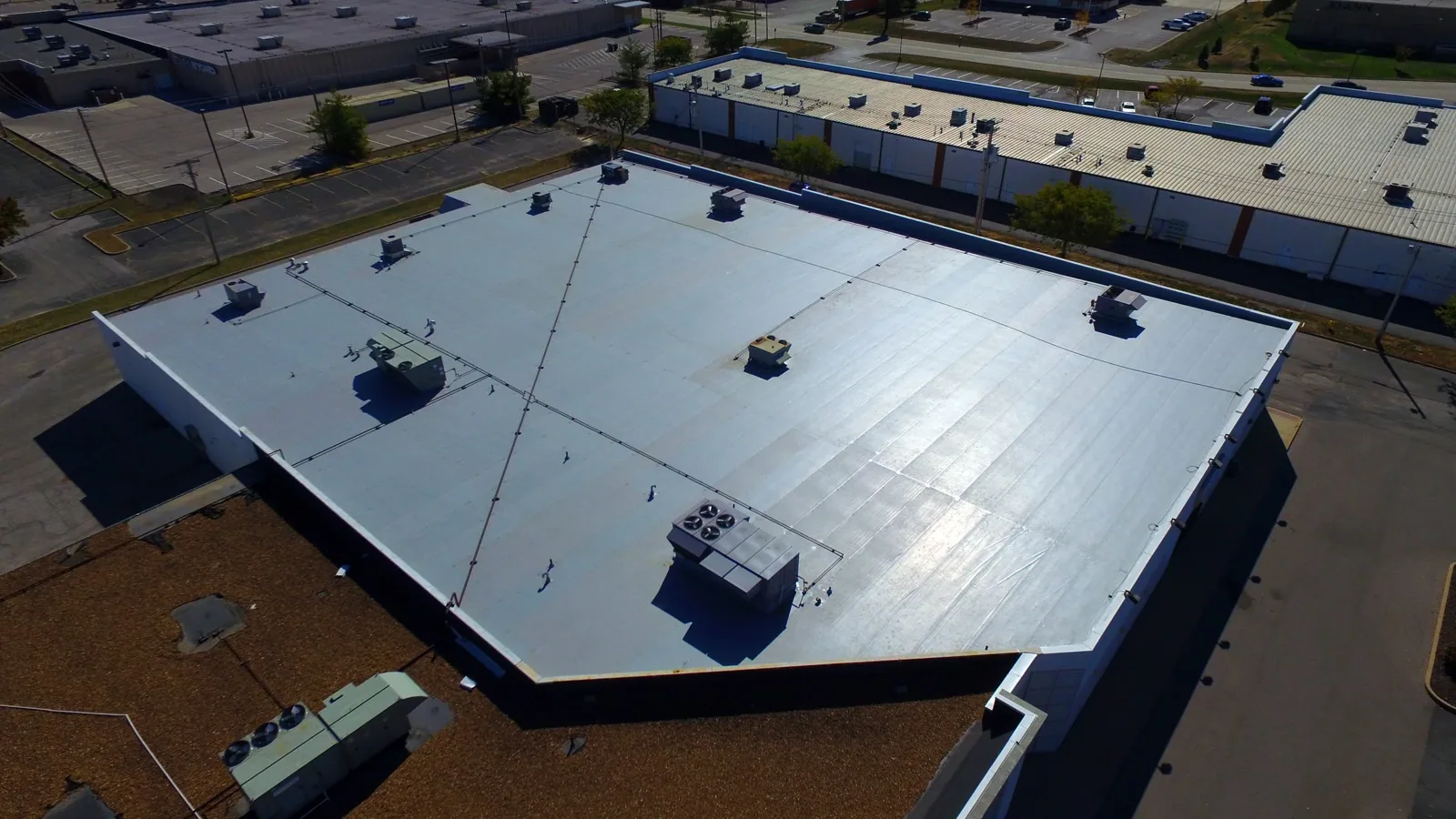
Granules shield the asphalt from sun and from hail. A stone as big as the 3.00-inch hail reported east of Fayetteville in May 2020 can knock granules loose and bruise the layers below, and bare asphalt ages quickly in July heat. Drake Field highs average 88.7 degrees in July, and surfaces run much hotter. After a hail week we walk the roof, mark loose granule patches and probe suspect spots.
A coating over an aging cap sheet can slow the wear, but only if the layers beneath are dry and well bonded. A coating restoration is a mid-life option, and we confirm moisture and adhesion before recommending one.
A wind storm line crossing the I-49 corridor can lift edge metal and expose the cap sheet at the perimeter. We check the perimeter first after any storm, since an open edge lets wind get under the roof.
Cost: what the options run against each other
Repairs to laps, flashing and blisters are modest and often worth doing. A new cap sheet over a sound base is a middle option, and a full tear-off is the most expensive. The deciding factors are moisture, the number of layers and the deck condition. We use a moisture survey and core cuts to learn what is underneath.
Roofing crews book up in spring and early summer. A manager who asks for a quote in winter has more choice of start dates, and a roof replaced on a plan costs less than one replaced after a leak has soaked the insulation.
Disposal and weight both affect cost. Multiple layers of old bitumen are heavy and expensive to haul, and a recover that leaves them in place adds load to the structure. We weigh both and give the manager a rough comparison.
Questions About Modified Bitumen Roofing
Records: for the file and the adjuster
Dated photographs, a roof plan and a list of repairs make up the file. A roof condition report after any storm helps an adjuster tell new damage from old wear. Code questions are routine: Arkansas adopted the 2021 International Building Code in its fire prevention code, effective January 1, 2023, and lists ASHRAE 90.1-2007 for commercial energy. The building official confirms the number of layers and the insulation on any tear-off.
Owners with several older buildings in Downtown Fayetteville can use a single format across all of them.
If a building changes hands, the buyer's lender will ask about the roof. A report on file answers that question and avoids a delay at closing.
Commercial Roofing Questions
Is torch-applied roofing safe on an older brick building?
It is the highest-risk method, and on buildings with wood decking or hidden cavities we often recommend a cold-applied or self-adhered system instead. If a torch is used, the crew keeps a fire watch and checks cavities by hand afterward. Your insurer may have a view, so ask early.
What are the granules on a mod bit roof for?
They protect the asphalt from sunlight and hail. Bare patches mean the roof is aging faster, and a coating or a new cap sheet may be due. We map the bare areas and show how much of the surface they cover.
Can a blistered mod bit roof be repaired?
Small blisters can be cut, dried and patched. A field of blisters suggests trapped moisture, and a moisture survey will show whether the insulation below is wet. Wet insulation changes the repair to a section replacement.
SBS or APP: which is better for this area?
SBS stays flexible through the winter, with about 10 freezing days a year at Drake Field. APP handles summer heat well. Either can work, and building use, installer preference and budget decide. We quote the two where both are reasonable.
How many layers can we stack before tear-off is required?
The code limits layers, and weight matters too. We count layers with core cuts and check the deck before quoting a recover. If the structure cannot carry another layer, tear-off is the answer.
Related Commercial Roofing Pages
Read how we handle this work in Fayetteville, AR
Read how we handle this work in Fayetteville, AR
Read how we handle this work in Fayetteville, AR
Read how we handle this work in Fayetteville, AR
Read how we handle this work in Fayetteville, AR
Read how we handle this work in Fayetteville, AR