Commercial Roof Replacement in Fayetteville, AR
Full tear-off and replacement for commercial roofs in Fayetteville, AR, with hail, freeze-thaw and budget timing handled before the spring storm line arrives.
A replacement decision usually starts with a work order that keeps coming back. The same ceiling tile gets swapped three times, the maintenance budget for one building creeps past what the neighbors cost, and a property manager in Fayetteville, AR finally asks what it would take to start over. That question is fair, and it has a cost side and a calendar side. A full tear-off removes the membrane, the insulation and the wet material hiding under them, then rebuilds the roof from the deck up. Done in the right season, it ends the cycle of repair invoices. Done in a panic after a storm, it costs more and gets squeezed into whatever crew time is left.
We replace low-slope and metal commercial roofs across Washington and Benton counties, and the first thing we do is separate the roofs that need replacing from the roofs that only look tired. A hands-on roof inspection comes before any number goes on paper, because the number depends on what is under the surface.
Signs: when repair money stops making sense
Repair makes sense while the damage is local and the insulation underneath is dry. Replacement makes sense when the problem is the roof itself. Watch for membrane that has gone brittle, seams that open again right beside the last patch, ponding that stays for days after rain, and flashing that has pulled loose in more than a few places. Several at once on a roof already patched more than once mean the roof has finished its useful life.
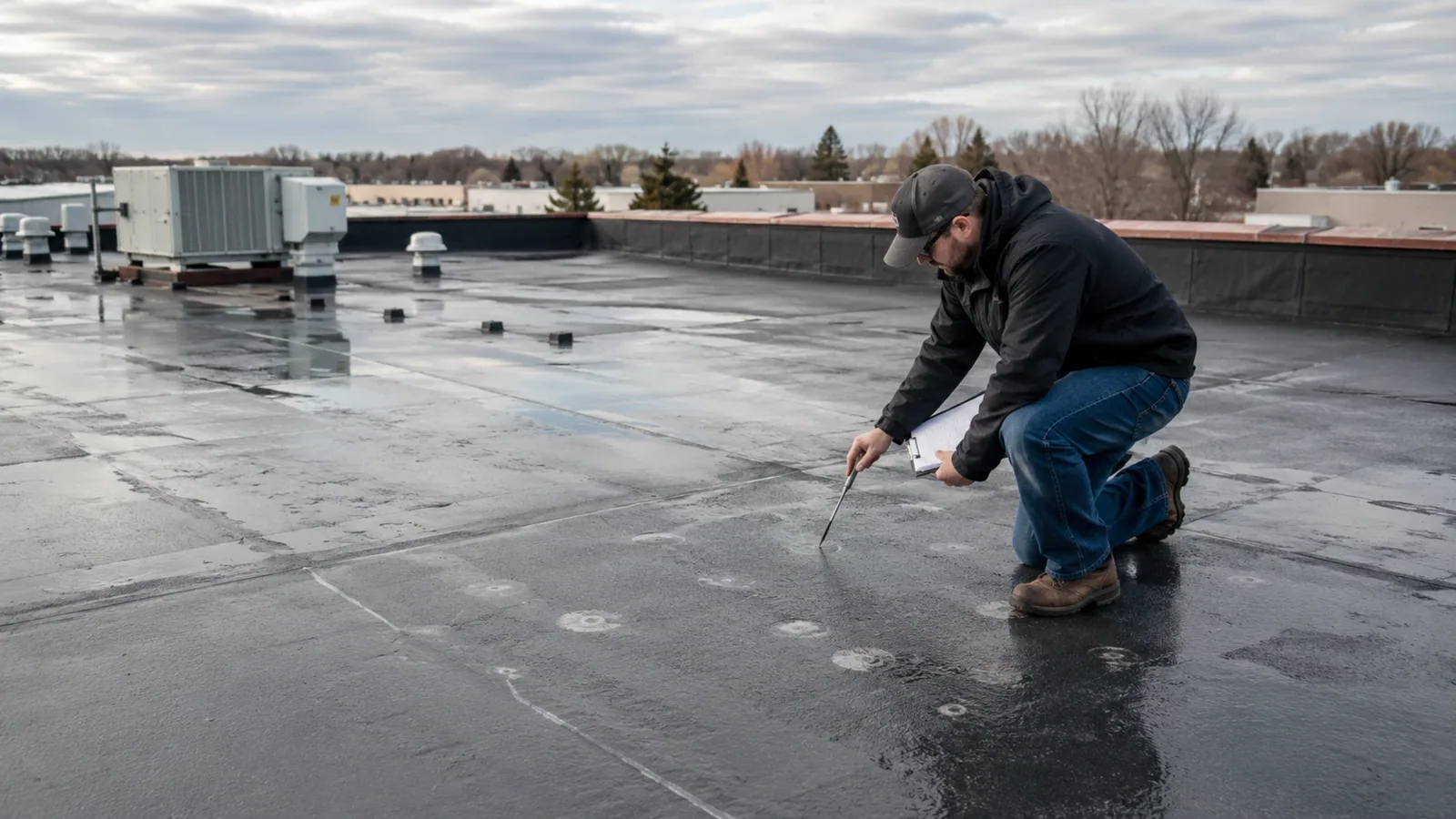
Wet insulation is the deciding item. Once water has soaked the board stock, it holds heat, loses R-value and keeps feeding moisture back up toward the membrane. A moisture survey maps that wet area so the decision rests on a drawing instead of a hunch. If the wet area covers a small corner, we cut it out and keep the rest. If it runs across most of the field, the budget conversation changes, and spending on patches only delays the same bill.
Weather: what a Northwest Arkansas roof absorbs
Fayetteville's Drake Field averages about 47 inches of precipitation a year, with May the wettest month. Add roughly 6.5 inches of snow a year and about ten days a year when the high never climbs above freezing, and the membrane goes through freeze-and-thaw cycling that works on laps, fasteners and edge metal.
Hail is the stress that most often forces the replacement question here. NWS storm data for May 2020 lists hail up to 3.00 inches about a mile east-northeast of Fayetteville, with smaller stones in the same area. A membrane that took stones that size can bruise or fracture without showing it from the parking lot. Inspection after a storm like that often finds that a roof thought to have years left has hidden damage that would shorten them. Wind is the other spring stress: the March 2022 EF3 tornado in Springdale destroyed a large metal building near Highway 412 and tore part of the roof off a city shop at the Springdale airport, a reminder that edge securement belongs in every replacement scope.
Scope: what a tear-off actually removes
A full replacement strips the existing membrane and the insulation down to the deck. Then the deck gets inspected. Rusted or wet steel deck sections are replaced, and wood or concrete decks are checked for rot, cracks and loose fastening. This is where unknowns turn into line items, so the quote should carry a unit price for deck repair instead of a vague allowance.
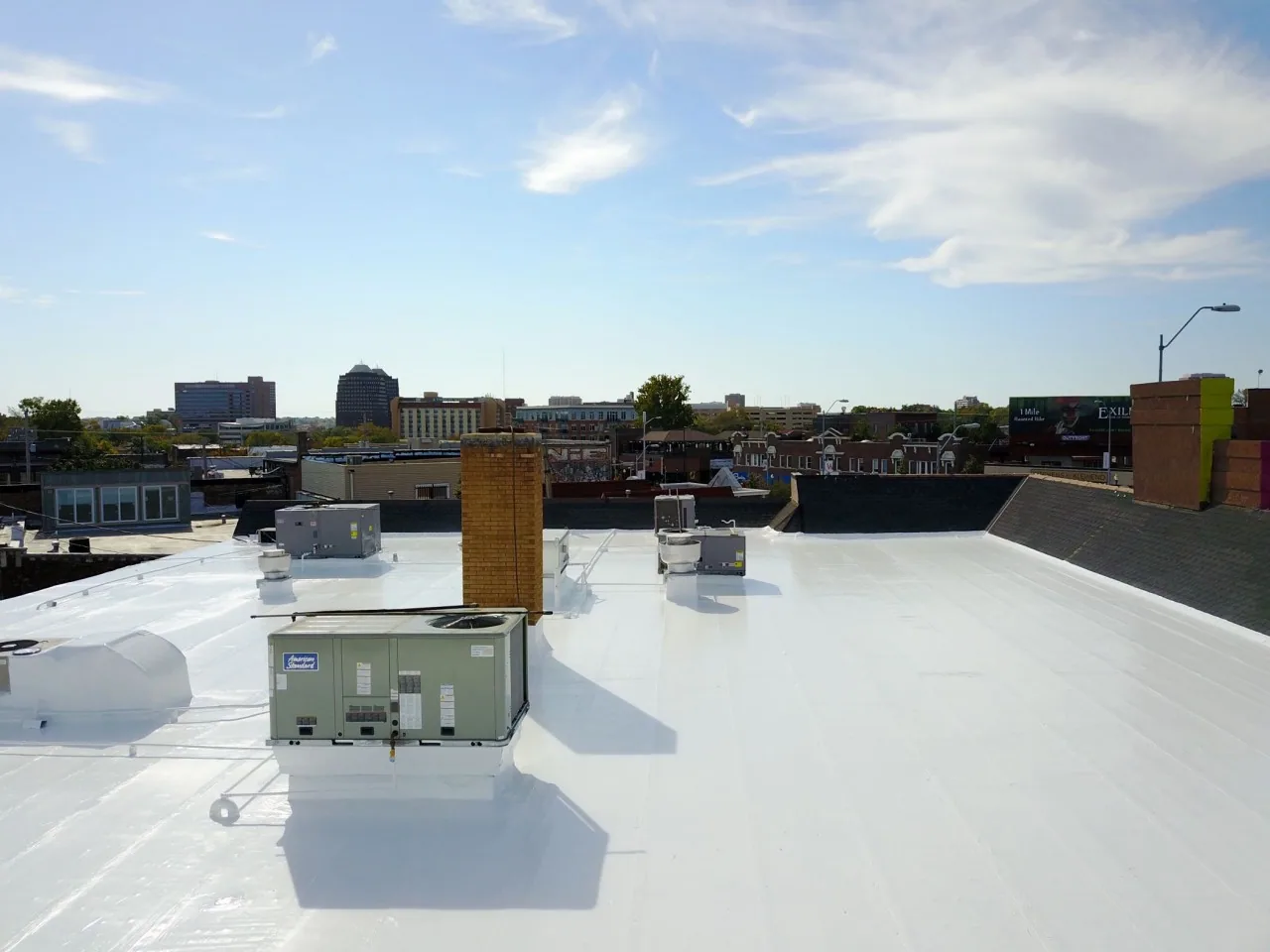
New insulation goes in to meet the energy requirement, a cover board goes over it where the system calls for one, and the new membrane follows. The details take the most care: parapet flashing, curbs, drains, scuppers and edge metal. We rebuild those at the same time because new field membrane tied into old flashing is the weakest joint on a finished roof. Your choice of system matters too. TPO is common on warehouse and retail roofs, while standing seam metal suits buildings where a long service life matters more than the first cost.
Code: what the state requires
Arkansas enforces the 2021 International Building Code through the Arkansas Fire Prevention Code, effective January 1, 2023, with State Fire Marshal amendments. A replacement permit review looks at wind uplift on the roof edges and corners, fire classification of the assembly, and drainage. The state's commercial energy code is the older ASHRAE 90.1-2007 level, which sets the baseline for insulation thickness, and owners can exceed it when a lower operating cost is worth thicker board.
Schedule: picking the season and working around tenants
The best window for a tear-off in this part of Arkansas is late summer through fall, and again in the late-winter gaps between storm lines. Spring is the hardest time to hold a schedule because storm lines come through from March into early June, and an open roof in front of one of them is a risk nobody wants to carry. We tarp and dry-in the same day we strip, so the building is covered whatever the forecast does overnight.
Occupied buildings add another layer. A retail center on the Fayetteville north side has customers using the entrances all day. A manufacturer in the Fayetteville Industrial Park may run shifts around the clock. We sequence the work in sections, plan crane picks and material staging away from loading docks, and coordinate noisy tear-off with the hours the tenants can tolerate. The occupied-building process is built for exactly that kind of constraint.
Questions About Commercial Roof Replacement
Budget: planning the capital line before the leak
Cost drivers are easy to name even when the final number depends on the roof. Roof size, the amount of wet insulation, the condition of the deck, the number of penetrations, the height of the parapets, access for cranes and the system chosen all move the price. We write the quote so each of those shows as its own line, and you can see where the money goes. For owners with many buildings, a capital plan spreads replacements across several years so no single year carries all the cost.
Commercial Roofing Questions
How do I know a Fayetteville roof needs replacement and not a bigger patch?
Start with the moisture map. If wet insulation covers a small portion of the field and the membrane is otherwise sound, a section repair is the cheaper road, and we will say so. If the wet area is spread across the roof, the membrane is brittle, or the same seams keep reopening after patching, then each repair is buying very little time. We recommend replacement when repair spending on one roof begins to approach a meaningful share of what a new roof would cost, and we put both numbers side by side so the choice is yours.
Can a new roof go over the old one to save money?
Sometimes, and the answer comes from the roof, not the budget. A recover over a dry, sound roof can save the tear-off cost, and it is worth pricing against a full replacement. It is the wrong choice when the insulation is wet, the deck is damaged or the existing layers are already heavy. Layers add dead load, and the building code limits how many a roof may carry.
What happens if hail hits partway through the project?
The open area is the only part exposed, and we keep it small on purpose. Each day we strip only as much roof as we can dry in by evening, and tarps and temporary tie-ins are staged before the forecast turns. If a storm does come through, we inspect the finished sections and document them with photographs. Those records help if an insurance question comes up later, and they let you see the completed work as it stood after the weather passed.
Should we replace in spring or wait until fall?
If the roof is leaking into an occupied space, do not wait for a better season; stop the water first with a repair and book the replacement as soon as a crew can start. If the roof is holding, fall is the calmer window because storm lines have passed and the days are long enough to finish sections. Spring work is possible but carries more weather delays, so we build extra days into that schedule.
Related Commercial Roofing Pages
Read how we handle this work in Fayetteville, AR
Read how we handle this work in Fayetteville, AR
Read how we handle this work in Fayetteville, AR
Read how we handle this work in Fayetteville, AR
Read how we handle this work in Fayetteville, AR
Read how we handle this work in Fayetteville, AR
Read how we handle this work in Fayetteville, AR