
Commercial Roof Repair in Fayetteville, AR
Planned commercial roof repair in Fayetteville, AR: membrane, flashing, seams and details fixed on a written scope with cost and timing spelled out.
A repair is cheap only if it is the right repair. The tenant call comes in on a Tuesday, someone drops a bucket under the leak, and a patch goes on by Friday. Two months later the same spot is stained again, because the patch covered the symptom and left the real path open. Planned repair works the other way around. We find where the water enters, fix that point and the weak details around it, and put the work on a written scope so the property manager knows what was done and what comes next.
We repair membrane, flashing, seams, penetrations and edge metal on low-slope and metal roofs across Fayetteville, AR and the surrounding Northwest Arkansas cities. The goal is a roof that stays dry through the next storm line, and a repair bill that makes sense next to the cost of a new roof.
Scope: what a planned repair includes
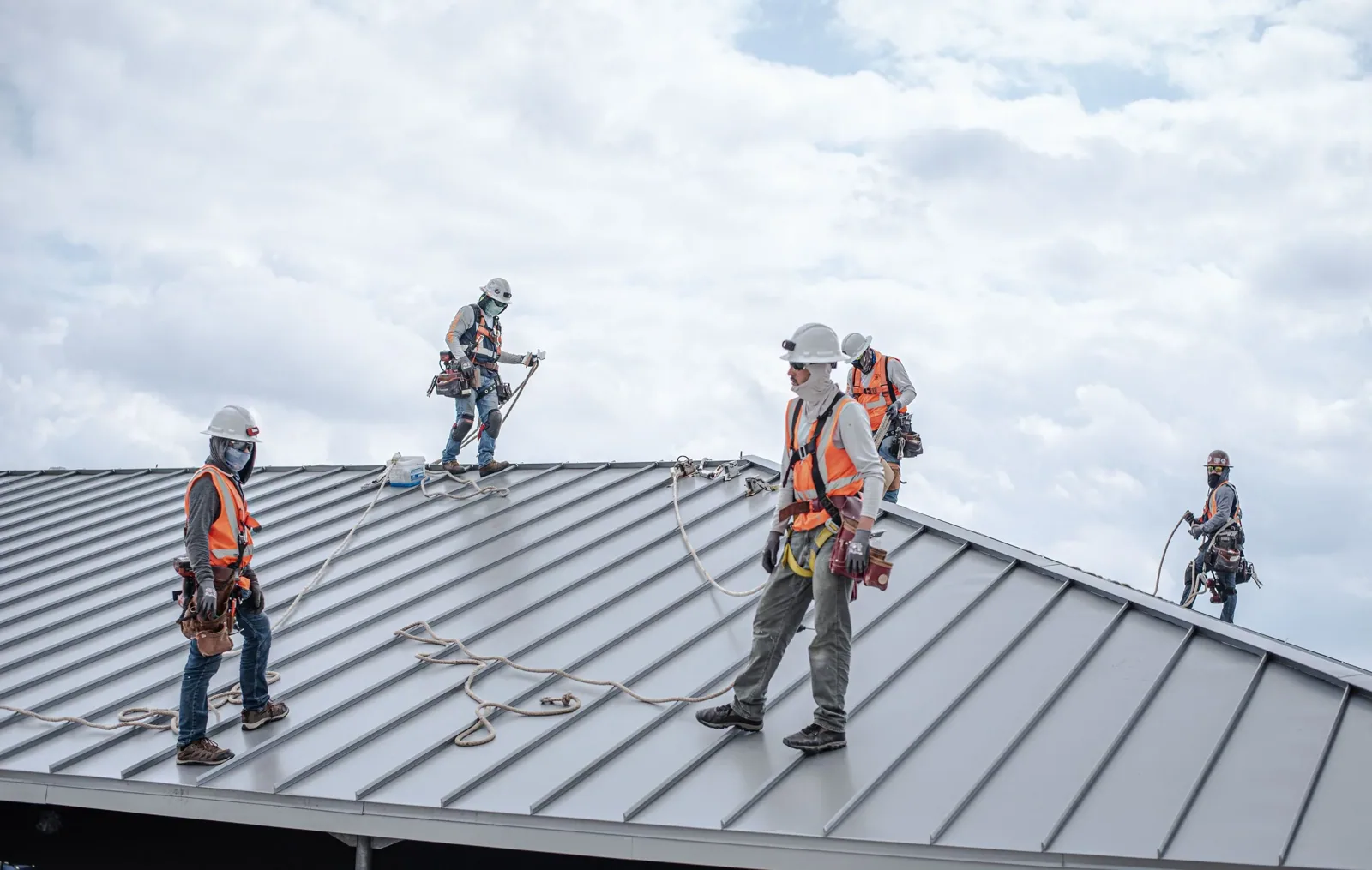
A planned repair starts with a walk of the whole roof, not just the damaged corner. We check drains, laps, base flashing, pitch pockets, curbs and the metal around the edge, then mark every defect on a roof plan with photographs. Some items are fixed on the same visit. Others go on a list with a priority and a price, so the manager can spread the work across budget cycles.
The repair itself is matched to the membrane. A TPO or PVC seam is cleaned and hot-air welded. An EPDM tear gets a patch bonded with the right primer and adhesive. Modified bitumen and built-up roofs get new plies or flashing set in compatible asphalt or cold-applied adhesive. We do not use one tube of mastic for everything, because mastic over a moving seam cracks within a season.
Timing: why spring and fall repairs cost less than storm-week repairs
May is the wettest month at Fayetteville's Drake Field, at 5.89 inches on average, and the stretch from March into May brings the storm lines. A roof that is repaired in February or October is repaired at a calm pace, with dry surfaces, available materials and room on the crew calendar. A roof that is repaired the day after a hail event is competing with every other building in town for the same crews.
Temperature matters too. Adhesives and sealants have working ranges, and a cold January morning can keep a patch from curing right. Fayetteville sees about ten days a year when the high stays below freezing, and those are the days we hold off on adhesive work. We plan the harder jobs for weather windows and use temporary dry-in only where it is truly needed.
Details: where most repairs actually start
The field of a roof is rarely the first thing to fail. Flashing at walls and curbs, drain sumps, pipe boots and seams at changes in direction take most of the movement, and they open first. When a roof expands in a July afternoon and contracts overnight, the details carry the strain. Repeating that cycle for years shows up as cracked sealant, lifted laps and pulled-away edge metal.
That is why a repair scope looks hard at penetration and skylight flashing and at drains and scuppers before it spends money on the open membrane. A cleared drain and a reset scupper often cost far less than the damage a backed-up roof can cause. On a large retail or processing building, such as the ones around Pinnacle Hills in Rogers or the industrial side of Springdale, we count penetrations first because each one is a place water can enter.
Decision: when repair is the wrong answer
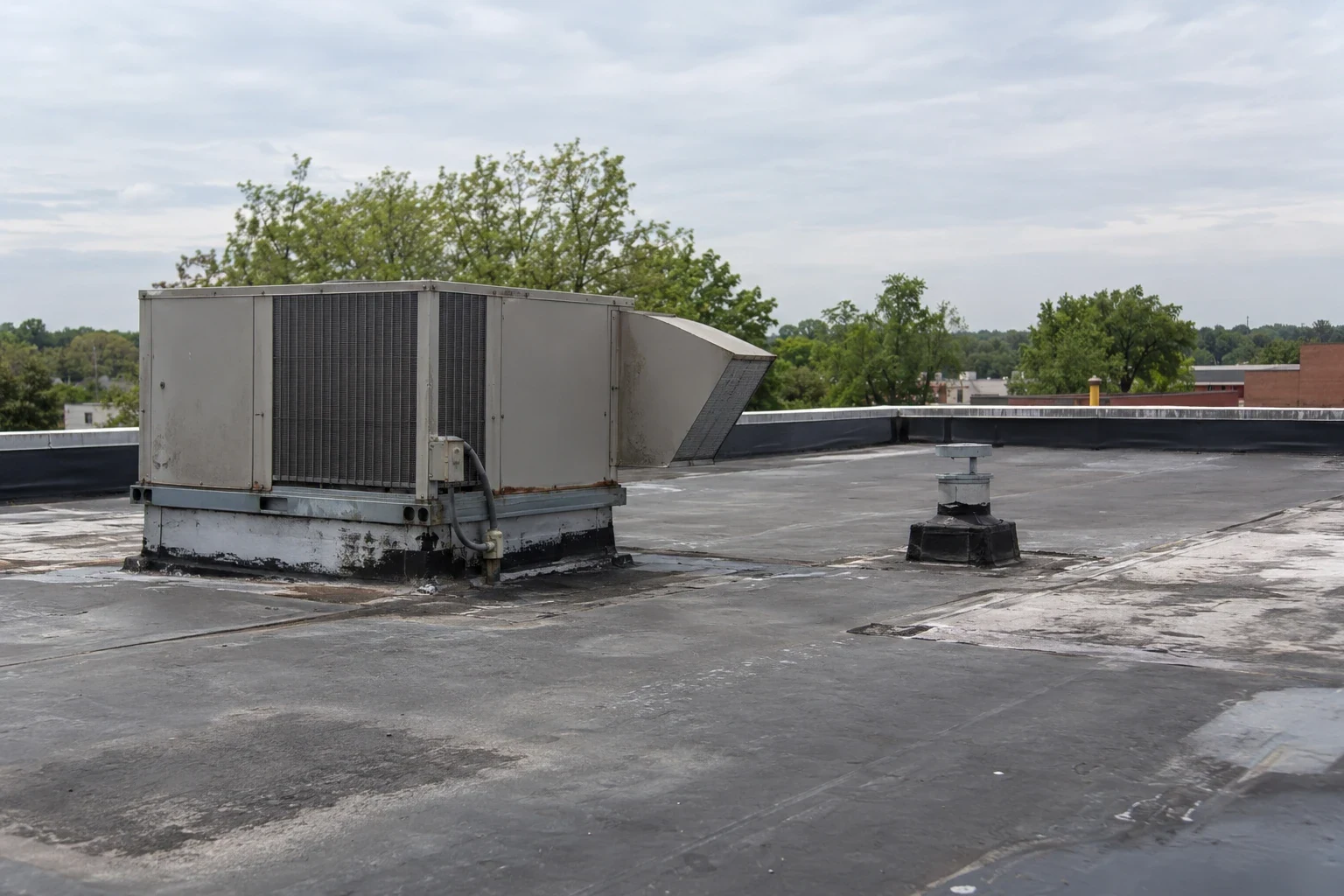
There is a point where repair money works against the owner. If the insulation is wet across a large area, if the membrane has turned brittle, or if patches already outnumber the original seams, then every dollar spent is buying a little time. We run a moisture survey when we suspect that, and we put the numbers beside the cost of a replacement.
Hail changes the picture. The May 2020 storm east of Fayetteville produced stones up to 3.00 inches, and impact damage often shows up months afterward as leaks at fractures nobody saw. When a roof has been hit, the repair fixes the visible damage, and the claim record and a condition report protect you on damage that has not leaked yet.
Records: what you get after the repair
Each repair visit ends with photographs, a marked roof plan and a plain description of what was fixed and what was left. That record is more than a courtesy. Insurers, lenders and future buyers all ask for it, and a property manager changing jobs can hand the next person a clean file. We tie the record to a preventive maintenance routine when the building warrants one, so the same roof is checked twice a year and the small problems do not turn into capital requests.
The same file helps when a repair turns into a bigger decision. If the next visit finds a pattern, the photographs from earlier visits show whether a problem is spreading, staying put or coming from a new place. A manager can take that history to an owner or lender and ask for budget with evidence in hand, which is a much easier conversation than asking for money after a ceiling comes down.
Questions About Commercial Roof Repair
Commercial Roofing Questions
How long should a commercial roof repair last?
A repair at a well-prepared detail should last as long as the surrounding material has life left, which is why we start by judging the age and condition of the roof. A weld on a sound TPO seam can outlast many winters. A patch on a membrane that is already brittle may fail beside the patch within a season. We tell you which situation you have, and we write the expected life of the repair against the roof, not against a hopeful guess.
Can you repair while tenants are inside?
Almost always. Most repairs happen on the roof surface and need nothing inside the space, so tenants keep working. If a leak is wetting ceiling tile or equipment, we coordinate with the manager for access to the area below. Roof access is by ladder or roof hatch, away from customer entrances, and we flag it when loud work or fumes might reach the occupants.
What should I do about a leak that only appears in heavy rain?
Photograph the stain, note the date and rainfall, and call us before the next big rain if you can. Leaks that show only in heavy weather often come from flashing or a clogged drain, and they are easier to find when the history is fresh. We trace the path on the roof, test the suspect details, and repair the entry point instead of the stain.
Is it better to repair every year or wait for a big failure?
Small yearly repairs almost always cost less than a major failure. Sealant and flashing problems stay inexpensive when they are caught early, while water that is left alone saturates insulation and damages the deck. Put a modest repair line in the annual budget and schedule an inspection each spring and fall, and the building will rarely face an emergency.
Will the repaired area match the rest of the roof?
Function matters more than looks, and we choose repair materials that bond to the existing membrane and handle the same movement. On a white TPO roof, the patch is white TPO. On other systems, we match the compatible material and note any color difference in the record so nobody is surprised.
Related Commercial Roofing Pages
Read how we handle this work in Fayetteville, AR
Read how we handle this work in Fayetteville, AR
Read how we handle this work in Fayetteville, AR
Read how we handle this work in Fayetteville, AR
Read how we handle this work in Fayetteville, AR
Read how we handle this work in Fayetteville, AR
Read how we handle this work in Fayetteville, AR
