
Commercial Roof Inspection in Fayetteville, AR
Hands-on commercial roof inspections in Fayetteville, AR, with photographed findings, a priced repair list and a plain read on how many years the roof has left.
Budget season is when most inspection calls begin. A property manager has a roof on next year's capital list, the owner wants a number, and nobody on the team can say whether the roof has two years left or ten. An inspection answers that question with evidence. We walk the roof, photograph what we find, probe the suspect areas and hand back a written report that sorts the building's problems into fix now, fix soon and watch.
For a building in Fayetteville, AR, that report has to account for hail, spring storm lines, summer heat and winter freezes, since all four leave marks on a membrane. The inspection is the cheapest roof expense on the books, and it is the one that makes every later dollar easier to spend.
The walk: what we check on the roof
We start with the perimeter and work in, looking at edge metal, coping, parapet flashing and the way the membrane terminates at walls. Then the field: seams, laps, fasteners, blisters, splits, punctures and the sheen of the surface. Drains and scuppers get a close look, since a partly clogged drain explains most ponding. Penetrations and curbs follow, because every pipe, vent and rooftop unit is a place water can enter.
We probe soft spots, check slope with a level, and note where water stood after the last rain. Where it is warranted, we add infrared scanning or a drone flight to cover large roofs and to reach areas that are unsafe to walk. The goal is to leave nothing on the roof that the report does not mention.
Weather: what to look for in this climate
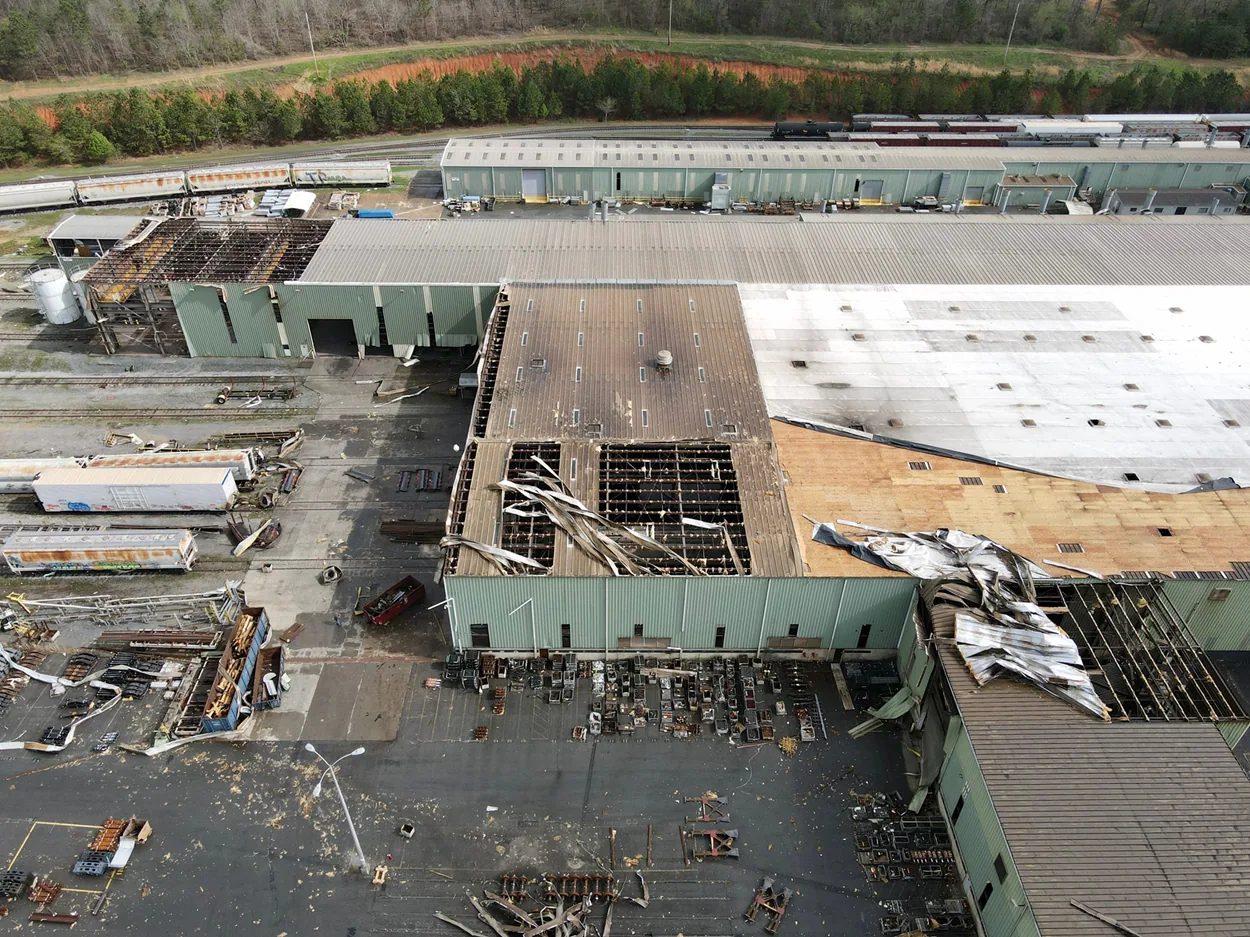
The May 2020 hailstorm east of Fayetteville reported stones up to 3.00 inches, and that scale of hail is the first thing we look for on any roof that was in the area. Impact marks show as round bruises in single-ply membranes, granule loss on modified bitumen and dents in metal panels. Some bruises leak right away, and others leak only after a winter of freeze and thaw works them open. A roof that took that hit may need documentation even if the ceiling is dry.
Freeze cycling is the quieter issue. With about 6.5 inches of snow in an average year, and roughly ten days when highs never clear freezing, water in small cracks expands and widens them. We check laps, flashing terminations and sealant joints for the telltale cracks, and we look for ice damage at drains and gutters.
The report: what you receive and how to use it
The deliverable is a written roof condition report with photographs, a marked roof plan and findings listed by priority. Each item carries a recommended action and a rough cost range, so the manager can budget the repairs and see which ones belong to this year. The report also gives an estimated remaining service life, with the evidence behind it: the age, the system, the condition of the field and the history of repairs.
That document does several jobs. It supports a capital request, gives lenders and buyers a basis for due diligence, and records the roof's condition before a storm so a claim has a baseline to compare against. For owners with several buildings, the same format stacks into a portfolio view, which is the starting point for capital planning across properties.
Buildings: how the inspection changes with the roof
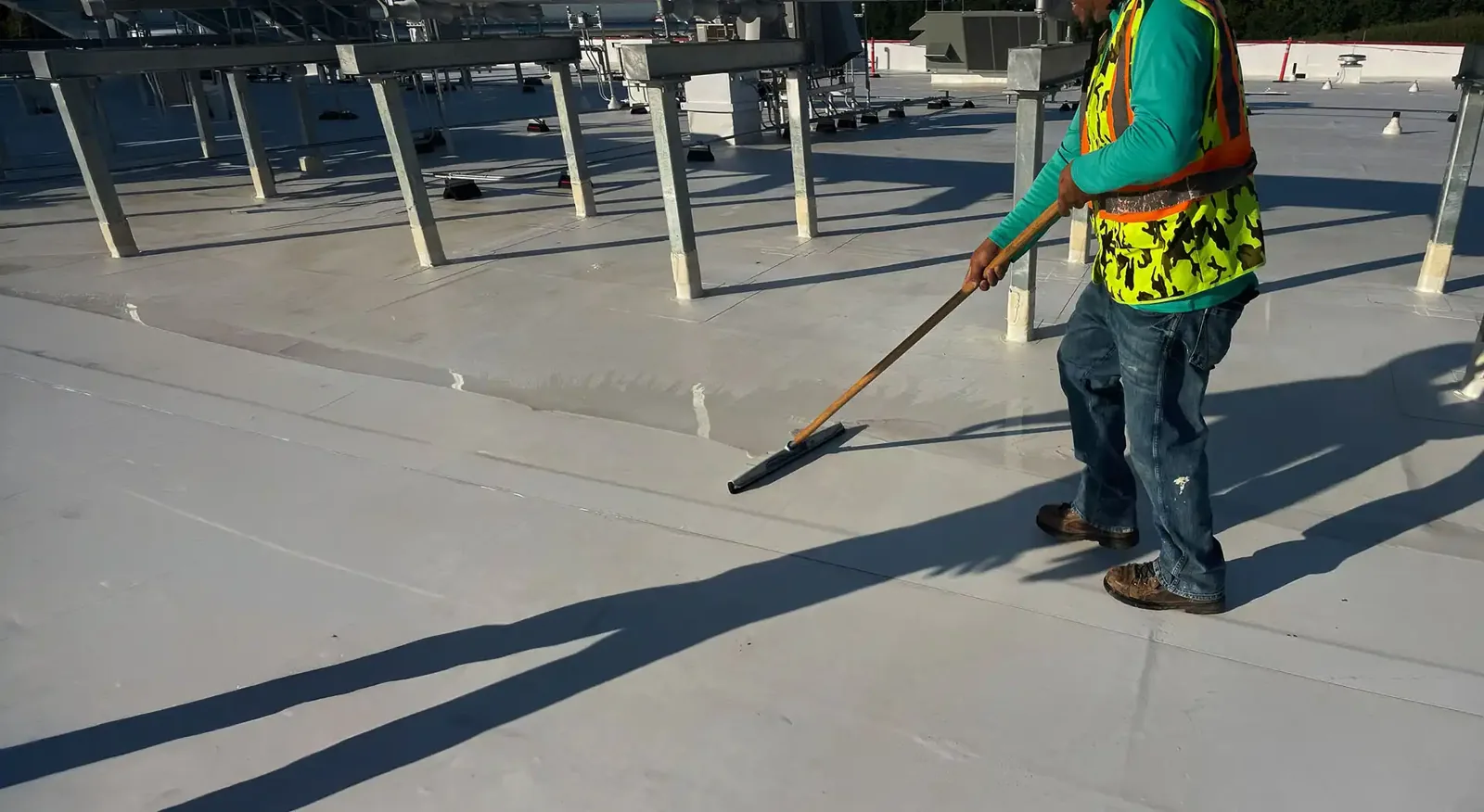
A retail center like Pinnacle Hills in Rogers, a school, a medical office and an industrial plant do not share a roof. Single-ply roofs get seam and flashing probes. Built-up and modified bitumen roofs get checks for alligatoring, blisters and ply separation. Metal roofs get fastener, panel seam and sealant review. Spray foam and coated roofs get checked for coating wear and thickness.
Occupancy changes the plan too. A hospital roof is inspected around air intakes and infection-control rules, and a school roof gets walked when students are out. On older buildings, such as those around Fayetteville's historic Square, we pay extra attention to tie-ins where additions and repairs meet. Each building gets a plan that fits how it is used.
Cadence: how often and when
Most commercial roofs benefit from a look twice a year, in spring after the winter freeze and in fall before the cold, plus after any significant hail or wind event. For a building under warranty, the manufacturer may require periodic inspections, and missing them can weaken coverage. For roofs approaching the end of their expected life, inspection every year helps the owner plan a replacement before the roof forces the issue.
The timing also matters for cost. An inspection ahead of budget season gives the owner numbers while there is still room to plan. An inspection after a storm gives a baseline for claims. Either way, the report feeds a preventive maintenance program if the owner wants one, with small tasks done on a schedule instead of waiting for the next work order.
For multi-building owners, we can stagger inspections across the portfolio so the oldest or most exposed roofs get seen first and the findings roll into one budget. The sequence matters less than the habit: a roof that gets looked at on a schedule rarely surprises anyone.
Questions About Commercial Roof Inspection
Commercial Roofing Questions
How long does an inspection take and does it disturb tenants?
A typical commercial roof takes a few hours to a day, depending on size and complexity, and most of the work happens outdoors on the roof. Tenants rarely notice. If we need to look at ceilings, mechanical rooms or roof access points inside, we coordinate with the manager in advance. Drone or infrared work can shorten the time on large roofs and keep people off areas that are hard to reach.
What does an inspection cost compared with the problems it finds?
Inspection cost depends on the roof size, access and the extra tools needed, such as infrared scanning. It is a small amount next to the cost of a failed roof, and the report often saves money by separating the repairs that matter from the ones that do not. Send us the address and roof size and we will put the scope and price in writing.
Can the inspection tell me how many years the roof has left?
It gives an informed estimate based on age, material, condition and repair history, and we state the reasoning behind it. A hailstorm can change the picture overnight, so treat the number as a planning range. With it you can set a replacement year and revisit it at the next inspection.
Should we inspect after every storm?
After hail of any size, high wind or a tornado warning in the area, yes. Damage can sit hidden under a membrane for months before it leaks. A post-storm look records the condition and catches problems while they are covered by the event. The March 2022 EF3 tornado that crossed Springdale is a reminder that edge metal and flashing can be disturbed well away from the visible destruction.
Will you tell us if the roof is fine?
Yes. If the roof is sound, the report says so and lists only the routine maintenance items. A clean report is useful too, since it documents a good baseline and lets you push a replacement budget back with evidence.
What do you need from us before the inspection?
Roof access is the main item: the location of the hatch or ladder, any key or badge needed, and a contact on site. If you have past reports, warranty papers, repair invoices or as-built drawings, send them, since the history explains a lot of what we see on the roof. Tell us about any leak locations and dates as well. That list lets us spend the roof time on the problem areas and check the rest of the field quickly.
Related Commercial Roofing Pages
Read how we handle this work in Fayetteville, AR
Read how we handle this work in Fayetteville, AR
Read how we handle this work in Fayetteville, AR
Read how we handle this work in Fayetteville, AR
Read how we handle this work in Fayetteville, AR
Read how we handle this work in Fayetteville, AR
