Preventive Roof Maintenance in Fayetteville, AR
Scheduled commercial roof maintenance in Fayetteville, AR, timed around hail season, freeze-thaw weeks and the reserve budget, with a photo record each visit.
Three tenant calls in one week usually mean a roof that was last looked at before the previous owner sold the building, and the work order that follows is rarely cheap. A maintenance program turns that pattern around. Two scheduled visits a year, one before the spring storm line and one after leaf fall, cost a fraction of a single emergency week, and they give the property manager something a reserve budget can plan around.
In Fayetteville, AR the schedule is set by the weather. A visit in early March finds the damage that winter left, and a visit in October clears the roof before freeze-and-thaw weeks begin. Everything in between is storm response, which costs more.
Visits: what happens on each walk
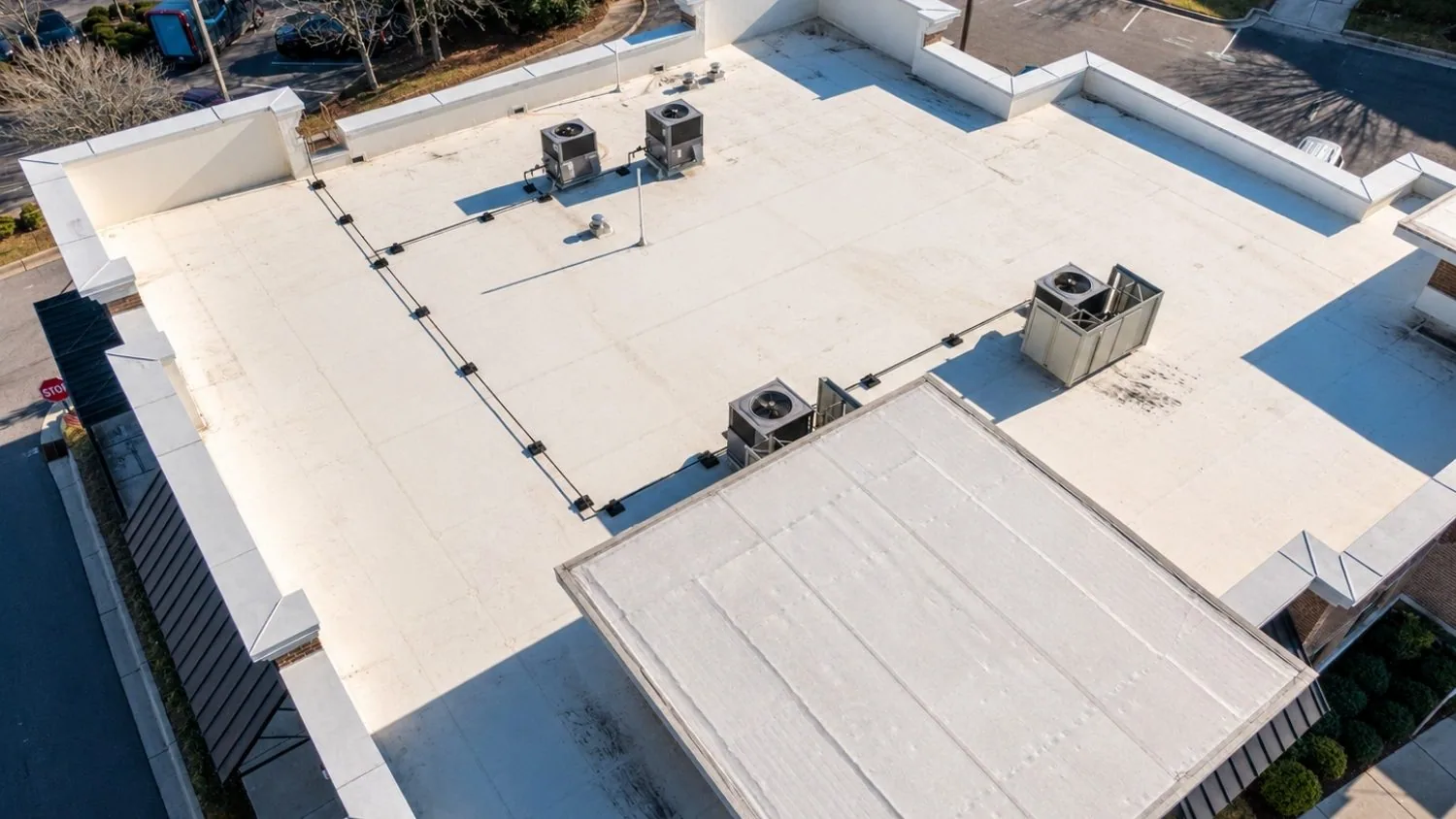
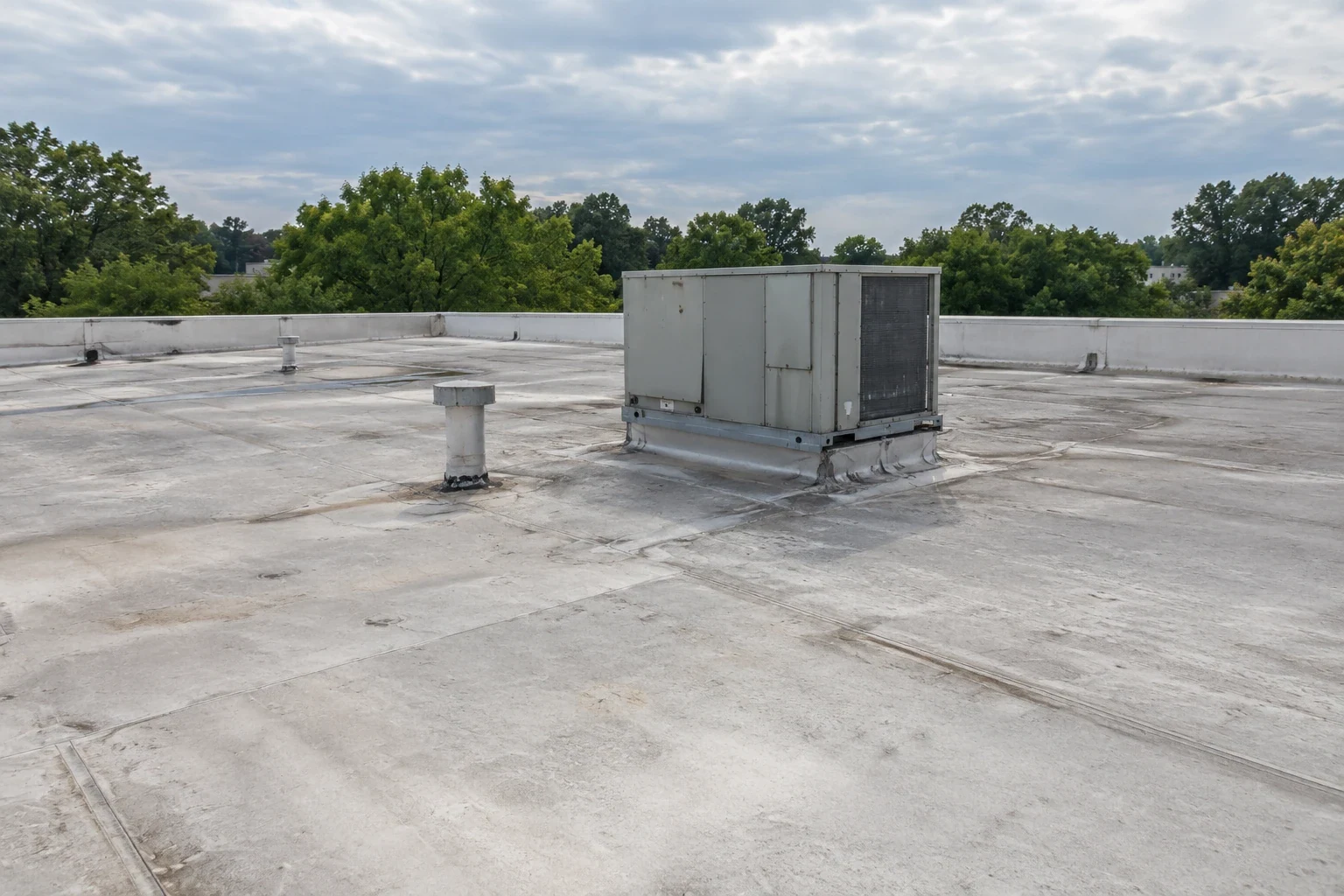
Each visit starts with a drain check, because a blocked outlet explains more roof damage than any other single cause. We clear debris, flush the line where we can reach it, and note any bowl that holds water more than a day after rain. Then we walk the field, press on seams and laps, look at base flashings and the metal around the edge, and photograph every curb, vent and skylight.
Small repairs are made on the spot, and a larger one can be scheduled as a planned commercial roof repair with its own quote window: a lifted lap resealed, a cracked boot replaced, a loose coping joint fastened. Anything larger goes on a written list with a priority and a price, so the manager can approve it now or carry it to the next budget cycle. Nothing is left as a vague worry. Every line on the list says what it is, where it is and what it costs to wait, and the lines are numbered to match the photographs so a tenant call can be matched to a known item in minutes.
Hail season: why March matters
In May 2020 the National Weather Service logged hail up to 3.00 inches just east-northeast of Fayetteville, with 2.50-inch and 1.75-inch reports in the same area. A stone that size can bruise a membrane without opening it, and the bruise may not show as a leak until the next hard rain. That is why the spring visit looks at the field for impact marks as well as for drain debris.
We mark bruised areas on the roof plan and photograph them, so that if a storm does cause a leak later, the record shows what the roof looked like before and after. A hail damage repair done on a bruised spot in April costs far less than the same spot after wet insulation has spread under it. Keeping that record also helps in any later conversation with an adjuster.
Freeze-and-thaw: what the cold weeks do to seams
Winter brings about 6.5 inches of snow in an average year, roughly 10 days of highs below freezing and, on February 16, 2021, a record low of minus 20 F that showed how hard cold can arrive. Water that sits in a seam, a low spot or a cracked sealant joint freezes, expands and widens the opening by a hair. Over a few cycles, a hairline becomes a path.
The fall visit is aimed at that. We dry out what can be dried, reseal the laps that show movement and check the edge metal and gutters so melt has somewhere to go. Snow itself is a smaller concern than the repeated thaw it leaves behind. A snow and ice damage call in January usually traces to something a fall visit would have caught.
Cost: what a program replaces
A program replaces three expensive habits. The first is waiting for a tenant call, which always arrives during the worst week of the year. The second is paying storm-week rates for repairs that could have been done in October. The third is replacing a roof early because small problems were allowed to soak the insulation. None of these shows up as a line item until it happens.
We price a program as a flat annual visit schedule plus a separate list for repairs found, so the manager sees the fixed cost and the variable cost apart. A roof near the end of its life gets a straight capital plan and a priced replacement option instead of a string of patches, and a healthy roof gets a program that keeps it healthy. The reserve line then follows the roof's actual condition, which is the number a budget committee can defend.
Records: the file that stays with the building
Every visit adds to a file of dated photographs, drain notes, repair descriptions and roof plan markups. After a few visits, the file shows how the roof is aging and which details keep needing attention. That file is useful for a buyer's due diligence, for a lender, for a warranty claim and for an insurer. A manager who changes jobs hands the next one a roof history instead of a guess.
The same record supports warranty management, since many manufacturer warranties expect documented upkeep and a missing record can cost a claim. We keep the file in a format that can be shared with the owner, the lender or the adjuster without anyone needing to visit the roof.
Questions About Preventive Roof Maintenance
Local: older roofs and newer parks
Fayetteville's largest employers include the University of Arkansas, Washington Regional Medical Center, Walmart, the Fayetteville School District, the VA Medical Center and the City of Fayetteville, so the mix of buildings that need upkeep spans education, health care, retail and government. The Fayetteville Industrial Park east of Fifteenth Street adds industrial buildings to that list, and the historic Square holds buildings from 1886 to 1911 whose roofs are a separate matter from their walls.
For owners in Fayetteville, downtown Fayetteville or the industrial park, we set the visit schedule by the building's use and the roof's age, and we adjust it after the first year when the record shows where the trouble clusters. Owners with holdings in Springdale or Rogers can run the same schedule across towns, so one dated record covers the whole portfolio and the reserve discussion happens once.
Commercial Roofing Questions
How often should a program visit a commercial roof?
Twice a year suits most roofs here: early spring ahead of the storm line and mid-fall before the cold weeks. Older roofs, roofs with heavy equipment and roofs under trees may need a third visit after leaf drop.
What does a maintenance visit cost compared with a repair call?
A visit is priced as a flat fee that includes small repairs on the spot. A repair call during a storm week adds emergency scheduling and often wet insulation, so the same defect costs noticeably more.
Will a program change my warranty?
It usually helps. Many warranties expect documented upkeep, and a dated record is the kind of paper a claims reviewer is likely to ask for. Check the warranty terms for who may do the work.
Can we start a program on a roof we just bought?
Yes, and it is the best time. A first visit works as a baseline walk, records every defect found and gives the new owner a repair list priced before the first tenant call.
What if the roof is too far gone for upkeep?
Then we say so and put the replacement on the capital line. Spending program money on a roof past saving only delays the bill, so the first report states whether upkeep or replacement is the better use of the budget.
Related Commercial Roofing Pages
Read how we handle this work in Fayetteville, AR
Read how we handle this work in Fayetteville, AR
Read how we handle this work in Fayetteville, AR
Read how we handle this work in Fayetteville, AR
Read how we handle this work in Fayetteville, AR
Read how we handle this work in Fayetteville, AR
Read how we handle this work in Fayetteville, AR
Read how we handle this work in Fayetteville, AR