Built-Up Roofing in Fayetteville, AR
Built-up roofing in Fayetteville, AR: multi-ply BUR repair, gravel-surface leaks and replacement planning, with plain numbers on weight, hail and tear-off cost.
Gravel on a roof tells a property manager two things at once: the building is probably older, and finding a leak is going to take patience. Built-up roofing has protected flat commercial buildings for generations, and some Northwest Arkansas owners still have a gravel-surfaced tar roof over their tenants. In Fayetteville, AR the system is judged by how it handles 47 inches of rain a year, a spring line of hail and a lot of freeze-and-thaw weeks.
We repair, recover and replace built-up roofs. Our job is to tell the manager how much life is left and what the next dollar should buy.
Owners along the I-49 corridor from Fayetteville to Bentonville share the same questions about older flat roofs: what is under the gravel, how many plies there are and whether the insulation is dry. The answers set the budget, and a half-day on the roof usually produces them.
What it is: layers of felt and asphalt
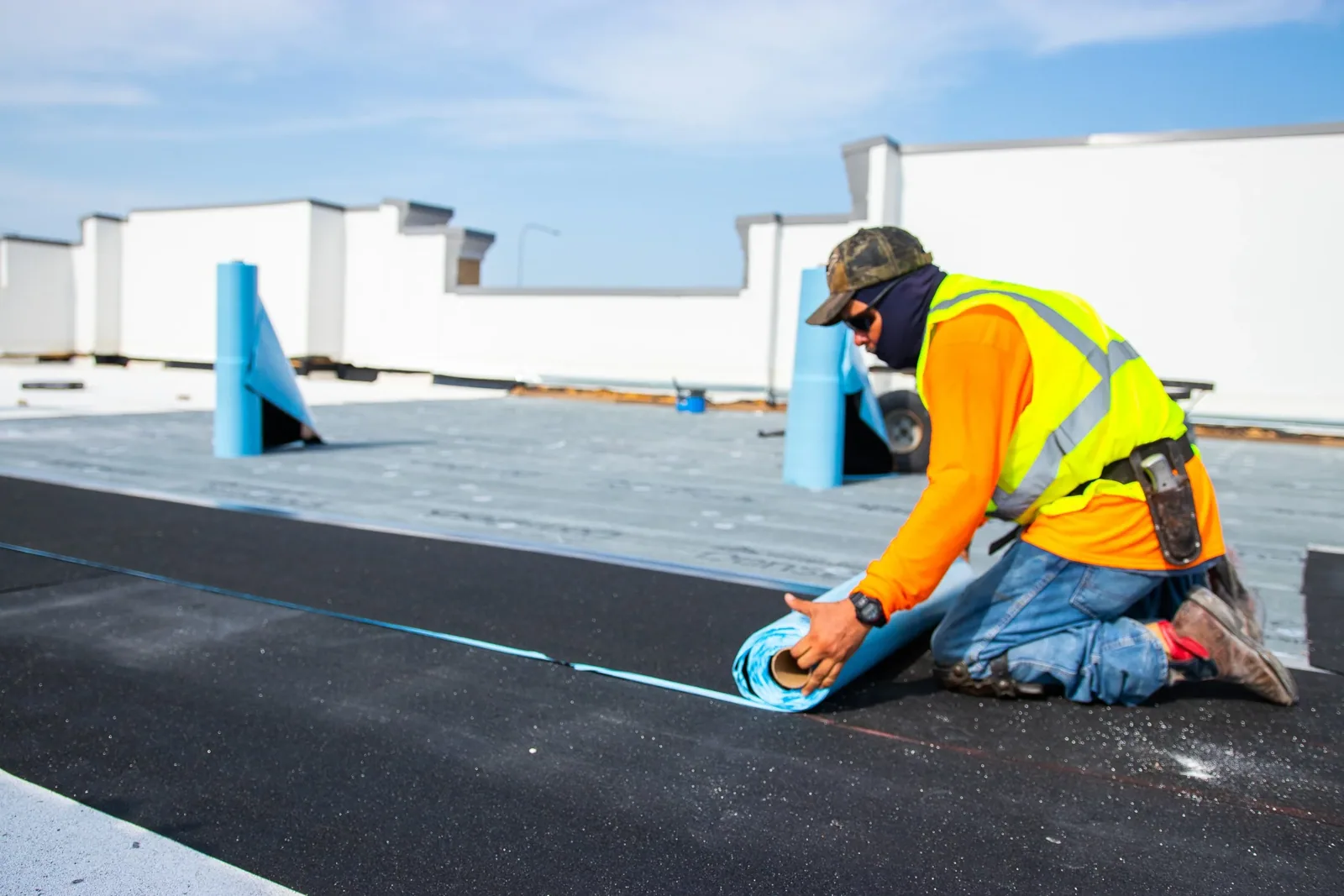
A built-up roof, called BUR for short, is a stack of reinforcing plies, traditionally felt, set in hot or cold-applied asphalt. Most carry a top surface of gravel, a mineral-surfaced cap sheet or a reflective coating. Three or four plies of asphalt-and-felt make a thick, redundant waterproofing layer, so a small flaw in one ply is covered by the next.
That redundancy is the system's strength. Its weaknesses are weight, installation heat and the fact that leaks can travel a long way between plies before they show up inside. A stain in a ceiling may sit thirty feet from the actual opening, and we trace it with moisture readings and a methodical sweep of the roof.
Flashing on a BUR is built the same way, in plies, and it turns up the wall and under a counterflashing or a cap. When the counterflashing fails, water runs behind the plies and into the wall. We check each termination by hand, since a cracked mastic bead can look sound from a ladder.
Fit: where built-up roofing still makes sense
BUR works well on roofs with many penetrations, heavy foot traffic and complicated shapes, because plies can be layered around anything. Older buildings with parapets and chimneys, such as those around the Square, are the typical case. It also suits roofs that must carry equipment, since the gravel or cap sheet resists wear.
It is a heavier system than a single ply, and the structure has to carry it. On a wide, simple retail roof, such as one in Uptown Fayetteville, a lighter TPO sheet may be easier to install. A modified bitumen system gives similar layered protection with a lighter touch.
Weather: rain, ice and the gravel
Rain adds up to 46.96 inches a year at Drake Field, on about 113 days, and May is the wettest at 5.89 inches. Gravel keeps the asphalt out of the sun and holds water back on the surface, but it also hides the roof. Pockets of standing water, bare spots and blisters are all easier to see on a bare surface, and harder under stone.
Ice is its own problem. Fayetteville has roughly 10 days a year with highs below freezing and about 6.5 inches of snow, and frozen water in a split ply expands and widens the split. Gravel can slide into drains during storms, clogging them just before the next rain, so we sweep drain areas and check them after every big blow.
Hail leaves round dents in gravel-free caps and displaces stone on ballasted roofs. After hail like the May 2020 storm, with stones of 3.00 inches reported east-northeast of Fayetteville, a pre-storm report makes the adjuster visit simpler. We keep dated photographs for that reason.
Repairs: what we do before a tear-off
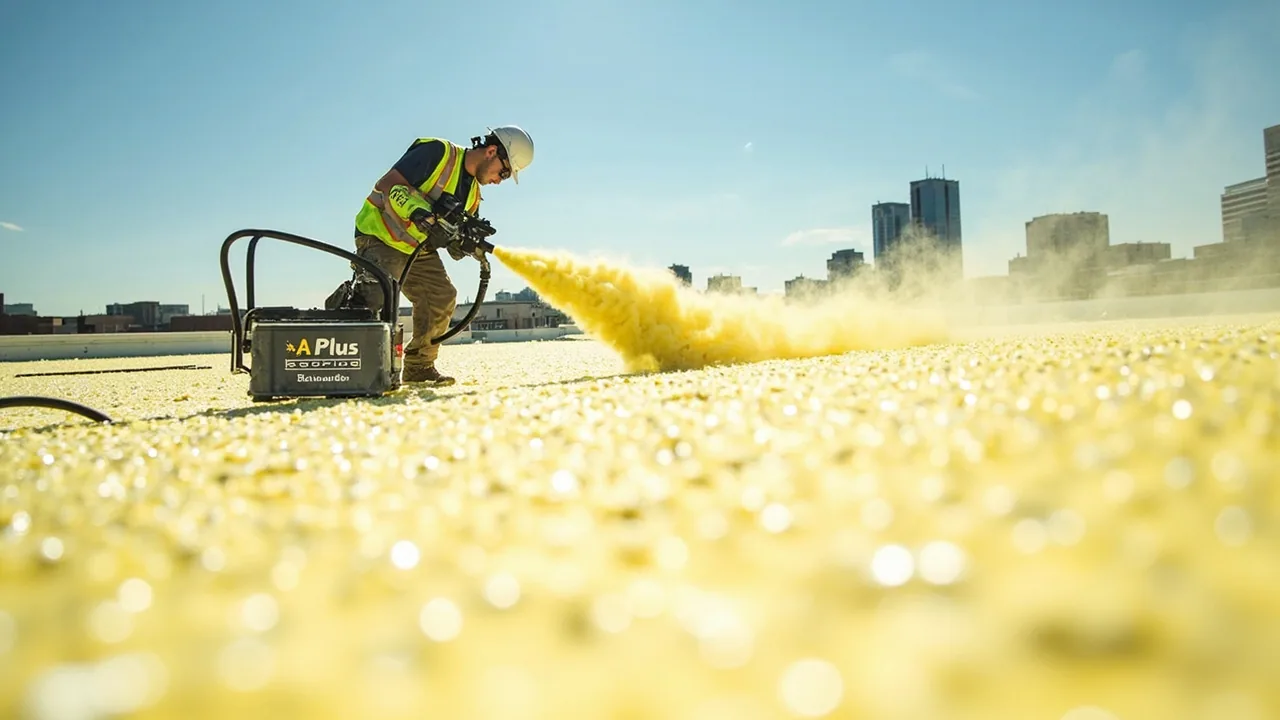
Most BUR leaks start at flashing, drains and penetrations, not in the field. We cut out failed flashing, reset it with new plies and seal edges with mastic or a cap sheet. Alligatoring, a crazed pattern in the surface asphalt, can be treated with a coating if the plies below are dry.
When blisters or splits cover wide areas, the plies have usually taken water. We cut a few test squares, look at the felt and check for wet insulation. A moisture survey maps the damage so the repair is sized correctly, and the manager can see what a section replacement would cost against a full job.
Drains need their own care. Gravel guards, strainers and sumps keep stone and debris out of the pipe, and a missing strainer is a small repair that prevents a flooded roof. We check them in every visit.
Cost: tear-off, recover or restore
Tear-off of a gravel BUR is messy and expensive because the stone, the plies and the insulation all have to be hauled. A recover with a lightweight system can avoid it if the structure and the insulation are sound. A restoration coating can add years to a dry, intact BUR at a fraction of the cost of replacement.
We give the manager three numbers, one per path, with a likely service life for each. Quotes go further when requested ahead of the spring storm line, since crews book up after a hail week. The capital planning line works best when the decision is made a year ahead.
Weight is a real number on older structures. Gravel adds several pounds a square foot, and a tear-off removes that load, so a lighter replacement can leave extra capacity for new rooftop equipment. We note the allowance in the proposal when it is relevant.
Questions About Built-Up Roofing
Records: a file for an older roof
Built-up roofs tend to come with thin paperwork. We draw a roof plan, count the plies from core cuts, list every repair and photograph each section. A roof condition report then goes into the building file. Layer counts and insulation are code matters. Arkansas has the 2021 International Building Code in force through the fire prevention code and an energy listing of ASHRAE 90.1-2007, and the building official decides how both apply to a tear-off.
Owners with buildings in Springdale, Rogers and Bentonville can keep the same report format across towns, which makes it simple to rank roofs by condition and budget year.
Commercial Roofing Questions
Why is it so hard to find a leak on a gravel roof?
Water travels between plies and along the deck before it drips, and the stone hides the surface. We use moisture readings, infrared scans and a grid sweep to find the actual opening. The stain on the ceiling is a clue, not the answer.
Can we put a new roof over gravel?
Sometimes, after the gravel is removed and a cover board is installed, if the insulation is dry and the structure can carry the weight. Loose gravel cannot be left under a membrane, so we price the stone removal separately and show it as its own line.
What is alligatoring and does it mean replacement?
It is a crazed pattern in the surface asphalt caused by sun and age. If the plies below are dry and tight, a coating can slow the aging. If water has entered, the plies need repair or replacement.
Is hot work still used on BUR?
Hot asphalt is still used, though cold-applied and torch-free systems exist. On older buildings with wood decks we favor methods without flame or kettle heat, and we plan fire watches when heat is unavoidable.
How long can a well-kept BUR last?
Many last a long time with regular care, but condition decides. A roof with dry plies, sound flashing and clear drains has years left, while one with soaked insulation does not. We rate the roof section by section and say which part is nearer the end.
Related Commercial Roofing Pages
Read how we handle this work in Fayetteville, AR
Read how we handle this work in Fayetteville, AR
Read how we handle this work in Fayetteville, AR
Read how we handle this work in Fayetteville, AR
Read how we handle this work in Fayetteville, AR
Read how we handle this work in Fayetteville, AR