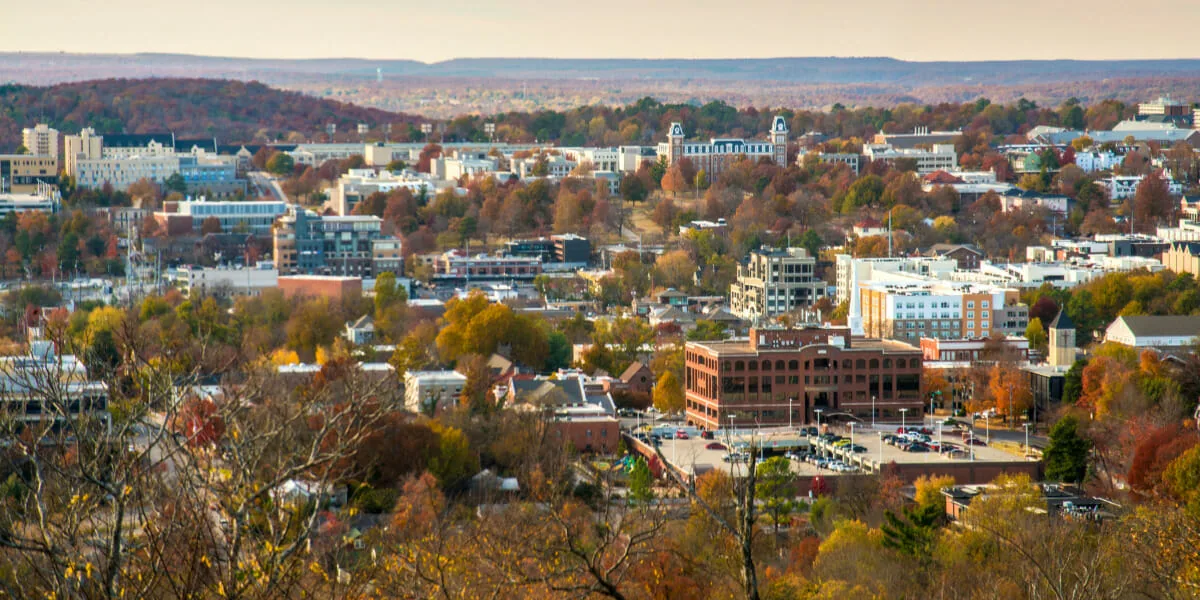
TPO Roofing in Fayetteville, AR
TPO roofing in Fayetteville, AR: single-ply membrane repair, recover and replacement for warehouses and retail, with hail checks and clear budget numbers.
A white TPO membrane is a common roof on warehouse and retail buildings in Northwest Arkansas, and the call comes after a spring storm line, not before. The tenant reports a stain, the manager asks whether the sheet is failing or just bruised, and the answer drives a repair order or a reserve line. In Fayetteville, AR the question has real money on it, because the same roof that looks clean from the parking lot can hold hail bruises, open seams and wet insulation underneath.
We install, repair and recover TPO on low-slope buildings, and we price the choice in plain terms: what the repair costs now, what waiting adds and when a replacement belongs on the capital line.
What it is: a heat-welded single ply
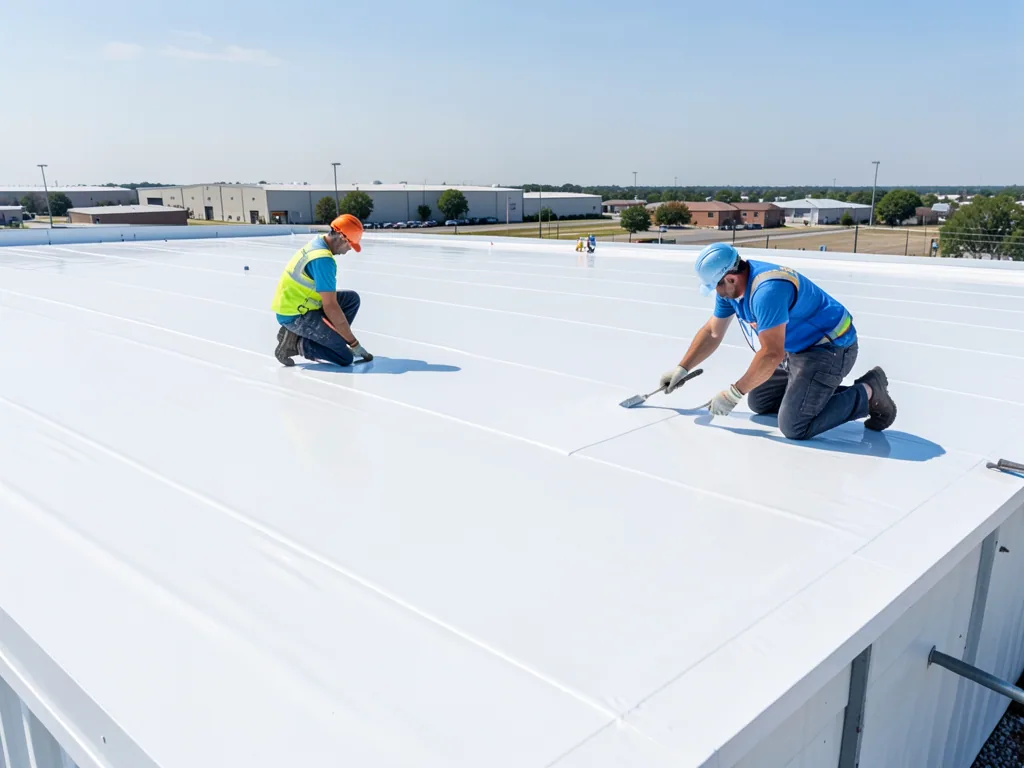
TPO is a thermoplastic sheet sold in rolls, usually white or light gray. Crews lay it over insulation and weld the seams with hot air, which fuses neighboring sheets into one continuous membrane. The sheet can be mechanically attached with fasteners and plates, adhered with bonding adhesive, or ballasted in some cases. Each attachment method has a different price, a different wind rating and a different failure pattern.
Thickness matters a great deal. Sheets are sold in thinner and thicker gauges, and the thicker ones tolerate foot traffic and hail better. When we price a job we state the thickness, the attachment method and the insulation under it, so two quotes can be compared on the same terms.
Flashing is where TPO is won or lost. Corners, curbs, pipes and parapet walls need pre-formed boots or hand-welded patches, and a rushed corner is the first thing to split in a freeze-and-thaw week. The Fayetteville station logs roughly 10 days a year with highs below freezing, and a seam that shrinks in the cold pulls on every unsupported corner.
Weather: what hail and rain do to the sheet
The May 2020 hail log from NWS Tulsa puts 3.00-inch stones about a mile east-northeast of Fayetteville, alongside smaller 2.50 and 1.75 inch reports from that area. Stones that large can leave a bruise under an intact surface, and the first sign is often a hairline crack at a seam or a plate weeks afterward. After a hail week we walk the field, mark impact spots and probe the insulation under any suspicious area.
Rain works on the other side of the roof. Over a year at Drake Field, 46.96 inches of precipitation fall on about 113 days, which keeps seams and flashing wet often. A pinhole at a weld or a split boot around a vent pipe sends that water into insulation, and wet insulation turns a small repair into a section replacement.
Walkway pads at rooftop units are a small line item that saves the sheet. Technicians walking to a condenser three times a month wear a path in the membrane faster than the weather does, and a worn path is where the first puncture appears.
Fit: which Northwest Arkansas buildings suit TPO
TPO is common on distribution buildings, big-box stores and strip centers. Pinnacle Hills Promenade in Rogers is a single-level center of about 934,000 square feet, and the neighboring power center holds big-box retail. Large single-level retail like that is where a light-colored single ply often gets priced first, because it covers a lot of area quickly and reflects heat off the roof.
It is a poorer fit where grease, solvents or heavy chemical exhaust sit on the roof. Restaurant hoods and process vents can degrade a TPO sheet near the discharge, and a PVC roof or a KEE membrane may last longer there. We check the roof around every exhaust point before recommending a sheet.
Edge metal needs the same attention as the field. A coping cap that has pulled loose on a retail strip lets wind get under the sheet at the perimeter, which is where uplift begins. We check the perimeter before the field.
Cost: repair, recover or replace
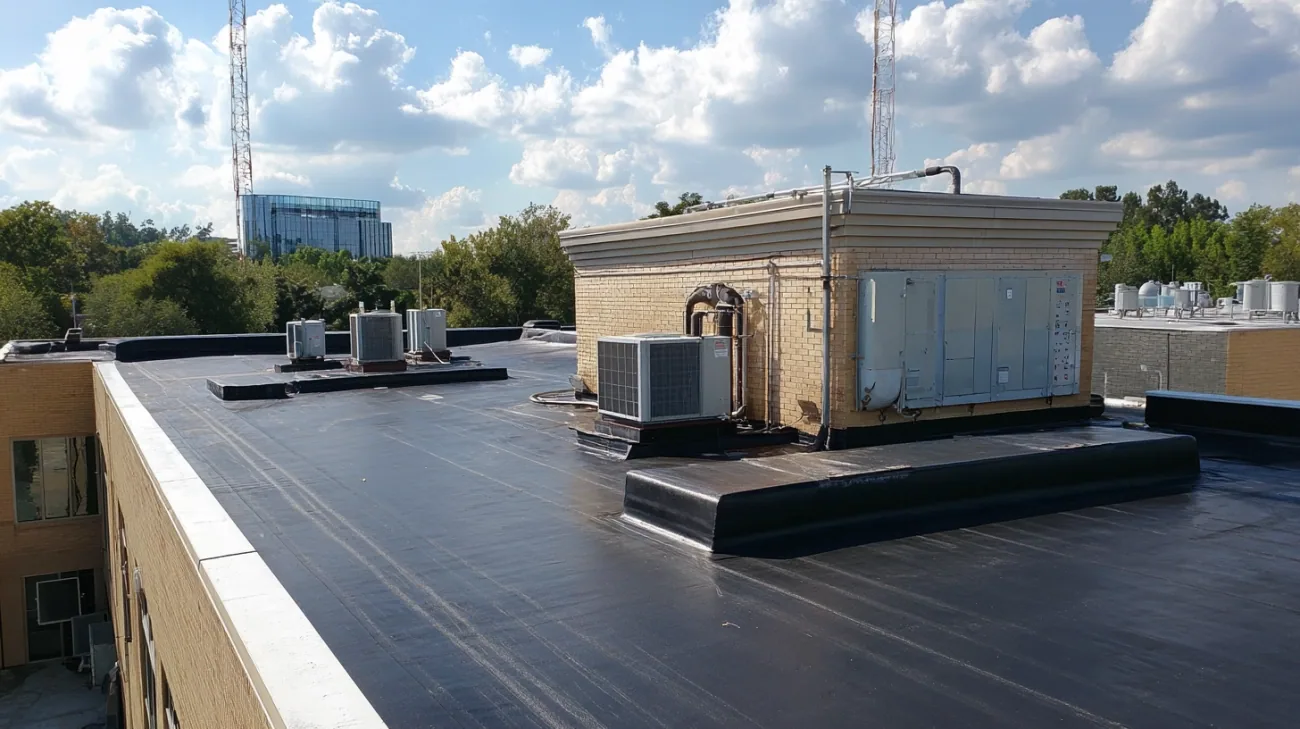
A seam repair costs little when the insulation is dry. A larger repair costs more because wet board has to be cut out and replaced. A recover over sound insulation saves tear-off and disposal. A full replacement resets the clock but costs the most. We prove which one applies with an infrared moisture survey and a few core cuts, and then quote each path with a likely service life.
The quote window matters too. Roofing bids pile up after a storm, and crews book out. Property managers who ask for a number in winter get a better choice of start dates than those who call in April. A budgeted job beats an emergency one by a wide margin.
Warranty paperwork is part of the cost. A manufacturer's warranty carries conditions on installation and maintenance, and a skipped inspection can cost the owner coverage. We list those conditions in the proposal so the manager can plan the visits.
Schedule: working around tenants and weather
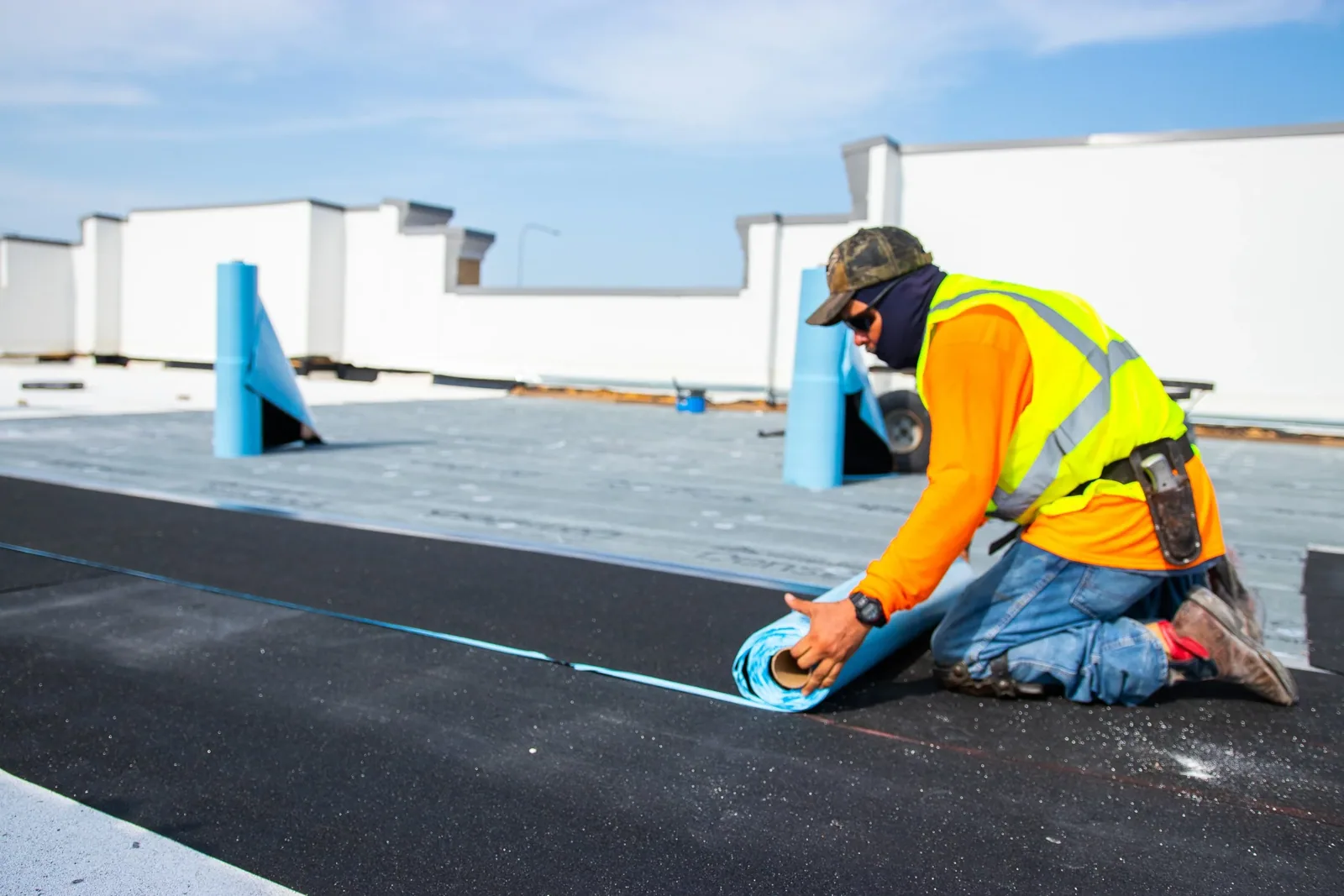
A TPO job on an occupied building runs in sections. We open only as much roof as can be dried in the same day, weld the seams and test them with a probe. Rain stops welding, and wet substrate stops adhesive, so the schedule leaves room for lost days. Tenants get a work order that names the section, the hours of noisy work and the staging area.
Most replacements in this region are planned for dry stretches between the spring storm line and the first freeze, and the capital planning conversation should begin months ahead of that window.
Questions About TPO Roofing
Records: what to keep for the adjuster
Photographs of the roof before a storm help an adjuster separate old damage from new. We provide dated photographs, a roof plan with impact marks and a written list of repairs. The permit file for a TPO replacement should name the code edition. Arkansas runs the 2021 International Building Code under its fire prevention code as of January 1, 2023, while the energy listing still shows ASHRAE 90.1-2007, which is why insulation depth is settled with the building official first. A roof condition report puts the findings in one place for the owner, the lender and the insurer. For buildings along the I-49 corridor in Springdale or Bentonville, the same report format applies.
Commercial Roofing Questions
How can I tell whether a hail storm damaged my TPO roof?
Walk it after the storm, looking for dents in metal edges, cracks at seams and bruises in the sheet. A moisture scan finds wet insulation that the surface hides. We mark each spot on a plan and photograph it for the adjuster.
What thickness should we ask for on a replacement?
Thicker sheets handle foot traffic and hail better and cost more per square. We quote two thicknesses side by side with the same insulation so the manager can see the difference in price and expected life.
Is a fully adhered sheet better than a mechanically attached one?
Adhered systems resist wind flutter and look smoother, but they need clean, dry substrate and cost more to install. Attached systems are quicker and cheaper. Wind exposure and budget guide the choice.
When does a TPO roof need to be replaced instead of patched?
When wet insulation covers a wide area, when seams are failing across the field, or when repairs have started to cost more each year than a share of a new roof. We put those numbers beside each other in the report.
Can TPO go over an existing roof?
Often, if the existing insulation is dry and the deck is sound. A cover board goes between the old and new layers. Local code limits and added weight are checked before pricing.
Related Commercial Roofing Pages
Read how we handle this work in Fayetteville, AR
Read how we handle this work in Fayetteville, AR
Read how we handle this work in Fayetteville, AR
Read how we handle this work in Fayetteville, AR
Read how we handle this work in Fayetteville, AR
Read how we handle this work in Fayetteville, AR
Read how we handle this work in Fayetteville, AR
Read how we handle this work in Fayetteville, AR