Roofing for Logistics and 3PL Operators in Fayetteville, AR
Roof repair, recover and replacement for warehouses and distribution buildings run by logistics and 3PL operators in Fayetteville and Northwest Arkansas.
A distribution building gives its roof a tenant's seat on the dock schedule. Trucks arrive on appointment, pallets move on a clock and a wet spot on the floor can shut a lane. When a roof leaks over racking or a staging area, the operator loses space, inventory and sometimes a customer's patience. A good roof plan keeps the product dry and the dock moving, in that order, and it tells the operations lead in advance what the crew will touch each day.
Northwest Arkansas is a freight region. I-49 and US 71 link Fayetteville, Springdale, Rogers and Bentonville, US 412 runs east and west through Springdale and Tontitown, and Highway 264 connects I-49 to US 71B in Lowell. J.B. Hunt Transport Services has its headquarters in Lowell and counts more than 12,000 trucks alongside 145,000 trailers and containers. A building that serves this network needs a roof that holds up to constant use.
Dock clock: scheduling roof work around trucks
The roof crew and the trucks want the same real estate, which is the yard. We plan staging away from trailer parking and dock doors, and we put hoisting and dumpster placement where a truck can still turn. If a lift has to reach over a dock, we pick the quiet hours and post a spotter. A delay of one day at a cross-dock can ripple through a delivery week, so we agree on the plan with the site manager before we mobilize, including a phone number for the crew lead and a named person at the dock who can stop a lift.
We also ask about peak season. A roof job that overlaps the weeks of heaviest volume invites trouble, so we aim for the slower stretch when the calendar allows. If a leak forces the issue during peak, we protect the product first with covers and drip control, make a temporary repair and schedule the permanent work for later.
Big roofs: ponding, seams and the long runs
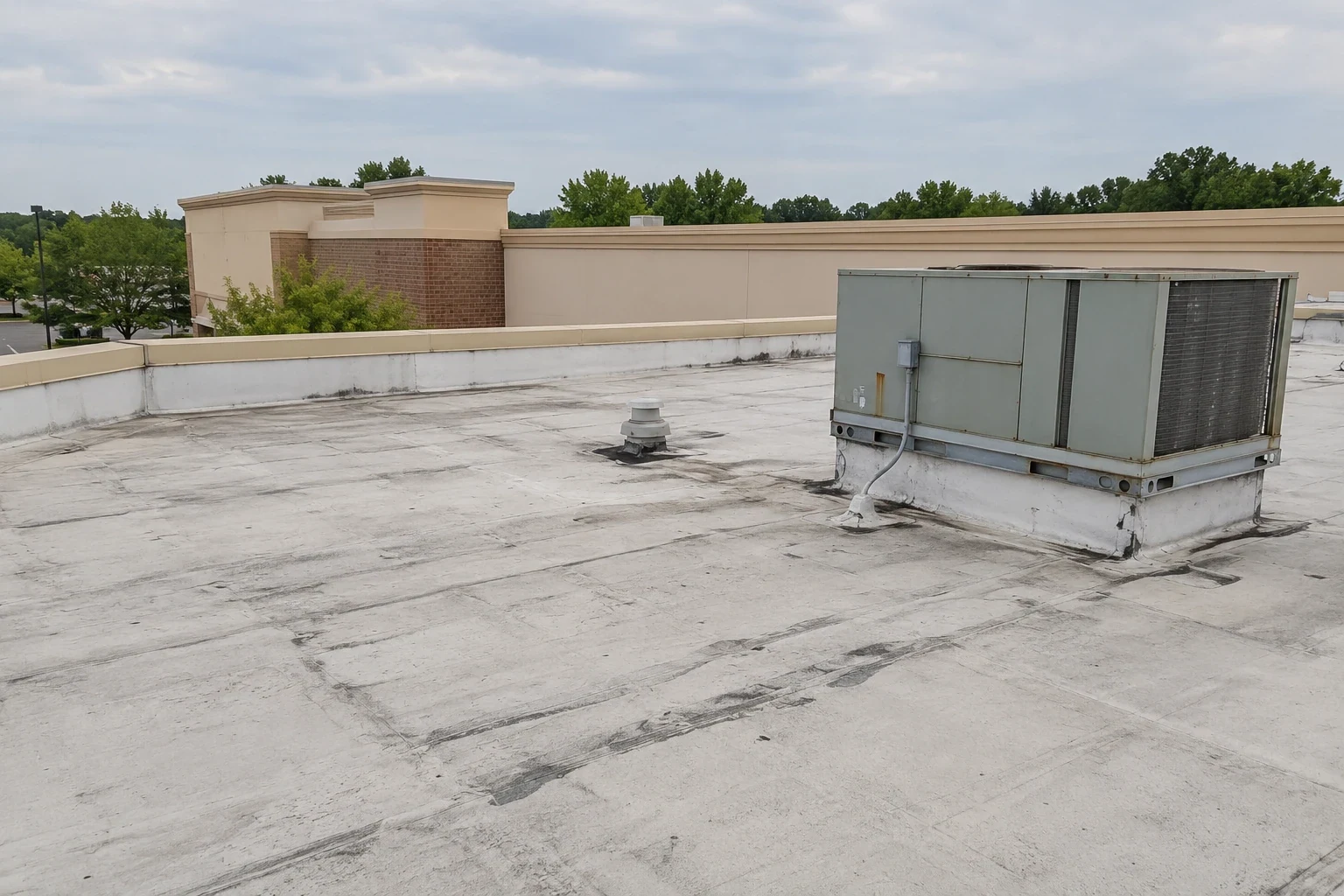
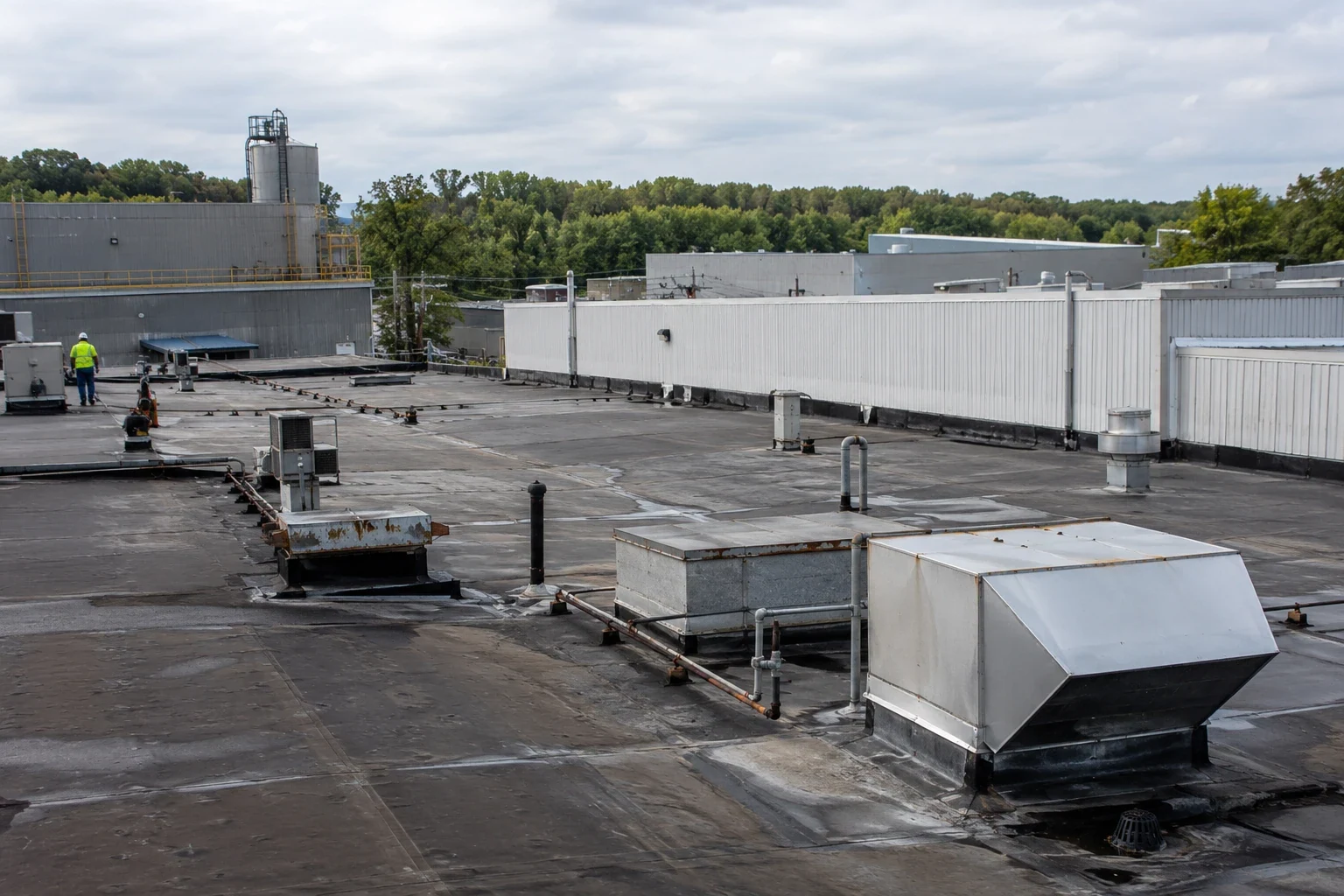
A distribution building has a large field of low-slope roof and few places for water to leave. That makes drainage the first question. Standing water adds weight, speeds membrane wear and finds any weak seam. We walk the field after a rain when we can, mark ponds and measure how long they last, then check each drain and scupper for debris, settling and slope.
Seams run in long lines across these roofs, and so do fasteners. A single open seam can let water travel along the insulation for a good distance before it reaches a ceiling. We probe along seams, check laps and flashing at walls and curbs, and use a moisture scan to see how far the water went. The result is a repair map with real boundaries, which beats guessing at the edge of a wet area. For these buildings, distribution center roofing choices often come down to a recover over dry insulation or a tear-off of the wet zones.
Wind and hail: what a big flat roof takes in a storm
In May 2020 the weather service logged 3.00-inch hail a mile east-northeast of Fayetteville, plus smaller 2.50-inch and 1.75-inch stones nearby. A large flat roof presents a wide target. Hail can bruise insulation and crack coatings without opening a hole, and the damage may only show in the next heavy rain. After a storm line we recommend a survey of every building in the path, with photos that an adjuster can use.
Wind lifts edges first. Perimeter flashing and edge metal on a large building see the most uplift, so those details deserve a check each spring. A wind damage repair after a storm might be as simple as re-securing metal and sealing a lifted edge, or it might call for replacing a damaged section. We report the cost of each path and the cost of waiting.
Roof edges near dock canopies need an extra look. Canopy flashings, downspouts and scuppers move water close to the doors where trucks and forklifts work, and a failed connection there drips on the dock plate and freezes or slicks the surface. We trace each downspout to its outlet, confirm that water leaves the building and note any splash onto a work area.
Rooftop units and penetrations: where the leaks start
Even a simple warehouse picks up rooftop units, exhaust fans, skylights and conduit over time. Each one is a hole in the roof with a seal around it. A quick HVAC visit can leave a cut membrane or a loose fastener behind. We map every penetration on the sketch and check the flashing at each, and we advise a rule: call us before anyone cuts the roof.
Skylights on older buildings can be a steady source of trouble because the curb, the glazing and the membrane all meet in one place. We inspect skylight and penetration flashing during every survey and recommend replacement when sealant or curbs have aged out. Small repairs at these points are cheap compared with a pallet of ruined goods.
Records help here as well. A dated photo of each penetration at turnover, with a note on who installed it, makes later leaks easy to assign and repair. We keep that file with the survey, and your facilities lead gets a copy. When a tenant changes, the file transfers with the lease, and the new operator starts with the roof's history instead of a guess.
Program: one calendar for every building
Operators with several buildings between Lowell, Springdale and Fayetteville gain from a single roof calendar. A visit before spring storms and one after summer, with drains cleared and photos filed, keeps small problems small. Our multi-site roof program sets that rhythm and ranks buildings by condition, so capital goes where it is needed first.
If you lease space, the landlord may own the roof, and the lease may control repairs. We can work with either party. An investor or REIT owner of an industrial building can use the same record for the lender, and a property manager can use it to answer a tenant's questions. Winter is a quiet time for roofs, with about 6.5 inches of snow in a typical year, but freeze and thaw still opens seams, so a late-winter walk pays off.
Questions About Logistics and 3PL Operators
Commercial Roofing Questions
Can you re-roof without shutting down the dock?
Usually, yes. We work in sections, keep staging off the truck court and close in the roof at the end of each shift. A few steps, like crane picks, may need a quiet window that we agree on beforehand.
How do you protect stored goods during a repair?
We cover racking below the work area, place drip control at known leak points and keep the roof opening small. For sensitive goods, the plan can include moving product before the work begins.
What if the building has no roof drawings?
We build the record from the roof. A walk, a few probes and a moisture scan show the layers, the drains and the penetrations. We sketch it and file it so the next visit starts from facts.
Is a coating a good fit for a big warehouse roof?
If the base is sound and the insulation is dry, a coating can extend service at lower cost than replacement. We test adhesion and moisture first, because a coating over wet insulation fails.
Do you handle leaks at night?
Yes. The emergency line is open at any hour, and a crew heads out as soon as safe access is confirmed. First step is stopping the water, then we plan the repair.
Related Commercial Roofing Pages
Read how we handle this work in Fayetteville, AR
Read how we handle this work in Fayetteville, AR
Read how we handle this work in Fayetteville, AR
Read how we handle this work in Fayetteville, AR
Read how we handle this work in Fayetteville, AR
Read how we handle this work in Fayetteville, AR
Read how we handle this work in Fayetteville, AR
Read how we handle this work in Fayetteville, AR