Roof Recover and Overlay in Fayetteville, AR
Roof recover and overlay systems for commercial buildings in Fayetteville, AR, installed only when moisture, weight and code conditions allow it.
Every manager who has priced a tear-off asks the same thing: can we just put a new roof on top of the old one? Sometimes you can, and the savings are real. A recover skips the removal, the haul-off and the dump fees, and it keeps the building working while the crew installs the new membrane over the existing roof. The catch is that the old roof becomes the foundation for the new one, so whatever is wrong underneath stays there. In Fayetteville, AR, where hail, spring rain and winter freezes all test a roof, that foundation has to be dry and sound or the savings disappear within a few seasons.
We install recover systems on commercial roofs when the conditions support it, and we say so when they do not. The decision comes from a moisture survey and a core cut, not from the budget alone.
The test: what has to be true before a recover works
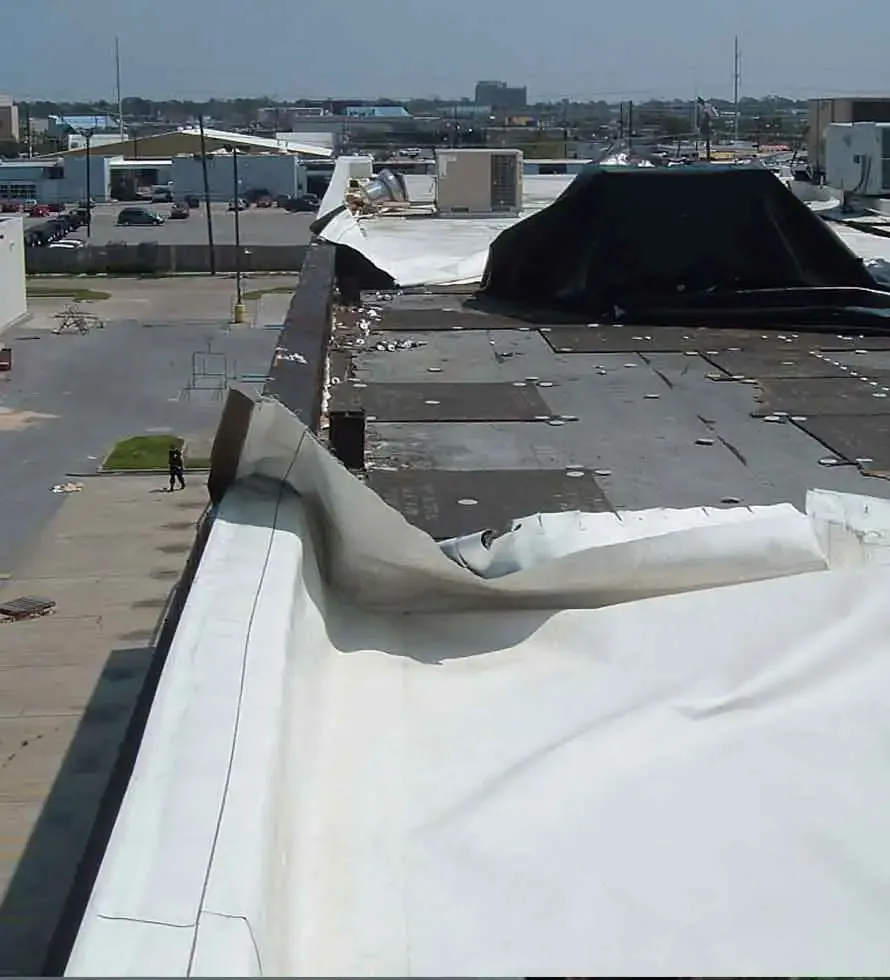
Three conditions have to hold. First, the insulation under the old membrane is dry across the whole roof, or the wet pockets are small enough to cut out and replace before covering. Second, the deck is sound, without corrosion, rot or loose fastening. Third, the existing roof is not already carrying so many layers that another one pushes past what the code allows. Miss any of those and the answer is a tear-off.
We verify with an infrared moisture survey and a few core cuts through the assembly. The cores, written up in a roof condition report, show the number of layers, the type of insulation and whether moisture has traveled farther than the surface suggests. That check is a modest line item next to the project, and it prevents the costliest recover mistake: burying a wet roof under a new one.
Systems: what goes over the old roof
The usual recover choices are a mechanically attached or adhered single-ply, a metal retrofit panel system, or a spray foam and coating combination. Over a built-up roof or older modified bitumen, a layer of cover board often separates the old surface from the new membrane, which spreads loads and keeps old asphalt from bleeding into the new material. TPO is a frequent pick for warehouse and retail roofs, including the trucking and logistics buildings around Springdale and Lowell because it welds at the seams and reflects heat.
Metal roofs have their own route. A retrofit over an existing metal roof uses framing and new panels that clear the old fasteners, and it works where the old panels are structurally sound but have lost their coating or sealant. Each of these systems changes weight, fastening and drainage, so the structure and the drain layout get reviewed before the material is ordered.
Weight and code: how many layers a building can carry
Arkansas follows the 2021 International Building Code through its fire prevention code, and that code limits recovering to conditions where the existing roof assembly is not already overloaded and has no water-soaked insulation. Practically, a roof with one existing membrane over insulation is a candidate. A roof that has already been recovered once is usually not, and the next step on that roof is a full removal.
Added height matters at the edges. A recover raises the roof surface, which shortens flashing at parapets, curbs and doors. We extend the flashing and raise the edge metal and curbs where needed, so water does not find a lower threshold than the one the old roof had. Skipping that step is how a cheap recover turns into a leak at the first heavy rain.
Closeout: what stays on file after the crew leaves
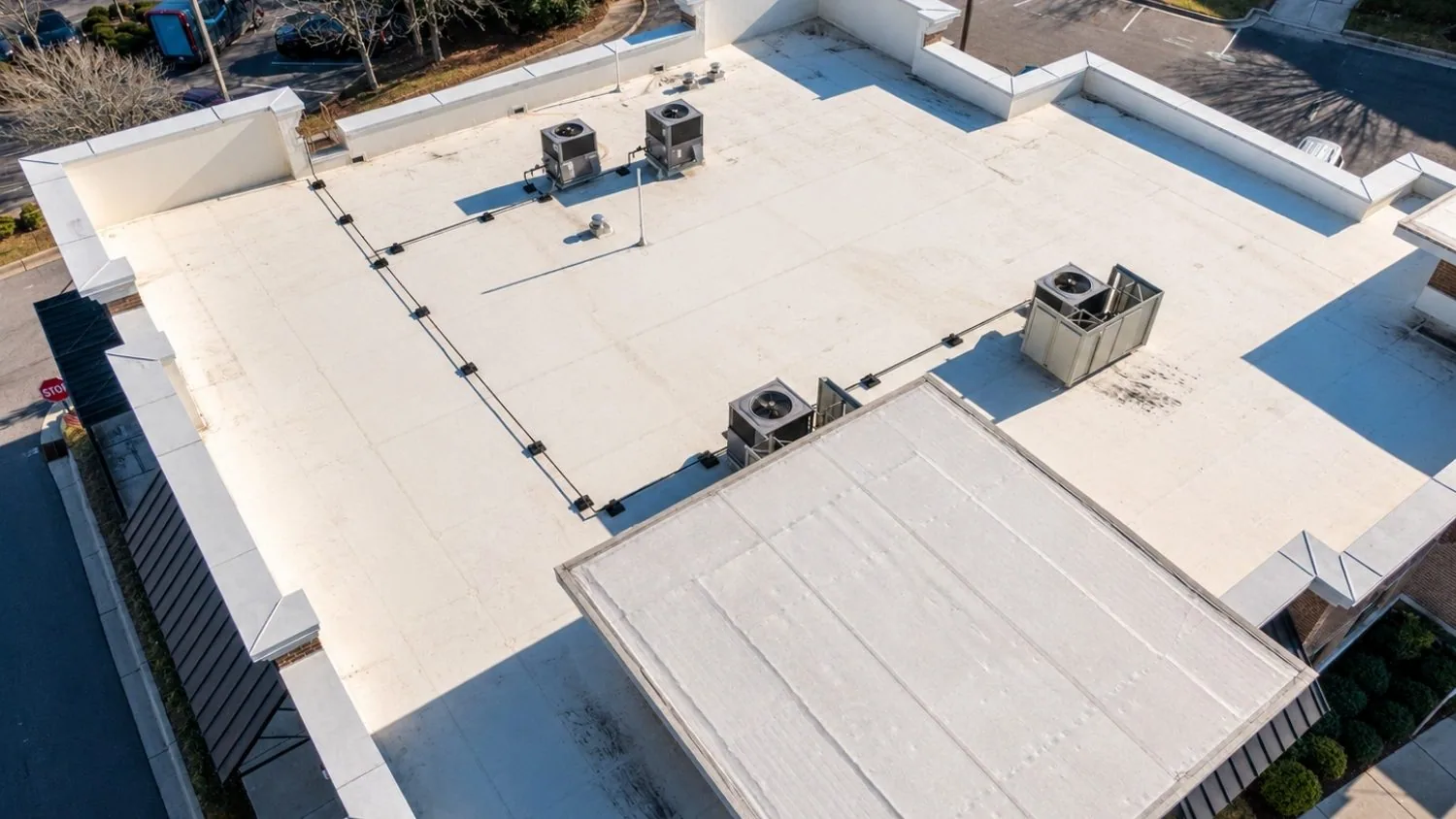
A recover buries the evidence of what was underneath, so the paperwork matters more than it does on a tear-off. We keep the survey map, the core cut photographs and the layer count with the project record, along with the fastening pattern and the cover board used. Years from now, a different contractor or an appraiser can open that file and see exactly what sits under the surface instead of guessing.
That record also sets up the first maintenance visit. A recovered roof deserves a look after the first full winter, when freeze-and-thaw has worked on every seam and termination. If the building sits among many others in a portfolio, the same file feeds a preventive maintenance schedule so small flashing and seam problems get caught while they are still cheap to fix.
Money and timing: where a recover wins and where it loses
A recover wins on cost and on disruption. With no tear-off, there is less noise, less debris and a shorter exposure window, which matters at a Fayetteville retail center or a medical office where tenants cannot lose their entrance for a week. It also fits a tight capital year, because the project can be finished in fewer days than a full replacement.
It loses when the roof underneath is the problem. Fayetteville's Drake Field averages about 47 inches of precipitation a year, and wet insulation under a recover stays wet. In a few seasons the owner has paid for two roofs and still has the same leak. When the survey finds that kind of damage, the budget conversation moves to a full replacement, and we say so before any contract is signed.
Questions About Roof Recover and Overlay
Commercial Roofing Questions
Does a recover roof carry the same warranty as a replacement?
The manufacturer sets the terms, and many offer a warranty on recover systems that meets the same standards as a new roof as long as the existing assembly passes their conditions. Those conditions usually include a dry substrate and an approved cover board. We give you the manufacturer's written requirements before the contract so you know what the warranty needs from the existing roof.
How do you handle a roof that took hail before we recover it?
Hail damage gets repaired or removed before anything goes on top. Hail reported near Fayetteville in May 2020 ran as large as 3.00 inches, and a membrane that took hits like that can hide fractures that leak later. We scan the field, mark the bruised areas, and cut and patch them. If bruising covers most of the field, a recover is the wrong tool and we price a tear-off.
Will the building keep operating during a recover?
Yes, and that is one of the best reasons to choose one. No tear-off means no debris falling and far less noise above the occupants. We still stage materials away from loading docks and entrances, schedule the loudest work for the quietest hours, and close the roof in sections daily so a pop-up shower does not catch an open area.
What if the survey finds wet insulation in only one corner?
Then we cut that corner out, replace the wet insulation with dry board and tie the patch into the field, and the recover can usually proceed. The map shows exactly how big the wet area is. If it stays contained, the savings from skipping a full tear-off remain mostly intact, and you get a roof that is dry where it counts.
Can a recover go over a roof that already has ponding water?
Ponding needs a fix first. Standing water after a rain means the roof is flat where it should drain, and a new membrane laid over it will pond in the same places. Depending on the cause, we add tapered insulation, move or add drains, or build up low spots, then lay the new system over the corrected surface. Ignoring it shortens the life of the new membrane, since water sitting for days breaks down seams and accelerates dirt buildup.
Related Commercial Roofing Pages
Read how we handle this work in Fayetteville, AR
Read how we handle this work in Fayetteville, AR
Read how we handle this work in Fayetteville, AR
Read how we handle this work in Fayetteville, AR
Read how we handle this work in Fayetteville, AR
Read how we handle this work in Fayetteville, AR
Read how we handle this work in Fayetteville, AR
Read how we handle this work in Fayetteville, AR