
EPDM Roofing in Fayetteville, AR
EPDM roofing in Fayetteville, AR: rubber membrane repair, patching and replacement for older flat roofs, with freeze, hail and budget numbers laid out plainly.
Black rubber roofs are a common sight on older flat-roofed buildings, and a property manager in Northwest Arkansas can easily inherit one without a file on it. Nobody knows who installed it, how old the seams are or whether the last patch was done right. The first tenant call after a hard freeze brings the question forward: repair it again, or put a replacement on the capital line. In Fayetteville, AR the answer has to account for a minus 20 degree reading in February 2021 and a spring that brings hail.
We repair, recover and replace EPDM, and we tell the manager what the sheet has left before spending money on it.
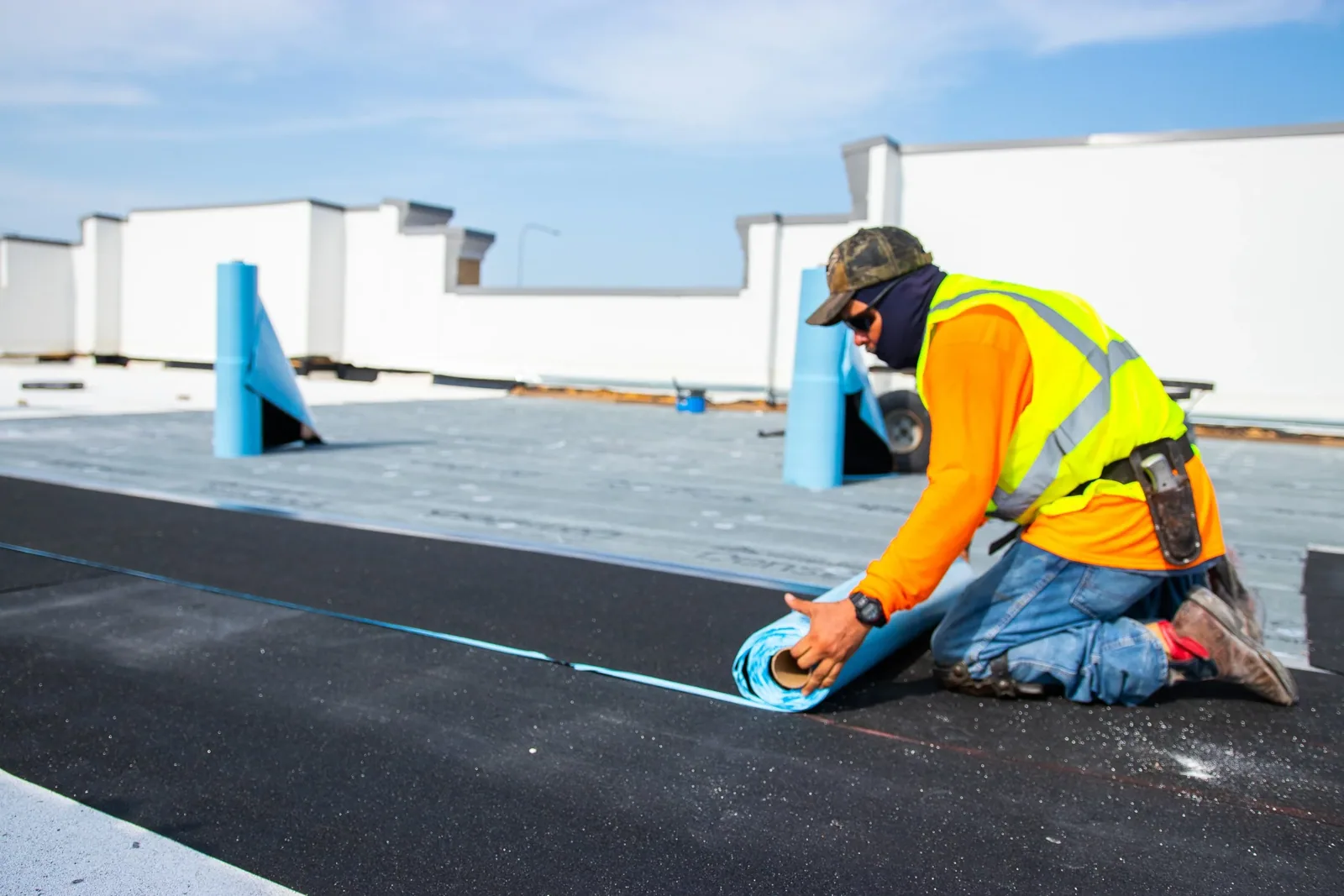
What it is: cured rubber in large sheets
EPDM is ethylene propylene diene monomer, a synthetic rubber supplied in wide rolls that cover large areas with few seams. It is black, or white on one face for reflective jobs, and it comes in a range of thicknesses. The sheet is adhered, mechanically fastened or ballasted with stone, and seams are joined with tape or splice adhesive, not heat.
Seams are the part to watch. A rubber roof does not fail evenly. The field of the sheet can look supple while the splice tape at a lap has let go, and the flashing at a curb or a drain has shrunk and pulled. We probe every seam and detail, since that is where an EPDM roof starts to leak.
Thickness and color are choices the owner makes up front. Thicker sheets resist hail and foot traffic better, and a white face lowers cooling load. We quote the combinations side by side, with the insulation and attachment method named, so that two bids compare fairly.
Cold: how a freeze-and-thaw week treats rubber
EPDM stays flexible in the cold better than many sheets, which is one reason it is a familiar choice where winters are real. Fayetteville averages about 6.5 inches of snow a year with roughly 10 days of sub-freezing highs, and the 20-below morning of February 16, 2021 tied for the eighth-coldest reading in Arkansas history. The sheet survives temperatures like that, but adhesives, splices and old patches get stressed as the roof contracts.
After a hard cold snap we look at laps, corners and penetrations where the rubber is pulled tight. Shrinkage shows up as a bridge across an inside corner or a flashing lifted off a wall. A small adhesive repair in February costs little. The same lifted flashing in a May downpour can wet the insulation below.
Drains deserve a look in the same visit. Ice in a drain bowl sends meltwater across the roof, and a rubber flashing that has lifted at the bowl lets that water under the sheet. We clear, reseat and reseal as needed and photograph the bowl afterward.
Fit: older flat roofs and the Square
Fayetteville's historic Square holds buildings dating from 1886 to 1911, and any of them with a flat or nearly flat roof behind a parapet belongs in the rubber conversation. Where a flat roof sheds water to a few interior drains behind a parapet, a rubber sheet is a common choice and a built-up roof is the other, because both handle awkward shapes, small areas and many penetrations.
For long, simple roofs on warehouses and strip centers, TPO may be quicker to install. For roofs with heavy foot traffic or chemical exposure, a different sheet is better. We match the system to the building, not the other way around.
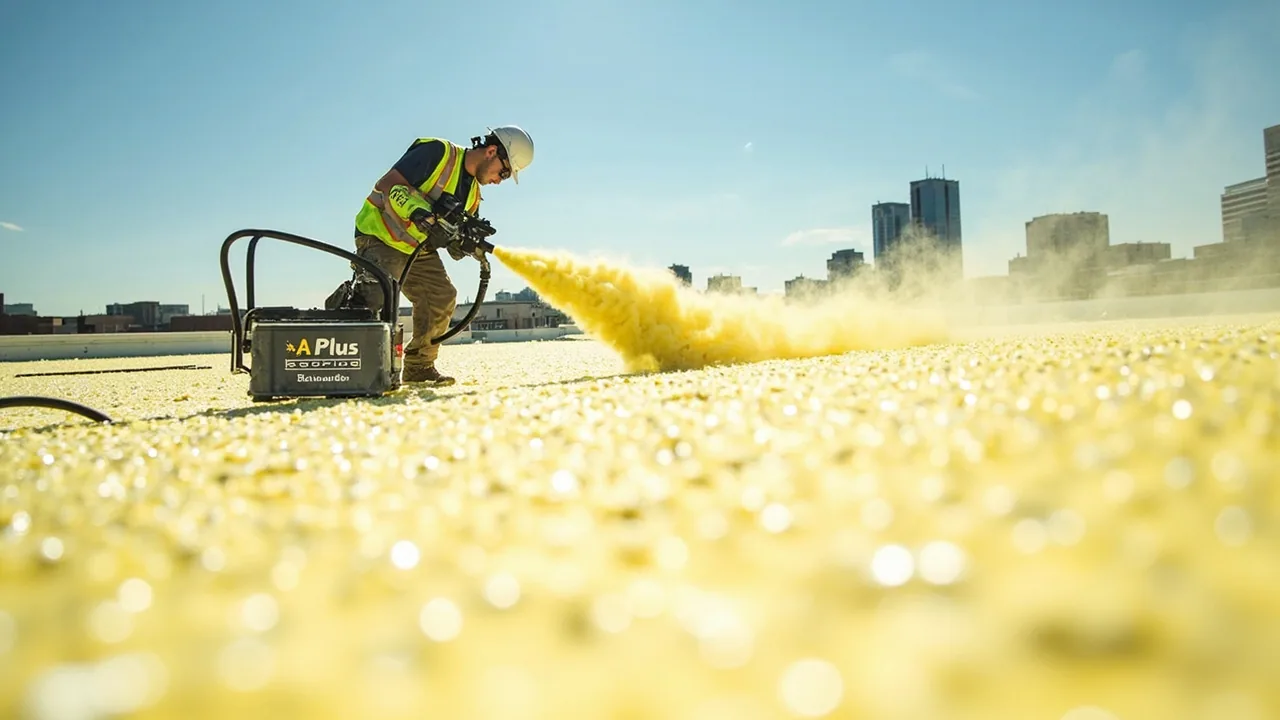
Hail: what a stone does to a rubber sheet
NWS Tulsa storm data for May 2020 lists hail of 3.00 inches about a mile east-northeast of Fayetteville. Hail that size can puncture thin rubber or leave round bruises that wear through in later seasons. Ballasted roofs and thicker sheets stand up better, and a cover board under the membrane helps spread the blow.
After a storm line we walk the roof for round marks, small tears and displaced ballast. Punctures are patched with cured splice material. A hail damage repair record with dated photographs helps the adjuster, and it keeps a later claim from being denied as old wear.
Ballast adds another wrinkle. Stone ballast holds a sheet down and protects it from sun and hail, but it hides the membrane and makes leak tracing slow. When we find a leak under ballast, we sweep the stone back in a grid, repair the sheet and set the stone again.
Cost: patch, recover or tear off
A patch at a seam or flashing is the lowest-cost fix and often the right one. A broader repair makes sense when the sheet is sound but several details have failed. Replacement belongs on the capital line when seams are letting go across the field, the sheet is cracking or insulation is wet over a wide area. A moisture survey and a few core cuts settle.
Tear-off costs more than recovering, because disposal and extra labor are added. A recover over dry insulation saves that cost, but old ballast and layers have to come off or be accounted for in weight. We quote the options and a likely service life for each so the manager can compare them against the reserve budget.
Drainage is part of the cost conversation. A roof that holds water after each storm will age faster, and tapered insulation at replacement can fix the slope for the life of the new sheet. It adds to the first cost and subtracts from the repair bills that follow.
Questions About EPDM Roofing
Records: what to put on file
Because older rubber roofs often arrive without paperwork, the first job is to make a file. We take a roof plan, dated photographs and a list of every penetration, drain and repair. A roof condition report then sits in the building file for the next manager.
On code, Arkansas uses the 2021 International Building Code (fire prevention code, January 2023), and the energy listing remains ASHRAE 90.1-2007. For a rubber replacement the building official confirms how much insulation goes under the new sheet. The permit file carries that confirmation, so the insulation number in the quote is the number the inspector will look for. Owners with buildings in Downtown Fayetteville or Springdale get the same report layout for each.
Dated photographs of the roof before and after each season make a strong file. When a claim arrives, or when a buyer asks for the roof history, the answer is in the folder.
Commercial Roofing Questions
Our rubber roof is old and nobody has a file. Where do we begin?
Begin with a walk, a roof plan and a moisture scan. We note the sheet type, the attachment, the seams and every detail, then give you a repair list and a rough replacement budget. The report becomes the file you did not have.
Why do the seams fail before the sheet does?
Splice tape and adhesive age faster than the rubber, and cold contraction pulls on them every winter. We re-seam failed laps and replace flashing that has shrunk.
Can EPDM be patched in cold weather?
Small repairs can be made on dry days with the right adhesive and a clean surface. Below the adhesive's working range the repair will not cure, so we hold larger work until it warms.
Is black or white rubber the better choice here?
Black absorbs heat, which helps shed snow and ice and costs less. White reflects heat and lowers cooling load in summer. July highs average 88.7 degrees at Drake Field, so both can work, and cooling bills tip the choice.
How long should a rubber roof last?
Condition matters more than a number on a calendar. A sheet that is flexible, with sound seams and dry insulation, has years left. A cracked, shrunk sheet with wet board does not.
Related Commercial Roofing Pages
Read how we handle this work in Fayetteville, AR
Read how we handle this work in Fayetteville, AR
Read how we handle this work in Fayetteville, AR
Read how we handle this work in Fayetteville, AR
Read how we handle this work in Fayetteville, AR
Read how we handle this work in Fayetteville, AR
Read how we handle this work in Fayetteville, AR
