Commercial Roof Leak Repair in Fayetteville, AR
Commercial roof leak repair in Fayetteville, AR: we trace the water entry point, stop it and document the fix so the same ceiling tile stays dry.
The work order says room 214, second floor, brown ring on the tile, started after Sunday's rain. By Wednesday the maintenance tech has moved the tile twice and the tenant has stopped being patient. A leak on a commercial building is a small problem for about a week and a large one after that, because water that gets into insulation keeps spreading long after the rain ends. In a place like Fayetteville, AR, where Drake Field logs measurable rain on about 113 days a year, there is always another storm on the way to test the repair.
Our job is to find the real entry point, close it, and leave the property manager with a record that explains what happened. We do that on occupied buildings of every size across the metro, from retail strips to industrial buildings.
Tracing: following the water back to the roof
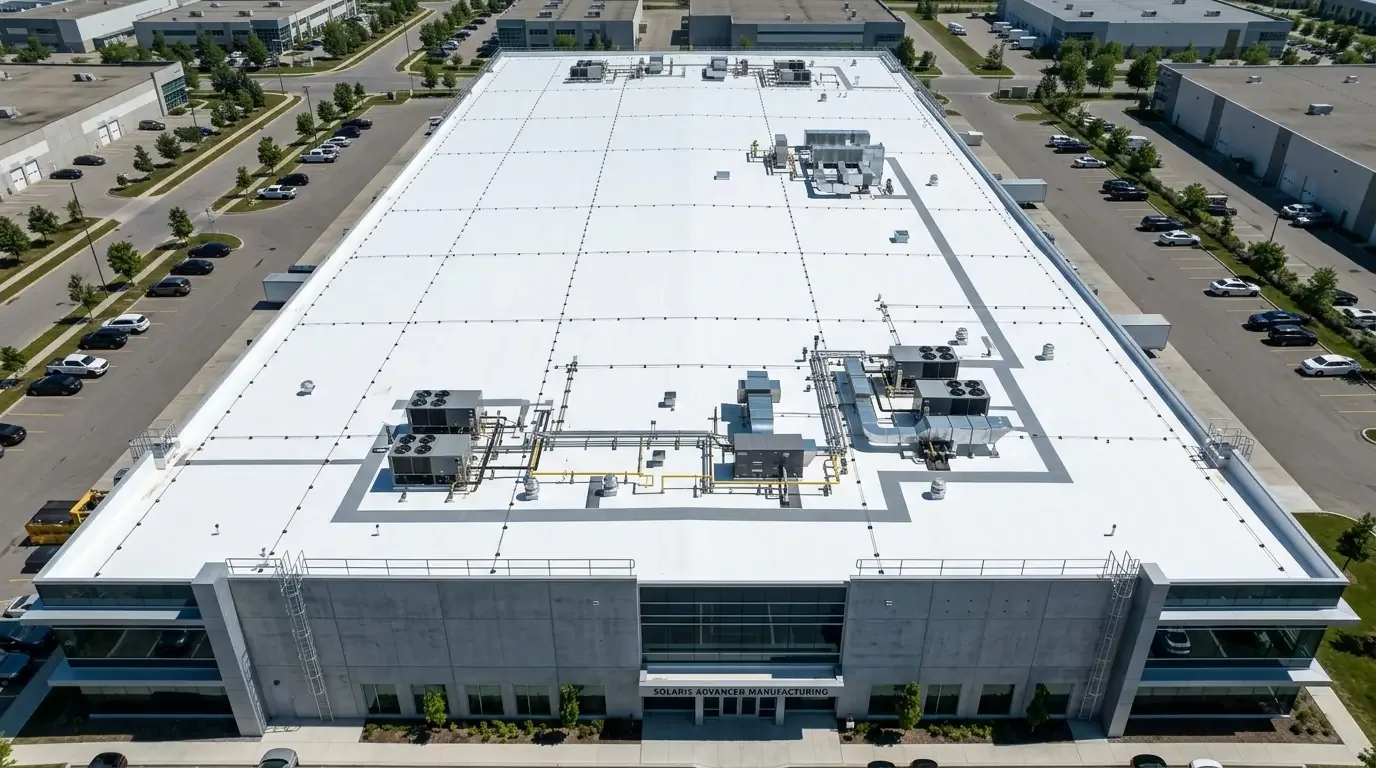
Water on a ceiling and water on a roof rarely line up. It runs along the deck, drops through a flute, follows a pipe or a joist and shows up ten or twenty feet from where it entered. We start inside by marking the stain and noting when it appears, then go to the roof and work the area upslope of that spot, checking drains, seams, flashing, curbs and penetrations.
When the surface does not show an answer, we use a moisture scan to map the wet insulation, which usually leads right to the entry. Sometimes we flood-test a suspect detail with a hose while a second person watches inside. This is slower than slapping on sealant, and it is why the repair holds. Fixing the stain location without the entry point is how the same ticket gets reopened in a month.
Causes: the usual suspects on Northwest Arkansas roofs
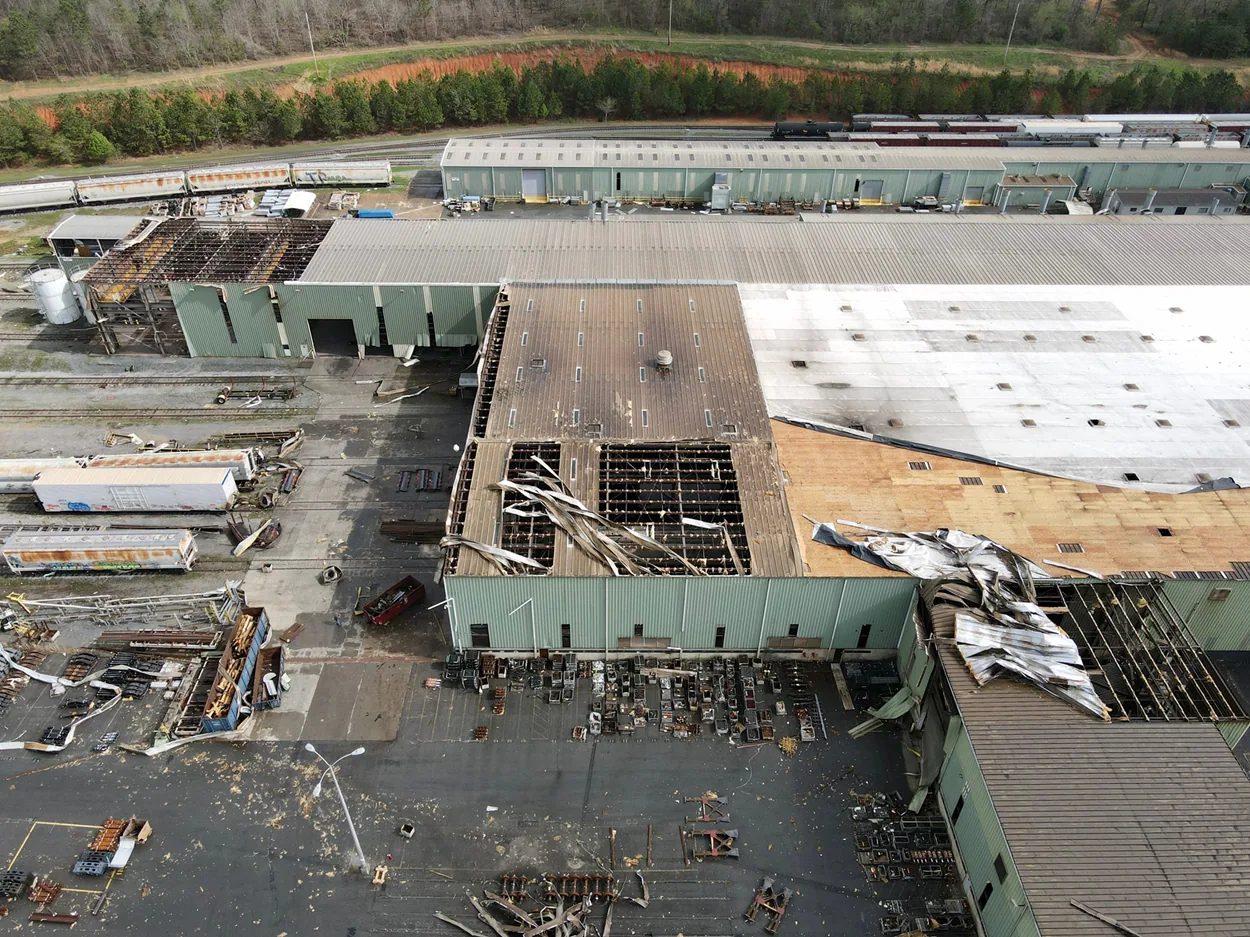
Most leaks here come from the details rather than the field of the roof. Open seams at laps, cracked sealant at pipe boots, pulled flashing at parapets, clogged drains that let water stand and edge metal that has lifted all feed the same complaint. Hail adds fractures that look minor and leak weeks later. Fayetteville saw hail up to 3.00 inches reported east of the city in May 2020, and bruised membranes from storms like that tend to show up as leaks in later rains.
Freeze and thaw does its own quiet work. With about 6.5 inches of snow a year and around ten days when highs never reach freezing, water that sits in a small crack expands and widens it. Over several winters a pinhole becomes a path. Any building with additions or added rooftop equipment has tie-in details that deserve a second look.
Stopping it: temporary dry-in versus permanent repair
If water is actively coming in, the first move is containment. We can place a temporary patch or tarp to stop the entry while the roof is wet, then return when the surface is dry to make the permanent repair. Permanent work needs a clean, dry substrate and a compatible material, which is why the temporary step exists. For leaks that need response outside normal hours, our emergency response follows the same sequence: stop the water, protect the interior, then repair.
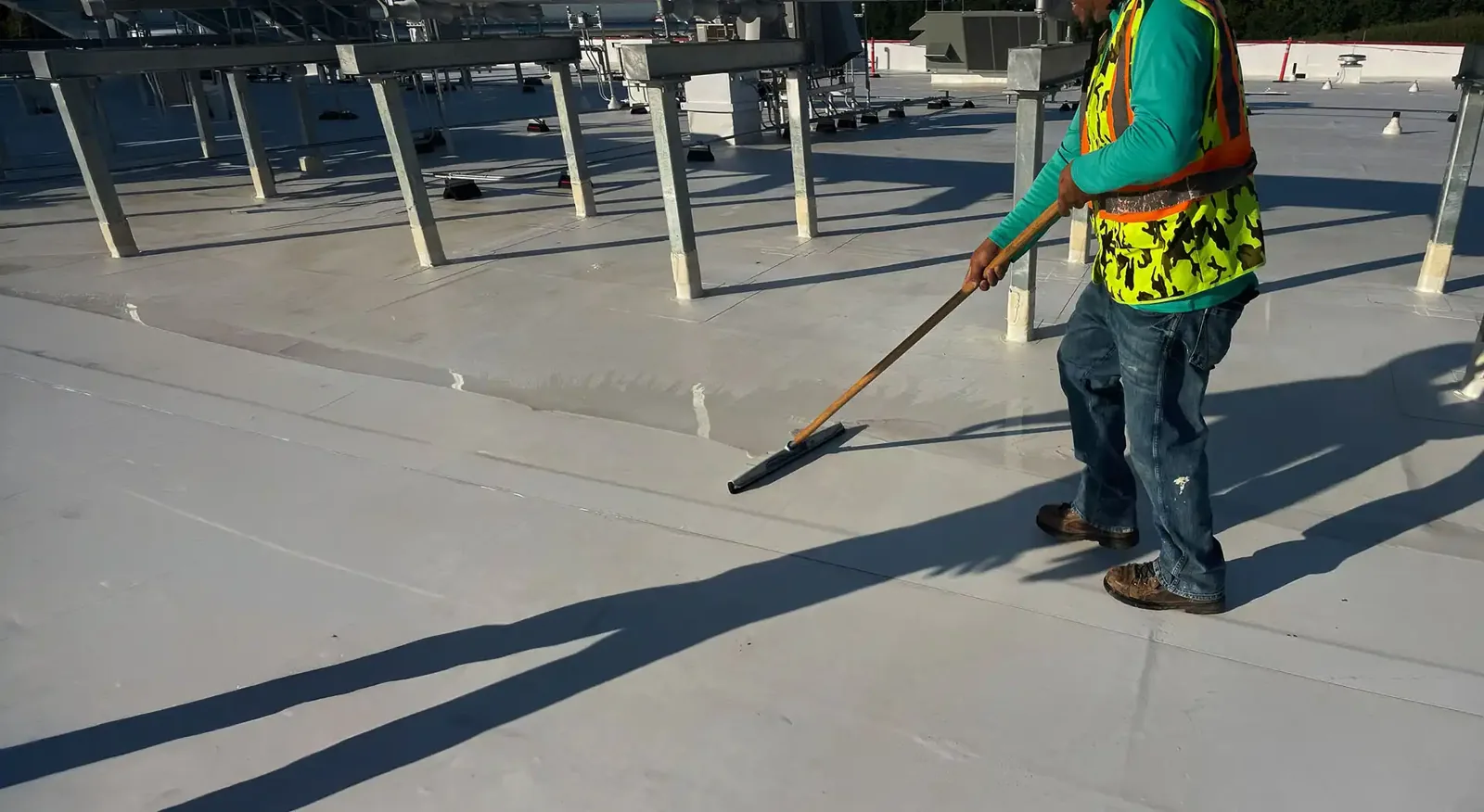
The permanent fix depends on the cause. A failed seam is cleaned and rewelded or re-adhered. A cracked boot is replaced rather than coated over. Failed flashing is stripped back and rebuilt with new membrane and fasteners. Where the insulation underneath is wet, we cut out the soaked section and replace it, because a dry patch over wet board draws moisture right back up.
Tenants: managing the interior while we work the roof
A leak is as much an operations problem as a roofing problem. Wet tile, damaged inventory, shorted lighting and tenant complaints all arrive at once. We coordinate with the property manager on access to the space below, ask for photographs and dates from the maintenance log, and tell the manager what the interior side should do while the roof side is being fixed: move stock, cover equipment, keep the area ventilated.
For multi-tenant centers around Springdale or Rogers, we try to keep roof traffic away from entrances during business hours and schedule loud work for quieter times. If a leak is linked to an insurable event, our notes and photographs support the claim paperwork, and the claim assistance work picks up from there.
After the repair: making sure it stays fixed
We recommend a follow-up look after the next significant rain. If the interior stays dry and the roof surface drains normally, the repair did its job. If anything looks different, we return before the problem grows. For roofs with a pattern of repeat leaks, the better move is a full roof inspection to see whether the whole system is aging out, followed by a planned repair list instead of one more emergency call.
Keep the repair record where the next manager can find it. A leak log with dates, rainfall, room numbers and the fix performed turns a vague complaint into a pattern. If three leaks in a year trace back to the same drain or the same wall, the log makes that obvious and supports a budget request for the real fix instead of a fourth patch.
Questions About Commercial Roof Leak Repair
Commercial Roofing Questions
What does a leak repair cost?
The price depends on three things: how hard the entry point is to find, how much wet insulation has to come out, and how much roof access and staging the visit requires. A simple boot or seam repair is a modest invoice. A leak with saturated insulation and a damaged deck is a different project. We give a written scope and price once we know which one you have, and we will say so when the cost of repeated leak calls is approaching the cost of a bigger repair.
Why does my leak only show up when it rains hard?
Small openings need pressure to pass water. A hairline crack at a seam may be tight in light rain and open when wind drives water sideways or when a drain backs up and water stands over a seam. We look for evidence of standing water, test flashing heights and trace wind-driven paths, since those conditions are the ones that reveal weak details.
Can you find the leak if it is dry today?
Yes, in most cases. Stained tile, dated work orders and photographs tell us where to look, and infrared scanning or core cuts show moisture that stays in the assembly long after the rain stops. A hose test on suspect details can reproduce the leak on demand. Dry weather is actually a good time for the repair itself, since adhesives and sealants cure well.
Should we call the insurance company about a leak?
Call when the leak follows a specific storm, such as a hail or wind event, because the claim clock and the documentation both matter. Wear and tear leaks are generally a maintenance matter. Either way, photograph the damage, keep the dates, and tell us when the water started. We will document what we find on the roof so you can decide with the facts in hand.
What if the leak is coming from a rooftop unit or a skylight?
Those are two of the most common sources. Units sit on curbs with flashing that moves with the equipment, and condensate lines, refrigerant lines and electrical conduits all pierce the roof nearby. Skylights have their own frames and seals that age. We check the curb flashing, the sealant and the fastening, and repair or rebuild the detail. When the unit itself needs to lift for the work, we coordinate with the mechanical contractor so the building is not left without cooling longer than necessary.
Related Commercial Roofing Pages
Read how we handle this work in Fayetteville, AR
Read how we handle this work in Fayetteville, AR
Read how we handle this work in Fayetteville, AR
Read how we handle this work in Fayetteville, AR
Read how we handle this work in Fayetteville, AR
Read how we handle this work in Fayetteville, AR
Read how we handle this work in Fayetteville, AR