Office Building Roofing in Fayetteville, AR
Office building roofing in Fayetteville, AR: leak repair, recover and replacement for low-slope and metal roofs, planned around tenants and reserves.
An office roof usually becomes a topic when a tenant sends a photo of a brown ring on a ceiling tile with a note that says it has happened before. The property manager has a lender, an owner and a tenant mix to answer to, and the roof is the one line in the budget nobody can see until it leaks. In Fayetteville, AR the question gets sharper after a spring storm line, when every tenant on the top floor checks the ceiling.
We inspect, repair, recover and replace office roofs, and we put a number and a date on each choice so the property manager can answer all three audiences with the same page.
Mixed buildings complicate the picture. A medical suite on the ground floor, a software team on the second and a storage tenant on the roof access landing all have different tolerances for noise and water. A medical office on the ground floor brings its own noise and air limits, and a server room upstairs raises the stakes again.
Roof types: flat roofs, mechanical yards and pitched metal
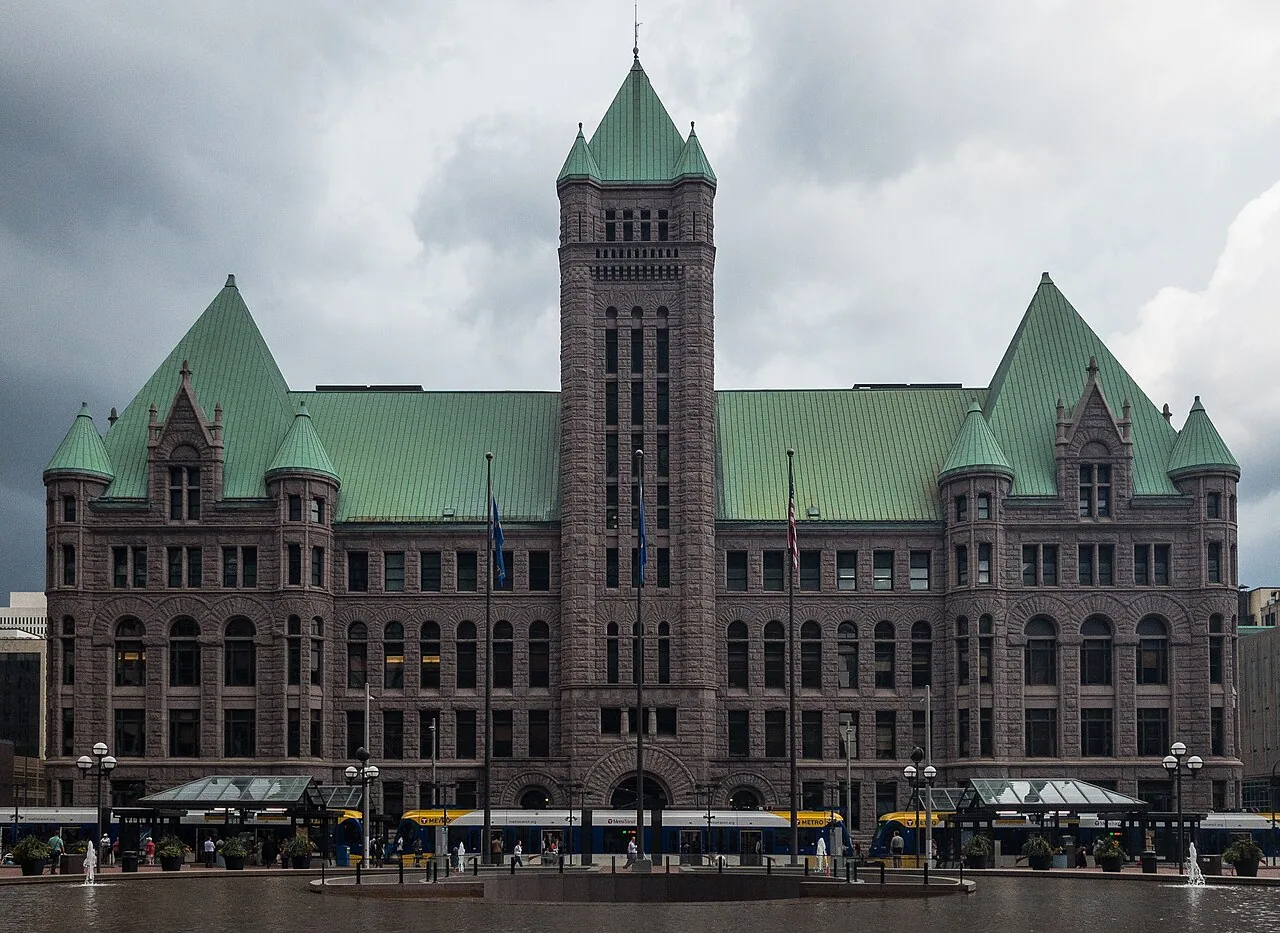
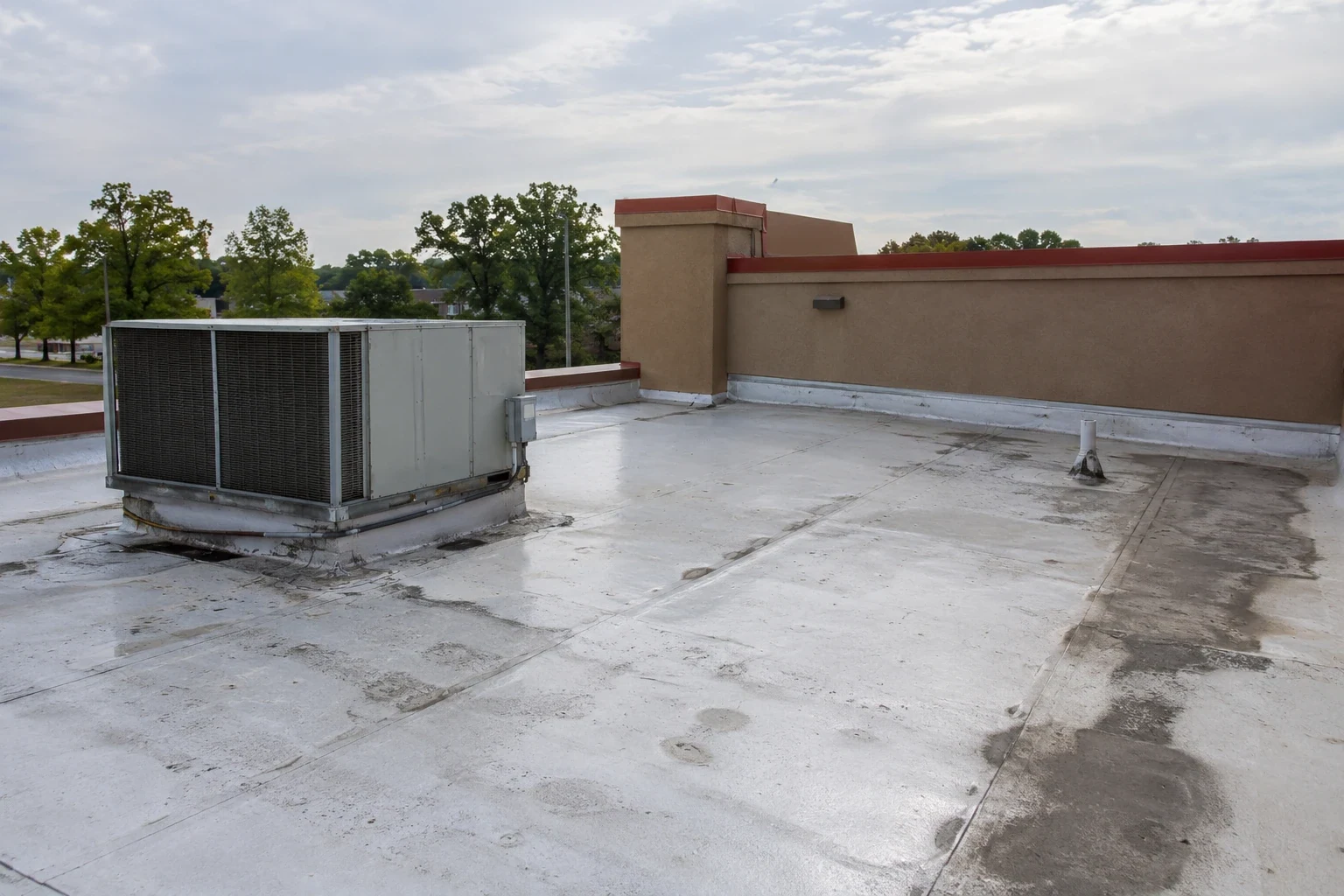
Office buildings usually carry a low-slope membrane with a mechanical yard: air handlers, condensers, exhaust fans and sometimes a small cooling tower. Smaller offices and professional buildings often have pitched or low-pitched metal, and some combine both. Each has a different failure pattern. Membranes fail at seams, curbs and drains. Metal roofs fail at fasteners, laps and trim.
Walmart's new Bentonville campus covers 350 acres and began opening in January 2025, replacing a home office spread across more than 20 buildings along Walton Boulevard. Office roofs in the region run from small professional buildings to whole campuses, and an owner with several of them is juggling several roofs at once. A TPO roof is common on newer offices, and older ones may carry something else.
Parapets, copings and roof drains are the repeat offenders on offices. A coping joint that opens in a freeze-and-thaw week lets water behind the wall flashing. A drain that clogs with leaves lets a pond stand against the parapet. We check both on every walk.
Tenant call: the stain on the ceiling tile
Most office roof calls start with a tenant standing under a stained tile. The property manager wants to know how bad it is, where the water got in and what it costs if it waits. We start inside, record the stain and the weather, then walk the roof along the line to the nearest curb, drain or wall.
Water in an office often moves along a duct or a pipe before it drops, so the mark and the opening may be far apart. A moisture scan finds wet insulation, and a drone pass checks the field quickly. The written note gives the tenant a cause and a repair date, which is what they actually want.
Photographs help the tenant conversation. A picture of the roof opening, a picture of the repair and a note of the date show the tenant that the cause was found and fixed, and they cost nothing to send.
Cost of waiting: ceilings, carpet and lease trouble
About 113 days of measurable rain and 46.96 inches a year at Drake Field keep a leaking office roof wet more often than not. In an office, the damage is more than insulation: ceiling tiles, carpet, drywall, furniture and electronics. A tenant who sees repeated leaks can start asking about rent credits and lease terms.
Wet insulation does not dry in place, so a small repair put off becomes a section replacement. The summary that goes to the owner shows repair now, repair with a plan, or replace, each with its price. Side by side, those show what each season of delay adds, and they give the owner a reserve line to defend.
Insurance is the other half of the cost. A leak that is sudden may be covered, and one that is long-standing may not, so the date and the maintenance record matter. We help the manager assemble the record at the time of repair.
Storm week: hail and the spring line
The NWS Tulsa log for May 2020 shows 3.00-inch hail about a mile east-northeast of Fayetteville and smaller stones nearby. Stones that large bruise membrane and dent metal, and the damage may wait for the next hard rain to show. Our storm walk covers the field, marks every bruise and probes the soft ones.
Rooftop units are often the first to show damage. Fan blades, coil fins and covers take the hits, and a displaced cover lets rain into the unit. Dated photographs in a hail damage repair file make the adjuster's visit simpler, and a baseline from before the storm shows what changed.
Edges and corners lift first in wind, so coping and edge trim get checked after every blow. A lifted edge is a quick repair that prevents a larger one.
Occupants: working around tenants and lenders
Office tenants care about noise, smell, access and parking. We plan loud tear-off for hours the building can tolerate, locate air intakes before opening the roof and stage equipment away from entrances. Each open section is dried in daily, and a work order tells tenants which area is active and for how long. An occupied-building reroof in an office is more about communication than carpentry.
Lenders and buyers want records. A roof condition report gives them age, condition, repairs and a likely remaining life. Owners along Walton Boulevard or in Downtown Fayetteville use the same report format for each building.
Parking and entrances stay open wherever possible. Barricades, signs and a spotter protect people at any point where a lift or hoist passes over a walkway, and the crew parks away from tenant spaces.
Questions About Office Building Roofing
Budget: reserve lines and energy code
Offices with several tenants need a reserve that grows ahead of the roof. A capital plan ranks each roof by condition and cost and sets replacement years. Offices follow the 2021 International Building Code as Arkansas adopted it in January 2023, with ASHRAE 90.1-2007 as the energy listing, and the building official confirms insulation before a replacement is priced.
Quotes requested in winter give the manager more choice of start dates, since spring is busy after storm lines. A budgeted job beats an emergency one by a wide margin.
Maintenance visits twice a year, one before winter and one after the spring storm line, keep small items small and add to the file. They cost far less than one emergency call.
Commercial Roofing Questions
A tenant reports a stain after every rain. Where do we start?
Begin with the date, the weather and the location, then walk the roof along the line to the nearest curb, drain or wall. Water often travels along ducts before it drops. A moisture scan and a close look at flashing narrow it down.
Can the roof be replaced while the office stays open?
Yes, in sections. We plan noisy work for off-peak hours, protect intakes and dry in daily. Tenants get a notice of each active area.
What should be in the file for a lender or buyer?
Roof age, type, a plan, past repairs, warranty terms, photographs and a condition report with remaining life. Keeping it current avoids a delay at closing.
Do rooftop units need to be moved during a reroof?
Often they can be lifted or flashed around. We review curbs and supports first and coordinate with the mechanical contractor so cooling stays on.
How much does waiting cost on a small leak?
Wet insulation spreads, so a repair can turn into a section replacement within a season or two. We give a three-path comparison with numbers.
Related Commercial Roofing Pages
Read how we handle this work in Fayetteville, AR
Read how we handle this work in Fayetteville, AR
Read how we handle this work in Fayetteville, AR
Read how we handle this work in Fayetteville, AR
Read how we handle this work in Fayetteville, AR
Read how we handle this work in Fayetteville, AR
Read how we handle this work in Fayetteville, AR
Read how we handle this work in Fayetteville, AR