
PVC Roofing in Fayetteville, AR
PVC roofing in Fayetteville, AR: welded single-ply membranes for restaurants, food plants and chemical exposure, with repair, recover and replacement pricing.
A restaurant manager who calls about a soft, discolored patch of roof near the kitchen hood is rarely dealing with weather. It is grease, and an ordinary membrane has been losing to it for a few years. PVC is the sheet we put in that spot, and it is the one that tends to last where cooking exhaust, animal fats or chemical vapors hit the roof. In Fayetteville, AR, with food-processing employers up I-49 in Springdale and the Dickson Street entertainment district at home, grease exposure is a fair question on any roof near a kitchen exhaust.
We install and repair PVC on low-slope roofs and tell the property manager what it costs, how long it should run and where a cheaper sheet will do.
What it is: a welded vinyl membrane
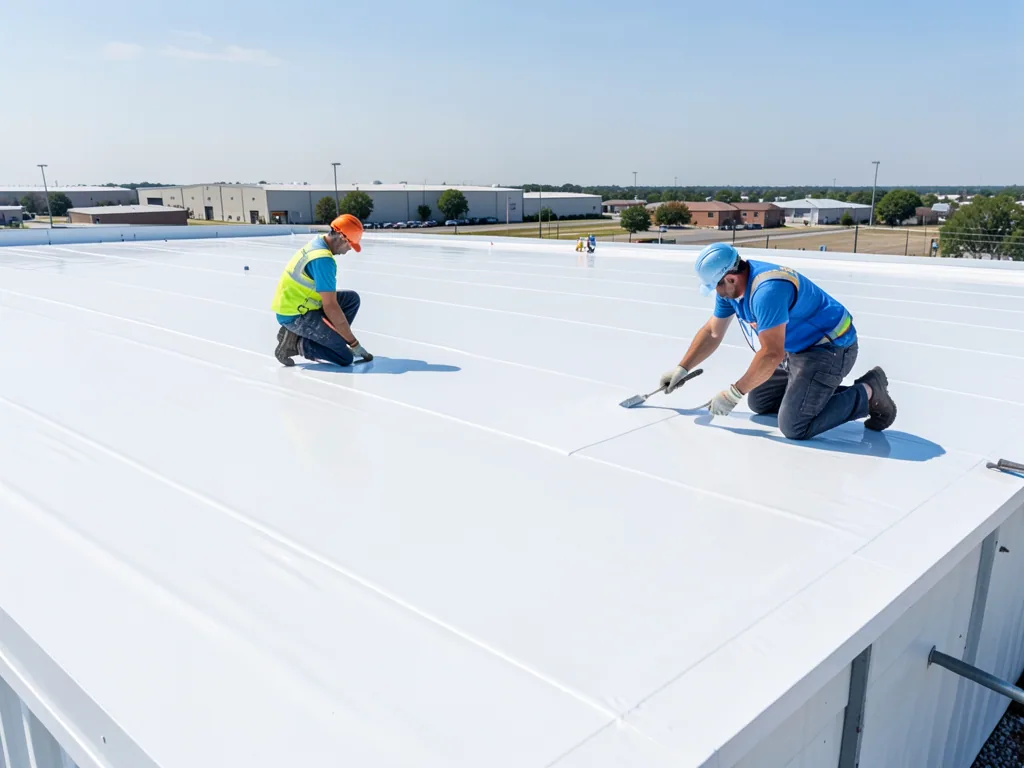
PVC roofing is a polyvinyl chloride sheet reinforced with a polyester or fiberglass scrim. Seams are welded with hot air into a single waterproof surface. The sheet resists many animal fats, oils and acids, and it holds up under standing water better than some alternatives. It also carries a fire-retardant formulation, which matters to insurers and building officials.
The cost is higher than a basic single ply, and the sheet has plasticizers that can migrate over the years, making the surface stiffer. That aging is slow, and a roof maintained with regular inspections tends to show it as light cracking at corners and stress points before it fails.
Seam strength is the other selling point. A properly welded PVC seam is stronger than the sheet around it, and we test welds with a probe along every seam rather than trusting the look of the bead. Probing costs a little time and catches the cold weld before it becomes a leak.
Fit: kitchens, plants and chemical exhaust
Springdale's largest employers include Tyson Foods, George's and Cargill Meat Solutions. Poultry processing is a large employer in Springdale, and plants of that kind move fats, steam and washdown vapors out through vents and stacks that sit on the roof.
Restaurants and grocery stores add the same exposure at smaller scale. A hood that vents onto a roof drops grease on the sheet for years, and the area within a few feet of the fan wears first. We test the surface around each exhaust point and recommend PVC, a KEE-modified sheet or a protective pad depending on what we find.
Pharmacies, clinics and labs add their own vapors, and hospital roofs carry exhaust of many kinds. A sheet that suits a kitchen may or may not suit a lab, so we ask what is being vented before any recommendation.
Weather: why standing water changes the choice
Drake Field logs 46.96 inches of rain and melted snow a year, across roughly 113 days, with May the wettest at 5.89 inches. A roof that holds a pond for a day after each storm spends a lot of the year wet. Ponding rarely kills a PVC sheet outright, which is one reason owners with drainage problems ask for it, but it still adds weight and speeds up dirt and algae growth on the surface.
We look for the cause. A clogged drain, a low spot in the deck or a poorly placed outlet is cheaper to fix than to live with. A ponding water repair with tapered insulation changes the slope under the sheet so the water leaves, and it extends the life of whatever membrane is on top.
On the roughly 10 days a year when Fayetteville highs stay below freezing, and in a winter that averages about 6.5 inches of snow, a pond on the roof turns to ice and sits there a day or two. Welded seams handle that better than glued laps, and flashing at drains deserves a close look in February.
Cost: when the premium pays back
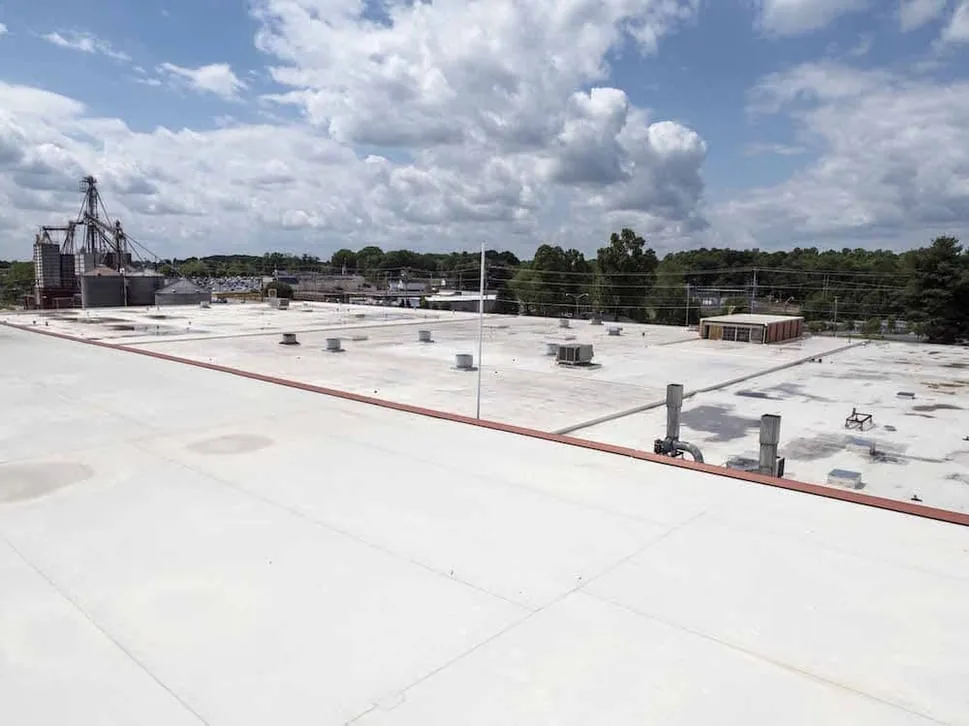
PVC costs more per square than TPO. It pays back where a cheaper sheet would need replacing early, or where repairs near exhaust points are recurring. For a roof with no grease or chemical exposure, the premium is hard to justify, and we say so. For a roof over a commercial kitchen or a plant with steam vents, a cheaper sheet can cost more over twenty years in repair calls and early replacement.
We prepare two numbers for the property manager: the first-cost difference and the repair history on the existing roof. If the current sheet has needed patches near a vent three years running, that tells us where PVC fits. The capital planning line is easier to defend with that record in hand.
Schedule: roofs over kitchens and food plants
Kitchens run on a clock, and a roof crew above one has to work around prep, service and cleanup. We agree on the hours that exhaust fans can be shut off, protect intakes from adhesive fumes and dust, and keep odors away from dining rooms. Food plants add sanitation rules, so crews wear clean footwear on the roof and debris is contained.
PVC welds in cool weather better than many adhesives set, so a winter job is possible on dry days, but cold stiffens the sheet and slows the crew. We plan the heaviest work for the mild spring and fall stretches and keep an occupied-building reroof in sections that dry in daily.
Fumes are a real concern. Adhesive and cleaning solvents can enter kitchens through make-up air intakes, so we locate intakes before the roof is opened and cover or avoid them. A cook who smells solvent in the prep line will stop the job, and he would be right to.
Questions About PVC Roofing
Records: what to keep after the job
Keep the roof plan, dated photographs, the product data sheets and any warranty terms in one folder. A later buyer, lender or insurer will ask for them. A roof condition report after installation sets the baseline, and a yearly check afterward shows whether grease or heat is aging the sheet faster than expected.
Code work is short. The 2021 International Building Code applies in Arkansas through the fire prevention code, and the energy side still cites ASHRAE 90.1-2007; the building official signs off on insulation for a replacement.
We hand over the weld test log as well. It shows who tested which seam, on what day and with what result.
Commercial Roofing Questions
Why does the roof near our kitchen hood keep failing?
Grease and heat from exhaust degrade many standard membranes, leaving them soft, stained and prone to splits. A grease-resistant sheet and a catch pan at the fan usually fix the pattern. We inspect the area within several feet of every hood.
Is PVC worth the extra cost on a plain warehouse roof?
Usually not. Without grease, oils or chemical exposure, a less costly sheet will do the same job. We recommend PVC where the exposure is real and tell you so when it is not.
Can PVC be repaired years after installation?
Yes, but aged sheet needs to be cleaned and, in some cases, treated before new material will weld. A test weld on a small area shows whether the repair will hold before we commit.
Does PVC handle ponding water?
It tolerates standing water better than some sheets, but we still fix the drainage. Standing water adds weight, grows algae and can reveal weak seams.
What happens to the old roof when PVC goes on?
Sometimes it is torn off; sometimes a cover board and a new sheet go over it. Moisture scans decide. Wet insulation has to come out.
Related Commercial Roofing Pages
Read how we handle this work in Fayetteville, AR
Read how we handle this work in Fayetteville, AR
Read how we handle this work in Fayetteville, AR
Read how we handle this work in Fayetteville, AR
Read how we handle this work in Fayetteville, AR
Read how we handle this work in Fayetteville, AR
Read how we handle this work in Fayetteville, AR
