KEE Roofing in Fayetteville, AR
KEE membrane roofing in Fayetteville, AR: PVC-alloy single ply for plants, kitchens and chemical exposure, with repair and replacement costs spelled out.
Some roofs fail from the inside out. A plant exhausts oil mist through a stack for twenty years, a kitchen throws grease across a membrane every dinner service, and the sheet softens, discolors and splits long before its weather life is over. KEE membrane is the PVC-alloy sheet we recommend for that kind of roof. Around Fayetteville, AR and the manufacturing and food employers up the I-49 corridor, a roof that has needed repairs near the same vent more than once is the one worth pricing in KEE.
We install and repair KEE membrane, and we are plain about when its added cost is worth paying and when a cheaper sheet will do.
What it is: PVC with a different plasticizer
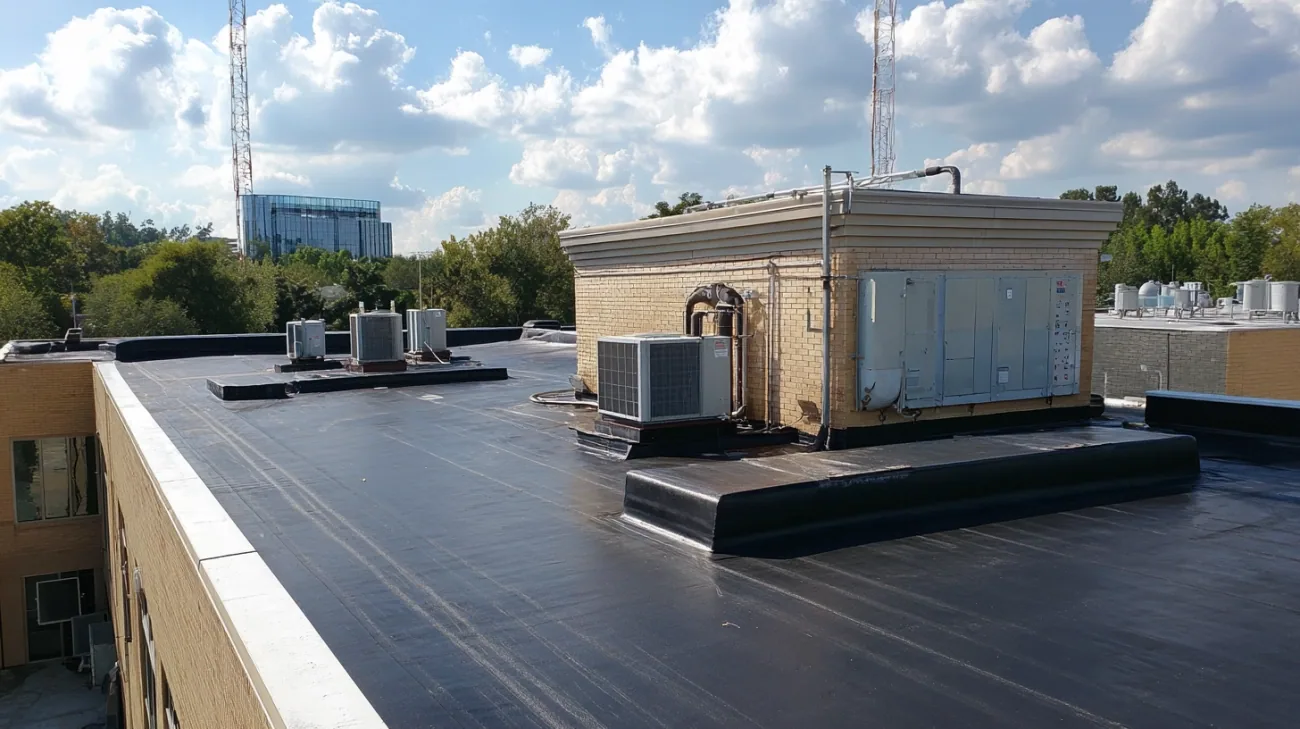
KEE stands for ketone ethylene ester, a polymer blended into polyvinyl chloride to hold the sheet flexible. Standard PVC uses a different plasticizer that can slowly leach out, which stiffens the sheet over time. The KEE blend is designed to stay put, so the membrane keeps its flexibility longer and resists oils, fats and many chemicals.
Like PVC, the sheet is reinforced and its seams are welded with hot air into a continuous surface. It is installed fully adhered, mechanically attached or in a few other ways, and it can be reflective. The price is higher than TPO, and the buyer pays for chemical resistance and a long working life in harsh settings.
Fire performance is a quiet advantage. PVC-based sheets are inherently flame resistant, which matters to insurers on a plant or a commercial kitchen, and it can influence the roof assembly rating the building official reviews. We list the assembly we propose so the reviewer sees it up front.
Fit: plants, labs and commercial kitchens
Springdale's largest employers include Tyson Foods, George's, Cargill Meat Solutions, Rockline Industries and Kawneer, a mix of food processing and manufacturing. Plants of that kind vent steam, fats, cleaning chemicals and process fumes through the roof. The Fayetteville Industrial Park, east of Fifteenth Street, holds industrial buildings of its own, and any of them with process exhaust is a candidate for a chemically resistant sheet.
Commercial kitchens, labs and hospital roofs with mixed exhaust are the other group. We ask what is vented, how often and at what temperature before recommending a membrane. A roof with only air conditioners on it does not need KEE, and a TPO roof will do the job for less.
Stack height and discharge direction are cheap fixes that get skipped. A fan that blows straight down onto the membrane concentrates damage in a small circle, while a taller stack or a directional cap spreads the exposure. We note both on the roof plan and price them with the membrane work.
Heat: summer surface temperatures and the sheet
July highs average 88.7 degrees at Drake Field, and highs above 100 degrees occur about three times a year, with an all-time record of 111. A roof surface runs hotter than the air, and exhaust adds more heat near the discharge. Thermal movement works on welds, flashing and fasteners, and chemical attack runs faster at higher temperatures.
We inspect process-vent roofs in mid-summer and again after a hard freeze. We look for softening, chalking and cracking in a ring around each discharge. Where the ring is growing, a stack extension, a splash pan or a replacement of just that area can stop the spread, and it is cheaper than replacing the whole roof.
Winter has its own risks. The record low of minus 20 degrees on February 16, 2021 is a reminder that process roofs heat unevenly, and condensation under a membrane near a warm exhaust can look like a leak. We tell the two apart before any repair is ordered.
Cost: when the higher price makes sense
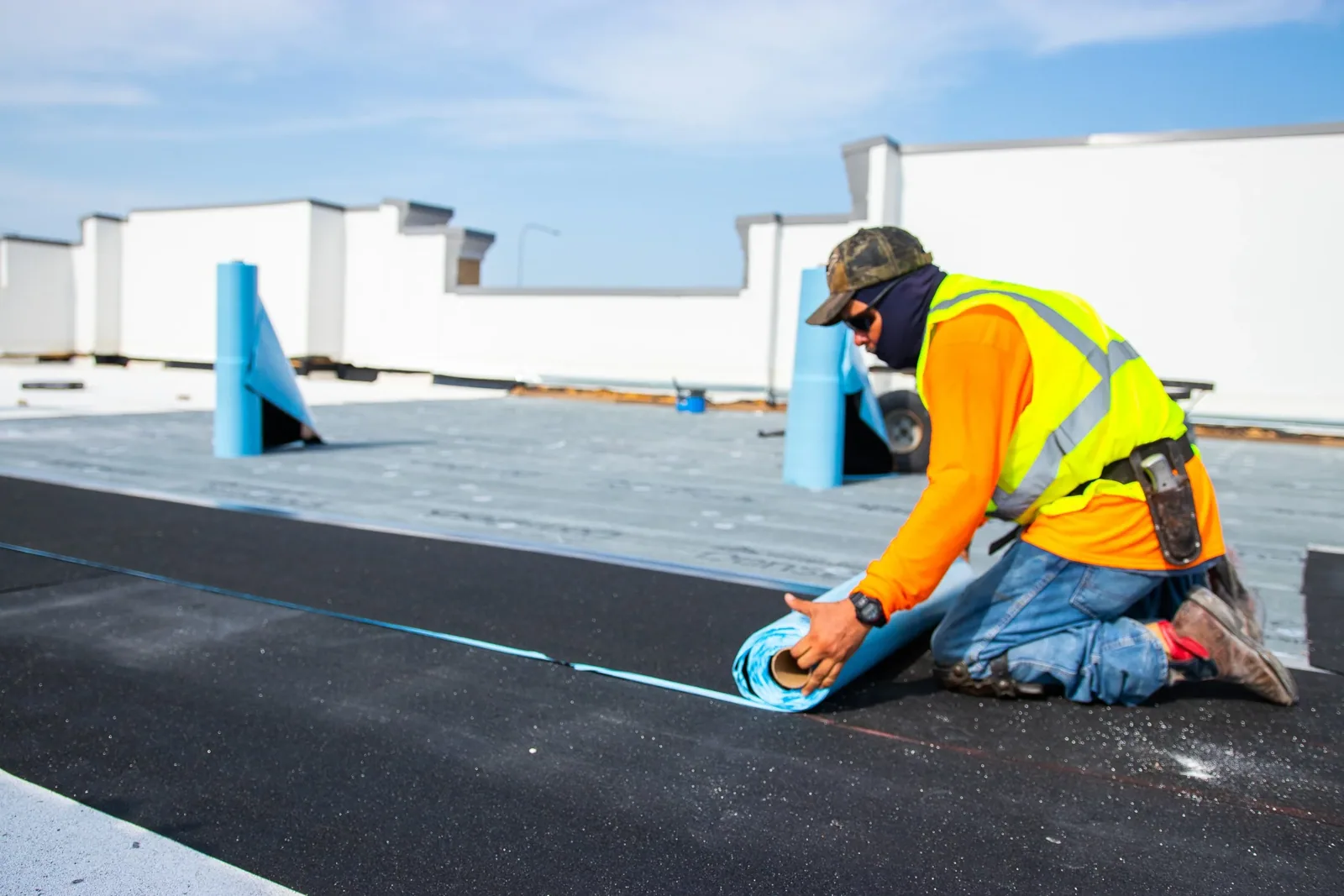
KEE costs more than basic single plies and about the same or a bit more than standard PVC. It earns the cost back on a roof that would otherwise need a new sheet near the exhaust every few years. We ask for the repair history on the current roof, and we price the new roof against the cost of the last three or four patch visits.
The PVC option is closer in price and may be fine for a roof with only moderate exposure. For a plant roof with heavy oils or solvents, KEE is a safer pick. The capital planning line should show both paths, with a likely life for each, so the finance side can see the tradeoff.
Ask each bidder for the thickness, the attachment method and the termination details in writing. Two quotes for KEE can differ by a lot, and the difference is often in the flashing and the edge, not the field sheet.
Schedule: roof work above live process lines
A plant that cannot stop production needs a work plan that respects it. We agree on which exhaust fans can be shut down for how long, protect air intakes from adhesive fumes and dust, and stage material away from loading docks. Food plants add sanitation rules for footwear and debris, and we follow them.
Welding KEE in cold, damp weather is slower than in mild conditions, so we avoid scheduling large areas in the coldest weeks. The spring storm line brings its own interruptions, and the occupied-building reroof approach keeps sections small enough to dry in the same day.
Delivery windows matter on tight plant sites. Rolls of membrane and adhesive drums need laydown space, and a hoist or crane needs room to swing. We mark both on a site sketch and agree on them with the plant manager before the first truck arrives.

Questions About KEE Roofing
Records: keeping the exposure history
For a process roof, the file should name what is vented from each stack, when it changed and what repairs were made. A roof condition report after installation records those facts, and a later change in the process, such as a new cleaning chemical, can be checked against it.
Process roofs follow the same code as any other. That means the 2021 International Building Code in Arkansas and an energy listing that still reads ASHRAE 90.1-2007, so the local official confirms insulation on a replacement. Owners in Springdale and Fayetteville Industrial Park get the same report format.
Commercial Roofing Questions
Is KEE the same as PVC?
It is a PVC-based sheet with a different plasticizer. The blend resists oils, fats and many chemicals, and it stays flexible longer because the plasticizer does not leach out as quickly. It is reinforced and welded in the same way as PVC, so the crew and the process are familiar.
How do we know our roof needs a chemically resistant sheet?
Look at the membrane within a few feet of each exhaust. Softness, discoloration, chalking or cracks in a ring around the discharge are the signs. We test the sheet, ask what is being vented and how often, and compare that with the patch history before recommending anything.
Can we put KEE over an existing roof?
Often, with a cover board over dry insulation. Wet insulation has to come out first, and the added weight and the code limit on roof layers are checked before pricing. A moisture scan and a few core cuts answer the question in a day.
What if only the area near one vent has failed?
A localized replacement of that section in a resistant sheet is common. We tie it into the existing roof with a lapped weld or a termination bar, and we fix the cause, such as a short stack, a missing splash pan or a fan that discharges downward.
Does KEE need maintenance?
Twice-yearly checks of seams, flashing and drains keep it in good shape. Keep grease and debris from building up around exhaust points, and photograph the same spots each visit so changes are easy to see.
Related Commercial Roofing Pages
Read how we handle this work in Fayetteville, AR
Read how we handle this work in Fayetteville, AR
Read how we handle this work in Fayetteville, AR
Read how we handle this work in Fayetteville, AR
Read how we handle this work in Fayetteville, AR
Read how we handle this work in Fayetteville, AR
Read how we handle this work in Fayetteville, AR