Roof Coating Restoration in Fayetteville, AR
Restore a sound commercial roof in Fayetteville, AR with a coating, tested first for wet insulation, adhesion and drainage, and priced against a tear-off.
A coating is the cheapest way to add years to a roof, and the most expensive way to find out you chose the wrong roof for it. The question a property manager asks is simple: can this membrane be restored for a fraction of replacement cost, and how many years does that buy? The answer depends on what is under the surface, so the first step is never a bucket of coating. It is a scan, a few cores and a pull test.
In Fayetteville, AR a coating also has to be applied around the weather. Drake Field's July highs average 88.7 F, readings over 100 F arrive about three times a year, and rain falls on roughly 113 days. That leaves a work window we plan for, not hope for.
Fit: which roofs can take a coating
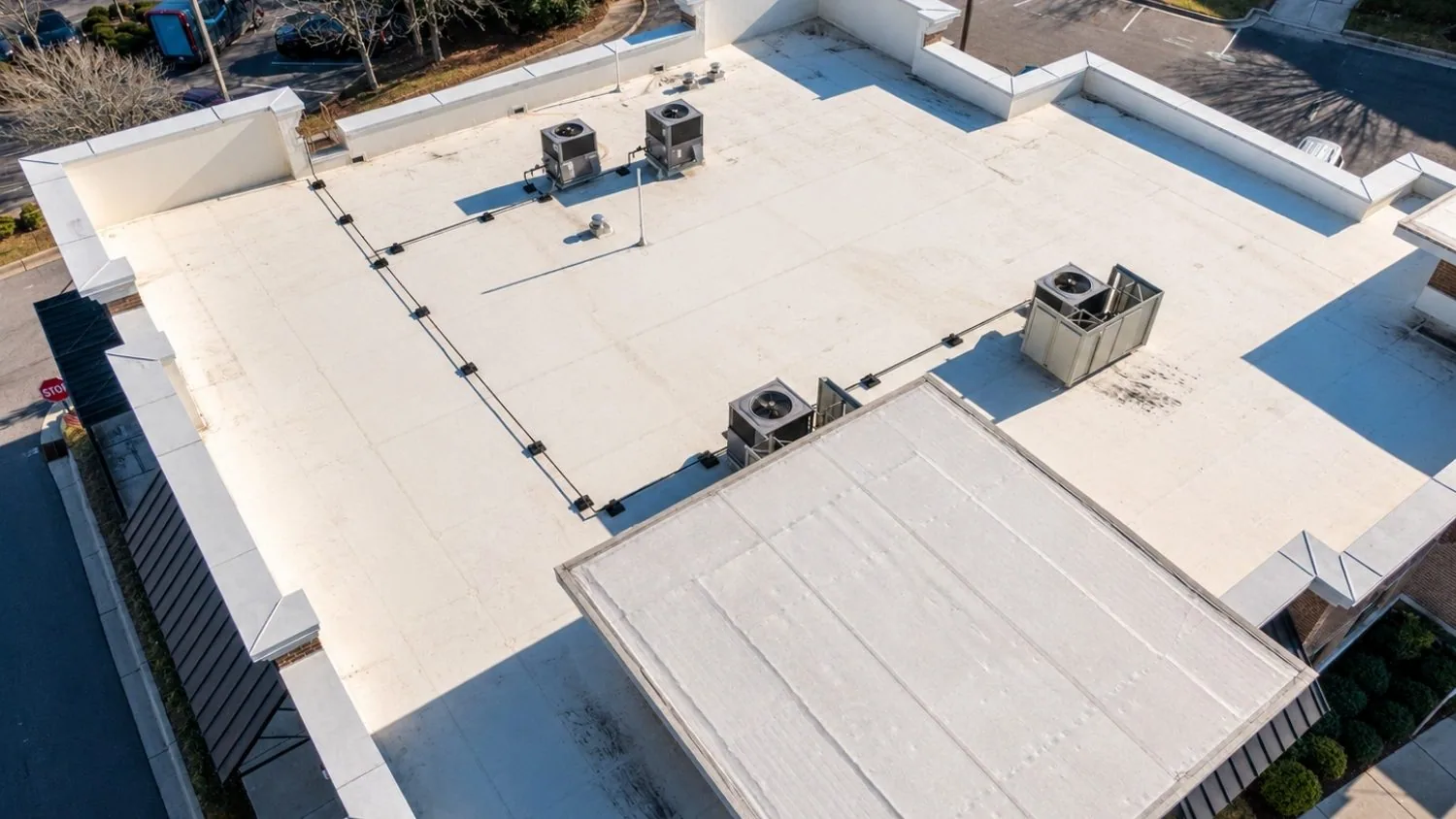
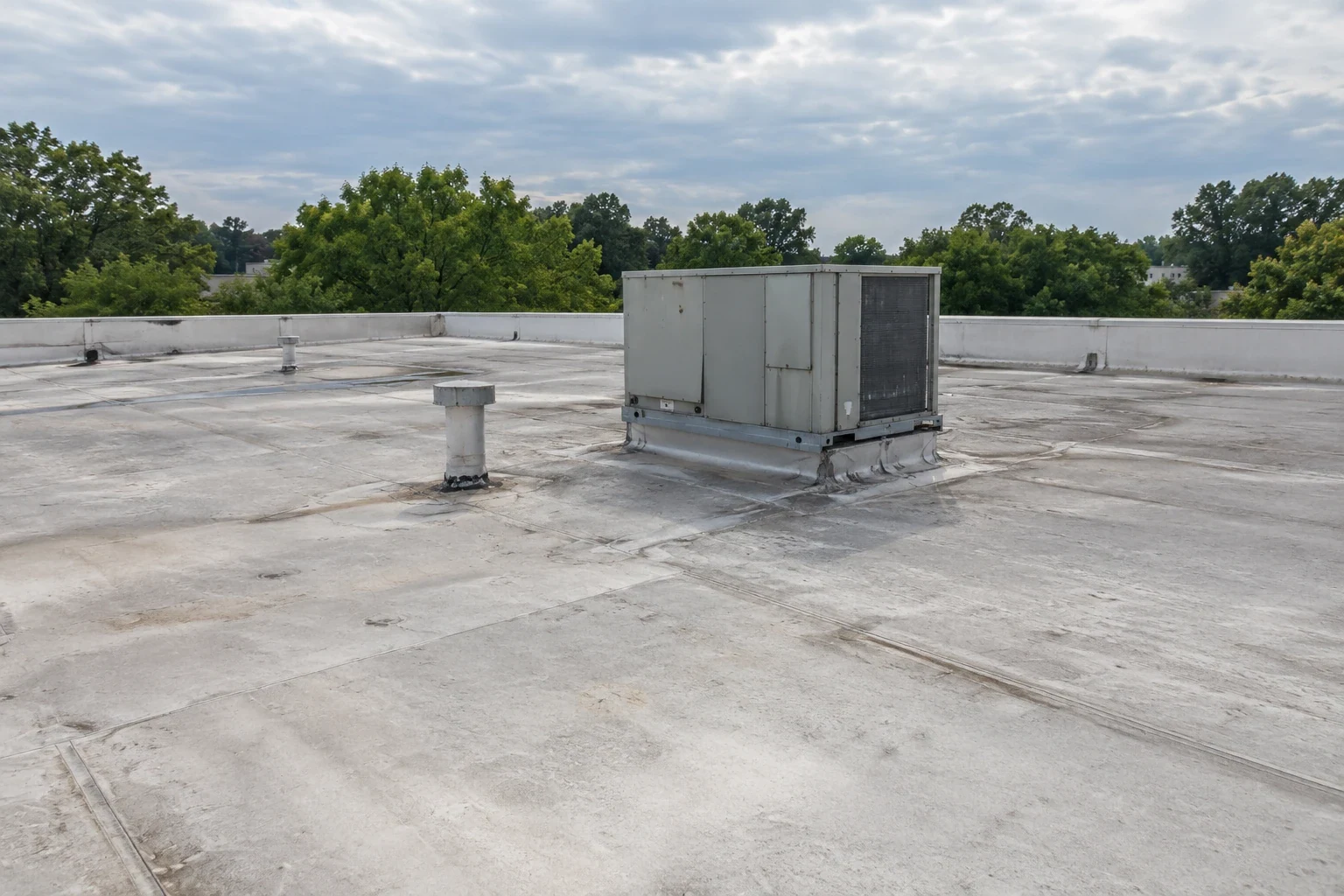
A coating suits a roof whose membrane is still attached and watertight in most places, whose insulation is dry and whose problems are surface wear, small cracks, sun damage and scattered pinholes. Single-ply sheets, aged modified bitumen, smooth built-up roofs, metal panels and sprayed foam can all take one when prepared well. A roof with wet insulation across a section, a membrane lifting from its base or a deck that has softened does not qualify.
We sort roofs into three groups after the walk. Roofs that qualify get a coating scope with a price. Roofs that qualify in part get a coating on the good sections and a repair or replacement on the rest. Roofs that do not qualify get a straight recommendation for a recover or a replacement, with the coating cost shown beside it so the manager sees what was saved by not coating.
Tests: what we confirm before ordering material
Three checks come first. An infrared moisture survey with a few cores shows where insulation is wet, and wet sections are cut out before anything is coated. A pull test on a cleaned patch of coating shows whether it will bond to the existing surface. A drainage check shows where water stands after rain, because the choice between silicone and acrylic turns.
Skipping any of the three is the usual way a coating job fails. A coat over wet insulation blisters in the first hot week. A coat that does not bond peels at the seams. A coat on a ponding roof breaks down where it stays wet. Each of those costs more to undo than the checks cost to run, and the report lists every result with photographs.
Seams and details get more than the open field does. Every lap, pipe boot, curb corner and drain bowl is cleaned, patched where needed and covered with reinforcing fabric under the coating, because those spots move with the temperature and crack a thin film first. Edges and flashings are refastened before the first coat goes on. A coating cannot hold a loose edge down, and an edge that lifts in a spring line of storms takes the film with it.
Chemistry: silicone, acrylic and where each fits
Silicone tolerates standing water and holds up under sun, though it collects dirt and is hard to recoat with anything else. Acrylic is easier to recoat and often costs less, but it does not like water that lingers. A roof that drains well can take acrylic; a roof with real ponds suits silicone better, or a drainage fix first.
Other systems exist, such as urethanes and asphalt-based coatings, and the right one depends on the surface under it. We pick the product by the roof, not by what is on the truck, and we say what the manufacturer's warranty asks of the preparation. The quote shows the number of coats, the film thickness, the reinforcement at seams and the price per square so it can be compared line by line.
Weather: when a coating can go on
Coatings need dry surfaces and mild temperatures, and May is the wettest month at 5.89 inches in a year that totals about 46.96. That points the work toward late spring dry spells, summer and early fall, planned around the forecast. Prep, repairs and priming can happen earlier in the year, so only the coating itself waits for a clear stretch.
Heat matters too. On a day above 90 F the roof surface is far hotter than the air, and some coatings skin over or bubble when applied to a hot membrane, so crews start early and work the shaded side first. Cold matters at the other end: fall coating has to finish before nights drop under the manufacturer's minimum. We schedule backward from that date and tell the manager early when a project belongs in next spring's work order.
Cost: restoration against replacement
A coating costs less than a tear-off and keeps the building in service during the work. It also pushes the replacement date out by a number of years that depends on the roof, the product and the upkeep. The fair way to compare is over a time horizon: coating now, recoat later and replacement at the end, versus replacement now with a longer warranty.
We put both on paper. The coating scope shows the initial cost, the expected service life, the cost of the first recoat and the point at which replacement becomes unavoidable. The capital planning view then shows the manager which path leaves more money in the reserve at the end of ten years. For a roof under a short ownership horizon, that comparison often favors coating. For one the owner plans to hold, it may not.
Questions About Roof Coating Restoration
Local: buildings that suit coating work
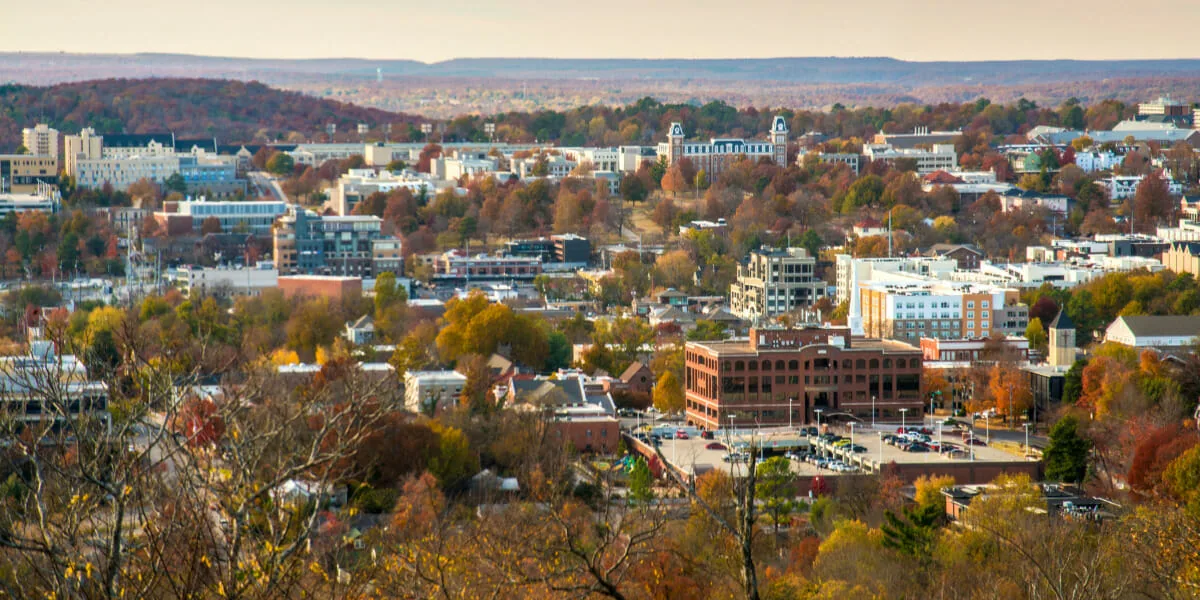
Fayetteville's historic Square holds buildings from 1886 to 1911, and the Fayetteville Industrial Park east of Fifteenth Street holds industrial buildings, including a 24,750 square foot single-story building in Industrial Park West. A building's age or size says nothing about its roof condition, so each one gets its own walk and its own cores before anyone talks about coating.
Owners in Fayetteville, the industrial park and Springdale usually start with the same question: can a coating bridge this roof to the next budget year? The test results answer it, and the written scope states the expected life, with the conditions that would shorten it.
Commercial Roofing Questions
How long does a roof coating last?
The roof under it sets the limit, along with the product, film thickness and upkeep. We state an expected service life in the scope and the conditions that shorten it, and we do not quote a number we cannot support with the test results.
Can any roof be coated?
No. Wet insulation, lifting membrane, soft deck and chronic ponding all disqualify a section. The scan and cores tell us which sections qualify, and the rest are repaired or replaced.
Will a coating void the existing warranty?
It can, depending on the warranty language and who applied it. Check the terms before work begins, and we will document the preparation so a manufacturer or insurer can see what was done.
Is silicone or acrylic better for a flat roof here?
Silicone suits roofs that hold water, and acrylic suits roofs that drain. Rainfall is high enough in this area that drainage is the first thing we measure.
What does a recoat cost?
A recoat is a fraction of the first job when the surface is clean and sound, which is why the capital plan lists it as a scheduled item. The first-recoat figure is in the quote.
Related Commercial Roofing Pages
Read how we handle this work in Fayetteville, AR
Read how we handle this work in Fayetteville, AR
Read how we handle this work in Fayetteville, AR
Read how we handle this work in Fayetteville, AR
Read how we handle this work in Fayetteville, AR
Read how we handle this work in Fayetteville, AR
Read how we handle this work in Fayetteville, AR
Read how we handle this work in Fayetteville, AR