Flex and Light-Industrial Roofing in Fayetteville, AR
Flex and light-industrial roofing in Fayetteville, AR: multi-tenant bay repair, rooftop unit curbs and reroof planning for office-warehouse buildings.
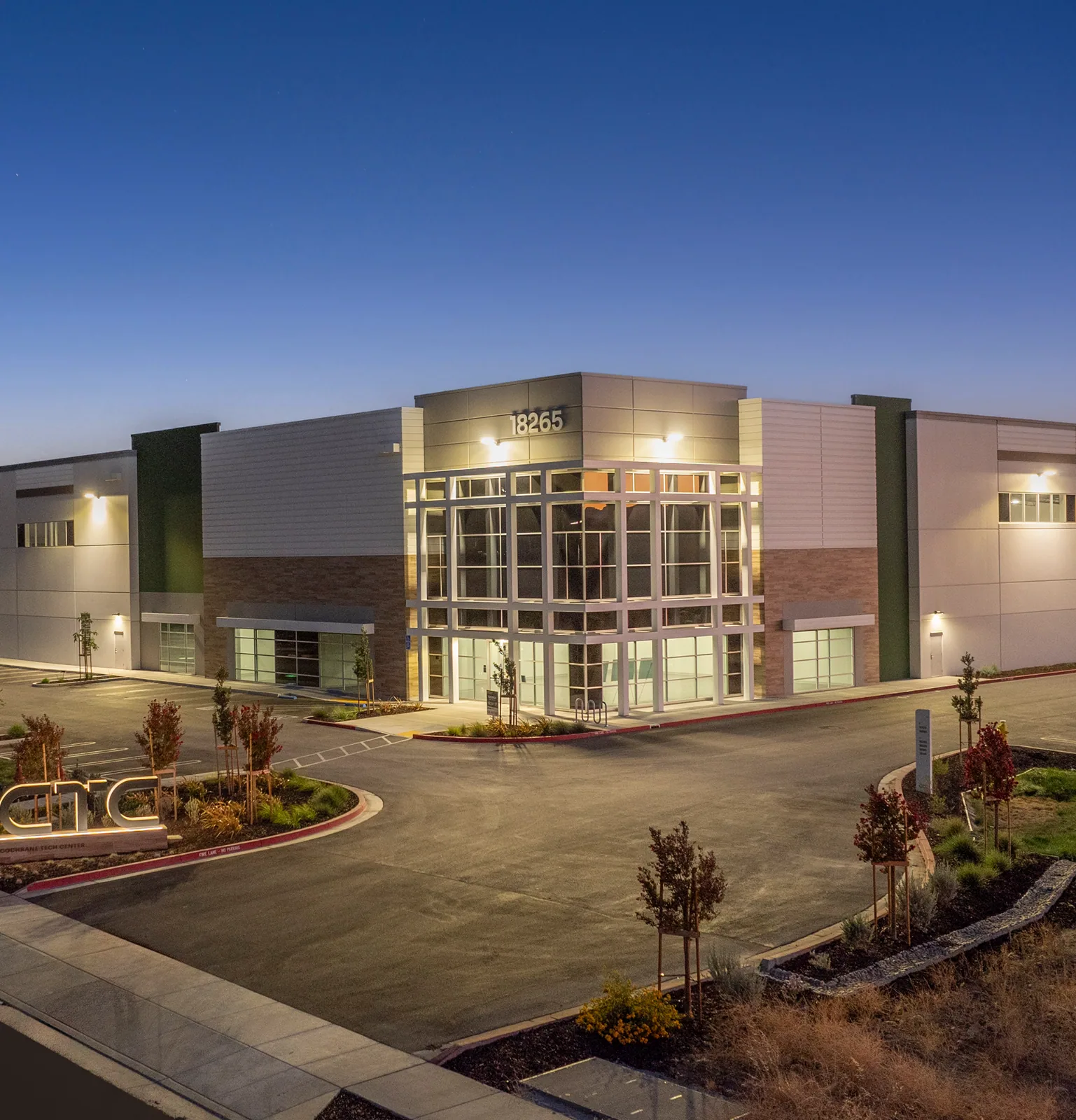
A flex building is one roof with several businesses under it. An office front, a warehouse back and a roll-up door in between, repeated bay after bay. One tenant stores parts, the next runs a small assembly line, a third is a showroom with a few desks. A leak in bay four is a problem for bay four, but the roof belongs to the owner, and the bill lands on the landlord. In Fayetteville, AR a flex building owner who walks the roof once a year and keeps a bay-by-bay log spends less and hears fewer complaints.
Bay by bay: finding the leak in a shared roof
A tenant reports a stain, and the stain is rarely under the entry point. In a long flex roof, water follows the deck and the insulation seams, then drops at a joist line or a firewall. We start with the report, then trace the path along the roof to the nearest suspect detail: a curb, a pipe, a parapet joint or a drain.
Each bay gets a number on the roof plan. Repairs are logged to the bay, and so are the tenant's reports. Over a year, the log shows which bays leak often and which details fail. A pattern points to a cause. Three calls from bays six through nine along one wall mean the wall flashing is the problem, not a series of bad luck. The owner sees the pattern and funds one fix instead of four patches. A self-storage property owner with long metal row buildings keeps a similar log for the same reason: a row of identical doors makes a repeat leak easy to spot. The log is a single sheet, with columns for the bay, the date, the tenant's words, what we found and what we did, and it rides in the owner's roof file from year to year.
Rooftop units: one per tenant, each with its own curb
A flex tenant may have its own rooftop unit, and each unit has a curb, a gas line, a condensate line and an electrical run. Over time, tenants change, units are replaced and curbs are modified. Every change leaves a flashing that someone has to maintain. When a unit is replaced, a service company may set it on a new curb, cut a new opening or leave the old one open.
We map every unit, curb and penetration on the roof plan and check their flashings. Where a unit is retired, we cap the curb or remove it and patch the roof. Where a service line crosses the membrane, we add a support and a walk pad. The rooftop equipment curbs and supports work is a large share of repair on a flex roof, because the equipment is closest to the people who use the bays.
The industrial park: what the area asks of a roof
The Fayetteville Industrial Park lies east of Fifteenth Street, and Fayetteville's I-49 interchanges and Fifteenth Street (Highway 16) connect it to the metro corridor. Industrial Park West includes a single-story industrial building of 24,750 square feet, and a park of this kind gives flex owners a ready comparison for bay size and roof age. Springdale, Siloam Springs and Gravette add manufacturing and logistics employers, from Rockline Industries and Kawneer to Hendren Plastics and Insul-Bead.
These buildings have trucks, forklifts and loading docks, and the roof gets attention only when it leaks. Truck traffic near the docks shakes the building, a canopy over a dock door can pond and a drain that clogs with leaves can flood a low section. We check each of those, and write the findings on the plan. Dock canopies, loading-door headers and the roof edge above a truck court get special attention, because trucks back into the same spot every day and a clipped gutter or bent coping turns into a leak. Metal parts near the truck court are checked for rust each spring.
Hail and freeze: what the weather does to a flat industrial roof
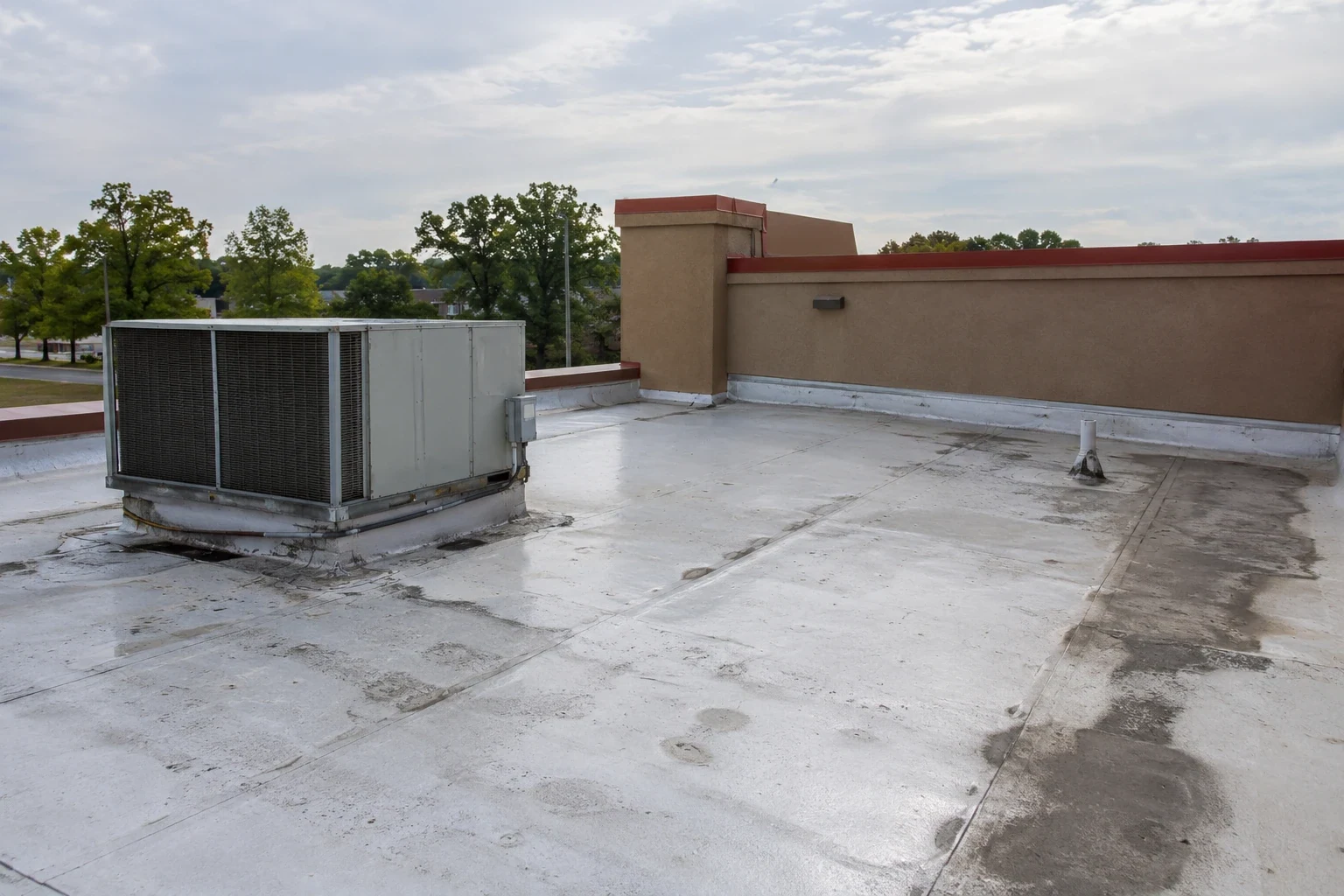
The May 2020 storm data lists hail up to 3.00 inches a mile east-northeast of Fayetteville. A flat industrial roof takes that impact across the whole surface, and hail can bruise membranes, crush insulation and crack skylights. Winter adds ten or so days a year with highs below freezing and a minus 20 F reading in February 2021, so freeze and thaw works on seams and flashings.
After a storm we survey the roof and mark every suspect spot. Because flex buildings are often leased, the file also serves the insurance claim. Each tenant's inventory is protected first, and a temporary dry-in goes on the worst area. A fall walk before the first freeze clears drains and checks seams, and the preventive maintenance report goes to the owner.
Roof choices: membrane, metal and coating
A flex building may have a low-slope membrane, a metal panel roof or an older built-up roof. A single-ply such as TPO suits most flat flex roofs because it can be welded, repaired in sections and installed in phases. A metal roof suits a building with a slope. A coating can renew a sound roof at far less than the cost of replacement.
The choice follows the roof's condition, not the brochure. A moisture survey tells us whether the insulation is dry, and core cuts show the layers. If the roof is dry and attached, a coating or a recover is on the table. If insulation is wet, those areas come out first. We write the options with cost and expected life so the owner can plan.
Questions About Flex and Light-Industrial Roofing
Budget: leases, reserves and the cost of waiting
Flex leases split roof costs in different ways, and the owner reads the lease. We write the estimate to show which costs are repair, which are replacement and which come from tenant equipment, so the landlord can bill correctly. A reserve line set by roof age keeps the budget steady. The numbers get easier to defend when each roof has a recorded age, a leak count and a repair spend, and the owner can show a lender or a buyer the same page. For owners with flex space in Fayetteville, Springdale and the surrounding parks, one report format covers every building, and a larger warehouse is planned the same way.
Commercial Roofing Questions
Who pays for a roof repair in a multi-tenant flex building?
The lease answers it, and the owner reads it. Typically the landlord pays and recovers some cost through common charges, but equipment added by a tenant can shift the bill. We log repairs by bay so costs can be assigned correctly.
How can we stop recurring leaks in the same bay?
Find the detail that keeps failing. A curb, a wall flashing or a drain is usually the cause. A permanent fix at that detail, backed by the bay log, ends the cycle more cheaply than repeated patches.
Do tenants need to be notified before roof work?
Yes. Notice goes out with dates, hours, access needs and noise expectations. For dock doors and truck traffic, we agree on a staging area and a route so deliveries continue.
Can we coat an older flex roof instead of replacing it?
A coating can extend its life at lower cost if the roof is dry, attached and clean. A moisture survey and core cuts show if that applies. Wet insulation or widespread failure points to a recover or replacement.
What happens to a unit curb when a tenant leaves?
The curb is capped or demolished and the roof patched when a unit is removed. A flashing left open is a leak waiting to happen. We list vacated units on the roof plan so they are closed properly.
Related Commercial Roofing Pages
Read how we handle this work in Fayetteville, AR
Read how we handle this work in Fayetteville, AR
Read how we handle this work in Fayetteville, AR
Read how we handle this work in Fayetteville, AR
Read how we handle this work in Fayetteville, AR
Read how we handle this work in Fayetteville, AR
Read how we handle this work in Fayetteville, AR
Read how we handle this work in Fayetteville, AR