Wind Damage Roof Repair in Fayetteville, AR
Commercial wind damage roof repair in Fayetteville, AR: lifted edges, peeled membrane, loose metal and tie-downs, with a priced list sorted by urgency.
The wind comes through on a spring night, and by morning the property manager has a photo from a tenant of a flap of membrane waving over the loading dock. Wind damage is a race against the next rain. An open edge lets water under the membrane, the water wets the insulation, and a repair that would have taken an afternoon becomes a section replacement. So the first decision is what to close up today.
Wind works on a roof in a pattern. It gets under the perimeter first, where air pressure is highest, then lifts the field if the edge fails. We read that pattern on the roof, mark each open area and tell the owner which items are urgent, which can wait a few weeks and what each costs.
Edges: where uplift begins
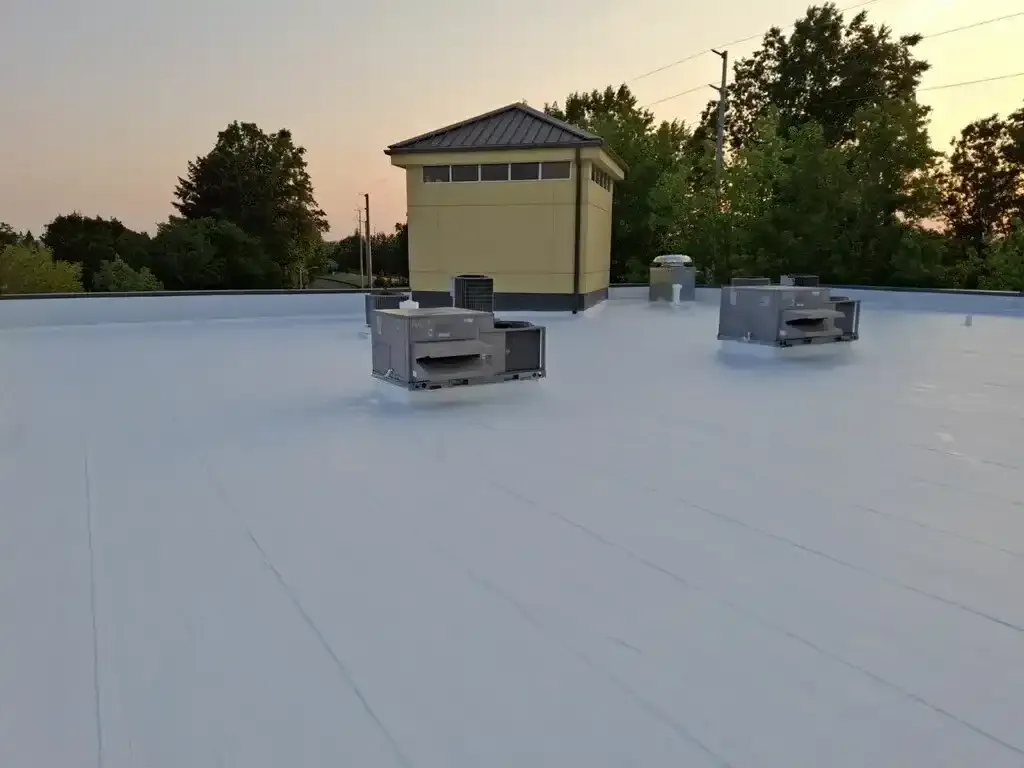
Perimeter metal, copings and fascia see the heaviest suction. A loose cap or a missing fastener at a corner can start a peel that runs across the roof. We walk the full perimeter, press on every length of edge metal, count fasteners and look for open joints, bent flanges and cracked sealant. We also check where the membrane ends under the metal, because a membrane that has pulled back from its termination will leak even if the metal looks fine.
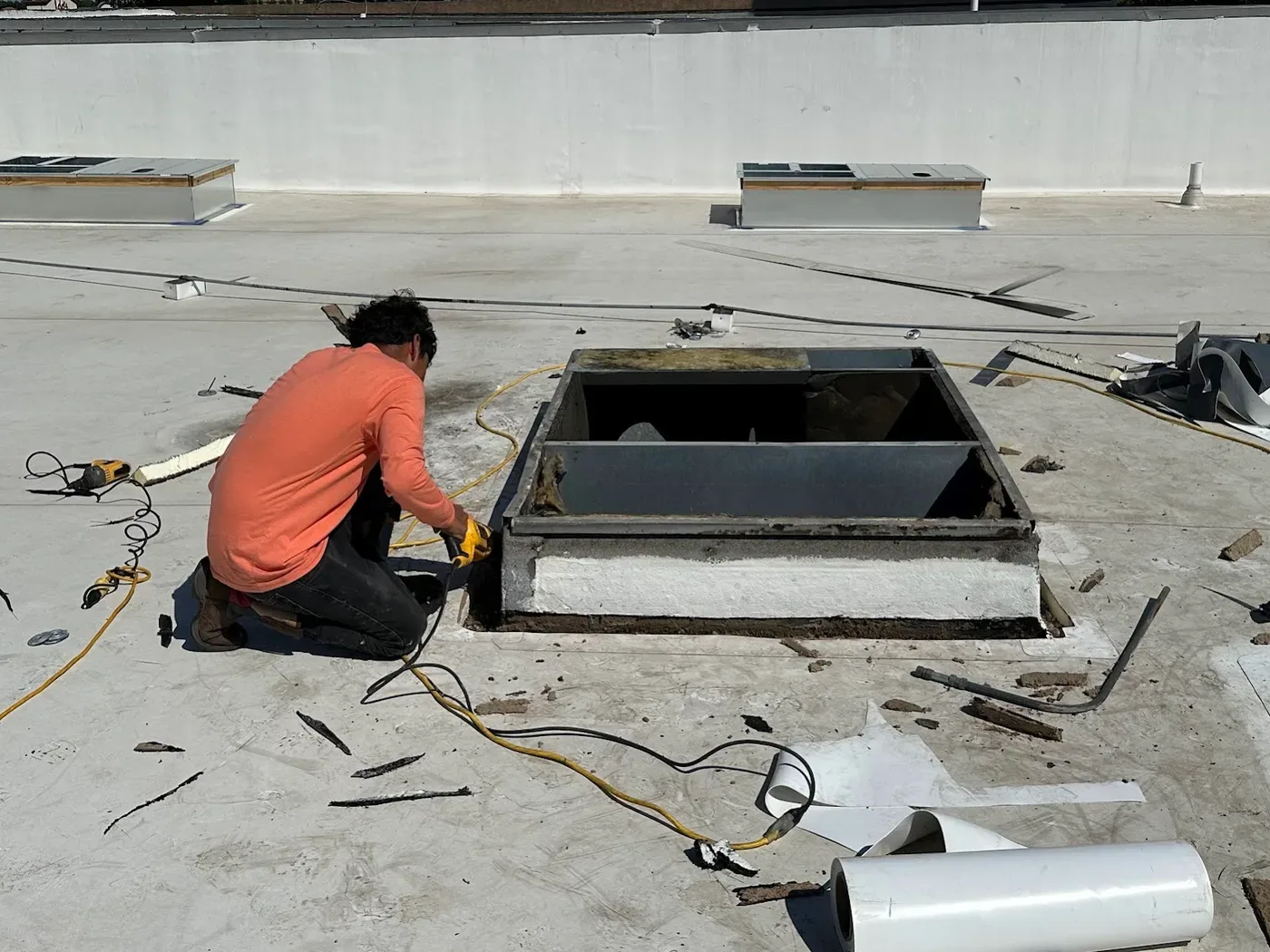
The usual fix is to re-secure the metal with the right fastener at the right spacing, reseal the joints and re-adhere the membrane at the edge. Where a section is bent or torn, we replace it. An edge metal, coping and gutter repair done early costs a small fraction of a membrane replacement, which is the reason we start at the edges after every wind event.
Flashing at walls and curbs gets the same scrutiny. Wind can bend or lift base flashing and open the seam between the flashing and the wall. We check each wall termination, counterflashing and sealant line, and we note any place where a failed flashing was already letting water in before the storm, since that changes both the repair and the claim.
Membrane and field: what peeled, what billowed
When wind lifts a membrane, it can pull seams open, tear the sheet at fasteners or detach it from the substrate. Mechanically attached systems show fluttering and fastener pull-through. Adhered systems show bubbles and lifted patches. Ballasted systems can show moved stone. We map each area on a sketch, probe the substrate and scan for moisture, because a roof that flapped for hours in a storm may have taken rain as well.
Repair depends on the extent. A small tear can be patched with a welded or adhered patch. A lifted area may need to be re-adhered or re-fastened. Large sections of loosened membrane may justify replacement of that section, and in a bad case a full commercial roof replacement is the better value. We price each path with its cost drivers so the owner can compare.
Rooftop equipment is part of the survey. A unit that shifted on its curb can break the seal around it, and a loose duct or a lifted hood can catch wind and pull on the roof around it. We check each unit for movement, look at the curb flashing and tighten or reset what we can. If a unit has to be lifted to repair the curb, we coordinate with the mechanical contractor so it goes back correctly.
Metal roofs and panels: laps, fasteners and clips
Metal roofs fail differently. Fasteners back out, laps open, panels buckle and clips loosen. In a standing seam roof, the seams can unzip at the end of a run, and in an exposed fastener roof the screws can pull through the panel. Wind can also drive rain under laps that were tight in July. We look for each of these signs, from the ground with binoculars where we can and on the roof where it is safe.
On a metal building, we check ridge caps, gable trim and eave edges first. Replacing a few screws and resealing laps is cheap work that stops leaks early. If panels are bent or clips are failing, we replace the damaged parts and recheck the run. A standing seam metal roof that took a severe event may need panel replacement and clip inspection along the whole run.
Tornado-class wind: when the structure comes first
Springdale's EF3 tornado of March 30, 2022, with an estimated peak wind of 145 mph, sits at the far end of the wind scale. A large metal building near Highway 412 was destroyed, and a city shop at the airport lost part of its roof and a wall. A storm like that is outside normal roof repair. Structure, utilities and safety come first, and a roofer has no business on a roof until it has been cleared.
In the milder events that are far more common, such as straight-line wind, the roof is usually intact but stressed. For those, repair is the right answer. For the destructive end, our tornado damage roof repair work starts with temporary protection and a structural check, then moves to replacement under an engineer's direction.
Records: dated photos and what the adjuster needs
Wind claims turn on documentation. We photograph each damaged area with a wide shot and a close shot, mark the location on a roof sketch and note the date, time and weather. We also record the state of fasteners and sealant, since a claim may hinge on whether a component was already worn. If a tenant reported the damage, their photos and the time of the call go into the file. We keep every piece of removed material that shows the failure, such as a bent cap or a pulled fastener, until the adjuster has seen it.
A repair that reaches a certain size can trigger code rules for fastening or edge details under the 2021 International Building Code as Arkansas amends it. We check with the local office when the scope grows. For help with the claim itself, our roof insurance claim assistance process keeps the file in order. Owners in Springdale and Tontitown, where US 412 crosses the area, can call for a walk after any wind event.
Dated photographs of the edges taken before the storm season, even without damage, give the next claim a comparison that is hard to dispute.
Questions About Wind Damage Roof Repair
Commercial Roofing Questions
How soon should a wind-damaged roof be tarped or patched?
Right away if the membrane is open or an edge is lifted. Rain can enter within hours, and wet insulation turns a small repair into a large one. Call the emergency line at any hour.
Can a lifted membrane be re-adhered?
Often, if the substrate is dry and the membrane is in good shape. We test the adhesion, clean the surfaces and re-adhere or re-fasten. If the sheet has stretched or torn, we patch or replace.
How do you check for hidden damage after a windstorm?
We walk the perimeter, probe soft spots, inspect fasteners and laps and run a moisture scan. Damage from wind often hides under a sheet that looks flat.
Will insurance cover wind damage to my roof?
That depends on your policy and the adjuster. We supply dated photos, a written description and a priced scope, and we separate storm damage from older wear so the claim has clear facts.
What can I do to reduce wind risk before storm season?
Have the edges checked, tighten loose metal, clear gutters and drains and secure loose rooftop items. A spring walk catches most of what wind would find.
Related Commercial Roofing Pages
Read how we handle this work in Fayetteville, AR
Read how we handle this work in Fayetteville, AR
Read how we handle this work in Fayetteville, AR
Read how we handle this work in Fayetteville, AR
Read how we handle this work in Fayetteville, AR
Read how we handle this work in Fayetteville, AR
Read how we handle this work in Fayetteville, AR
Read how we handle this work in Fayetteville, AR