Tornado Damage Roof Repair in Fayetteville, AR
Commercial tornado damage roof repair in Fayetteville, AR: safe access, temporary roofs, debris removal, partial or full rebuild and records for the claim.
A tornado is the one storm where the roof may not be the first problem. Walls can be down, utilities cut and the structure unsafe to enter. The property manager's first calls are to emergency services, the owner and the insurer. Ours comes after: when the area is cleared, someone has to cover what is left, keep rain out of the building and start the record of what was lost.
Northwest Arkansas knows this storm. A 5.2-mile path up to 350 yards wide and an estimated peak wind of 145 mph made Springdale's EF3 tornado of March 30, 2022 the region's most recent measure of how a roof fails, and seven people were injured. The damage it left behind showed how a roof fails when the wind is far past what any membrane or panel is built to take.
Most wind events the area sees are much smaller, and for those the repair path is different. A building that lost edge metal or a section of membrane to straight-line wind needs wind damage roof repair, and one that took large stones in the same storm line needs hail damage work first. A tornado often brings both, along with debris, so the survey covers all three.
What failed in Springdale: roofs, walls and hangars
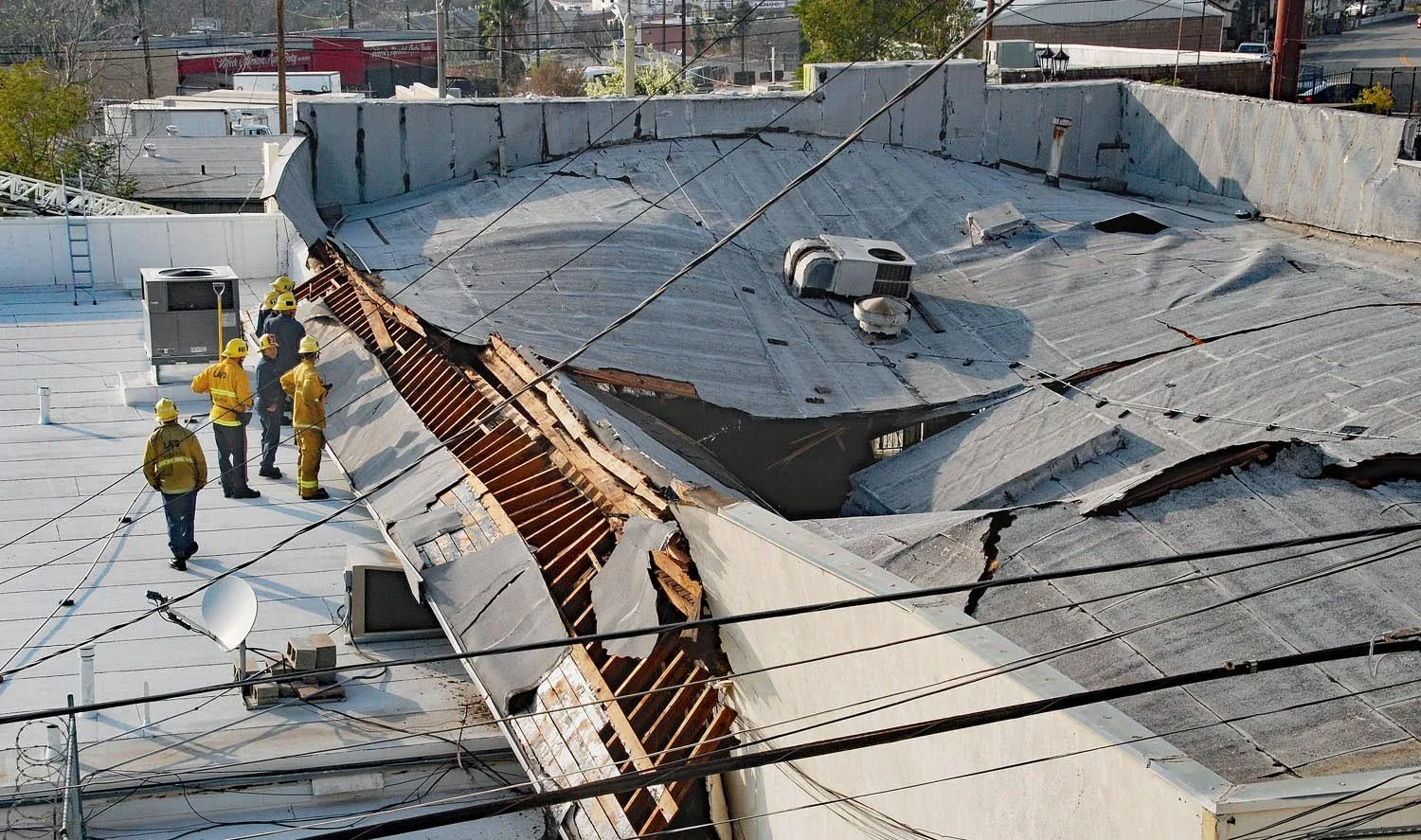
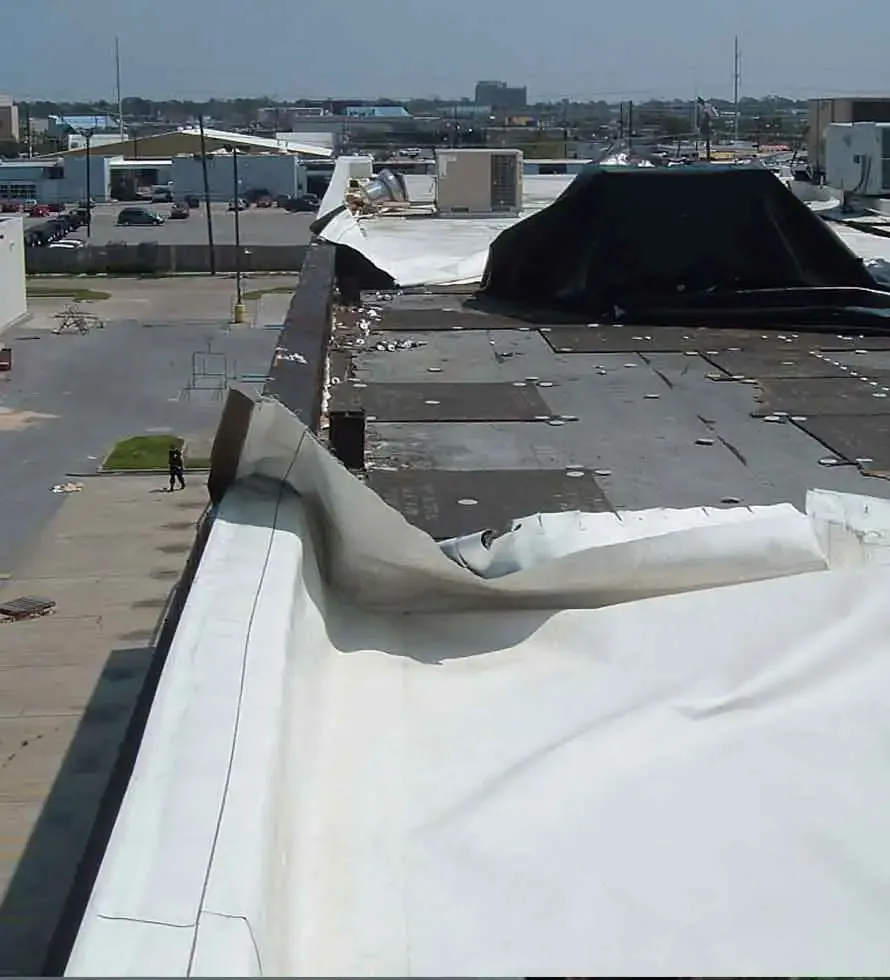
The storm destroyed a large metal building near Highway 412, a hangar at Springdale Municipal Airport and part of the roof and a wall of the airport's city maintenance shop. Metal buildings fail in a recognizable way under that kind of wind: the roof panels lift, the purlins twist, the walls lose their connections and the frame collapses. On other building types, the roof edge goes first, and the deck can peel back in sheets.
These events are the far end of the range. For the owner of a building that survived, the questions are narrower: what is the deck's condition, how much membrane and insulation is gone and what does the frame look like. We answer them with a careful walk, a structural engineer's input and photographs of everything before it is moved.
Safe access: who clears the building and when
No roofing work starts until the building is cleared. That clearance comes from the building official, a structural engineer or both, and it may be partial: some areas open and others fenced. We follow it. Downed power lines, leaking gas and unstable walls are not a roofer's problem to solve, and we wait for the people who can solve them.
When access opens, we start from the edges. We confirm the deck can hold a person, lay boards over doubtful areas and mark no-go zones. A drone gives a first view of the extent without putting anyone on questionable surfaces. Photos taken at this stage record the condition before cleanup, which matters for the claim and for the engineer's report.
Debris is the next hazard. Torn metal, broken glass, shattered wood and insulation spread across a roof and into drains. We pick up what is loose, bag small items and sort large pieces by what they were, since the adjuster may need to see them. Every drain is cleared and every scupper checked before rain, because debris-blocked drains turn a covered roof into a pond. Sharp pieces of metal are removed first, so the crew is not working among cut edges.
Temporary roof: keeping rain out of a torn building
The rain after a tornado is the second storm. We cover open areas with heavy tarps, sheet material or temporary membrane, secured to sound framing, and we keep the covers tight against wind. Where the roof deck is gone, we may build a temporary frame or use shoring. The goal is a dry interior while the permanent work is planned.
Temporary protection has to be documented as carefully as the damage. We photograph each cover, record the materials and keep receipts. Emergency roof repair is available at any hour, holidays included, and this is the stage where the clock matters most: a building covered the first day has far less water damage than one left open for a week.
Where the roof deck is gone, the interior needs protection from above and from the sides. We coordinate with the restoration contractor so tarps cover the roof while drying equipment runs below. Temporary roofs can stay in place for weeks, so we inspect them after each wind and rain, re-secure ties and replace worn sheets. A cover that has been left alone through a second storm line becomes a new problem, not a solution.
Rebuild: partial repair or full replacement
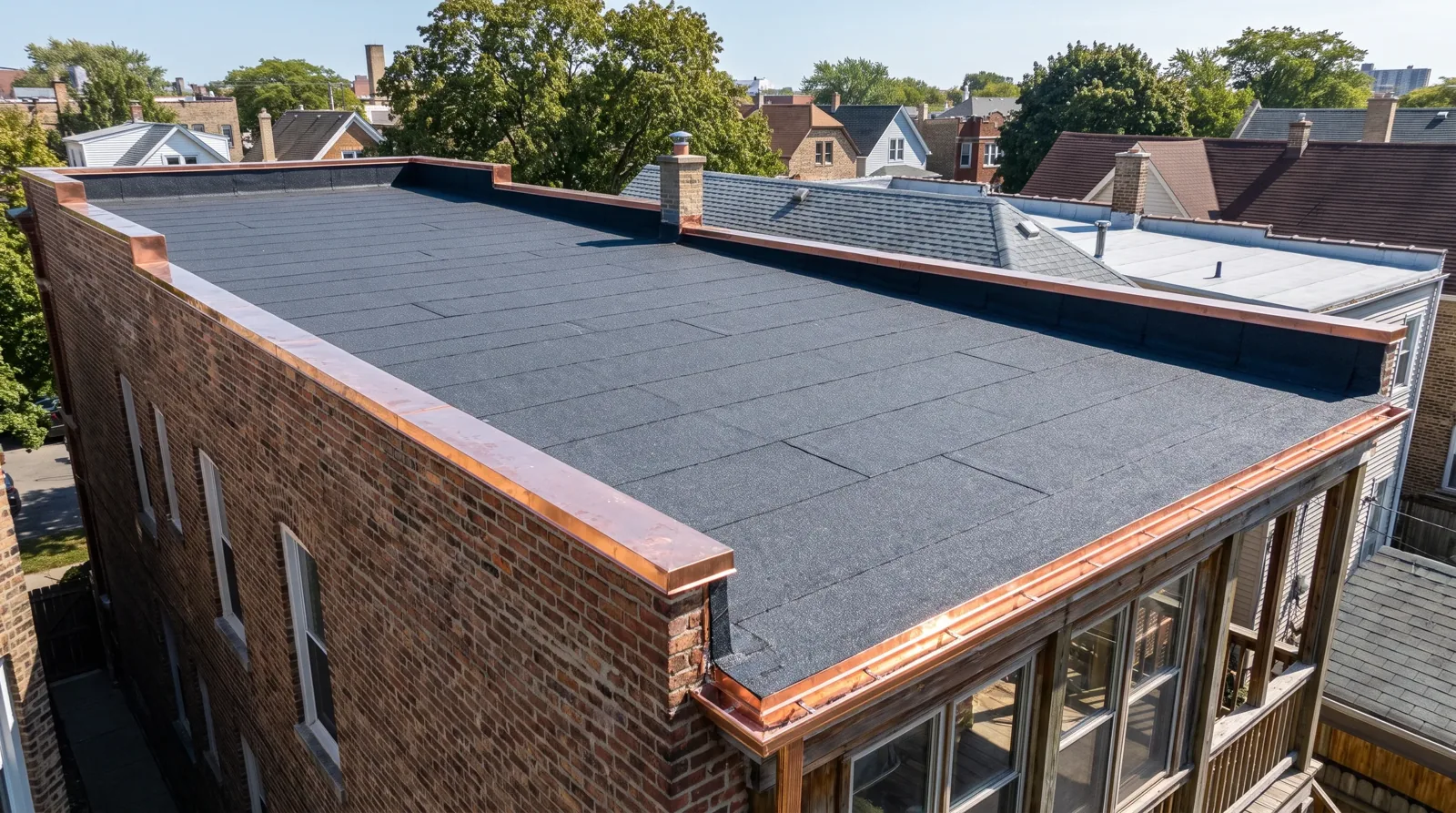
After a tornado, a full replacement is common, but not universal. A building at the edge of the path may have lost a few panels and a stretch of edge metal, and a repair is right. A building closer to the core may have a deck that is warped or missing and a membrane that is torn across large areas. The engineer rules on the deck, and we price the roof on top, listing the cost drivers so the owner can compare a partial rebuild with a full one.
Because the 2021 International Building Code applies in Arkansas through its fire prevention code, the rebuild is permitted and built to current rules for fastening and edge details. We check the manufacturer's tested assemblies against the code and the wind requirement. A metal roof retrofit or a new standing seam system may be a better choice for a metal building than patching, depending on the frame and the damage.
Supply and schedule: why the rebuild takes a while
When a storm damages many buildings, material and crews get tight. Orders for membrane, insulation and metal may take weeks, and the building office is busy. We order early, line up crews and sequence the work so each stage starts when the last one is done. The schedule names what depends on others: the engineer, the permit, the supplier and the weather.
For owners in Springdale and Tontitown, where US 412 runs east and west, and for those in nearby towns, we keep a running list of what is covered, what is ordered and what is waiting. Records for the insurer start at the first photo and continue through completion, with a log of every delivery, inspection and sign-off, and our roof insurance claim assistance file follows the claim from the first call to the last invoice.
Questions About Tornado Damage Roof Repair
Commercial Roofing Questions
When can a roofer enter a tornado-damaged building?
Only after the building official or an engineer clears it. We wait for that clearance, then walk the roof with boards, a safety plan and a spotter on the ground for each person above.
Can the roof be saved after an EF3 hit nearby?
Sometimes, if the deck and frame are sound. We check the structure with the engineer and test the membrane and insulation. Parts may need replacement while others stay.
How do you protect the building from the next storm?
With a temporary cover over open areas, secured to sound framing, and a rain plan for the days until the permanent work starts.
How long does a rebuild take?
It depends on the permit, the engineer, the material and the weather. We give a schedule with the dependencies listed, and we update it as the pieces fall into place.
What records should I keep?
Photos from before cleanup, invoices for temporary work, the engineer's report and all correspondence with the insurer. We keep our own copy as well.
Related Commercial Roofing Pages
Read how we handle this work in Fayetteville, AR
Read how we handle this work in Fayetteville, AR
Read how we handle this work in Fayetteville, AR
Read how we handle this work in Fayetteville, AR
Read how we handle this work in Fayetteville, AR
Read how we handle this work in Fayetteville, AR
Read how we handle this work in Fayetteville, AR