Standing Seam Metal Roofing in Fayetteville, AR
Standing seam metal roofing in Fayetteville, AR: panel, clip and seam inspection, repair and replacement for commercial buildings facing wind and hail.
A standing seam roof looks permanent from the parking lot, and that look is why the clips and seams under it get ignored. The panels run long, the ridges stand tall and the fasteners are hidden, so when a leak shows up the property manager has no obvious place to start. In Fayetteville, AR the system faces a spring line of storms, hail up to three inches in the May 2020 reports and the March 2022 tornado that crossed Springdale.
We inspect, repair and replace standing seam metal, and we tell the manager where the real risk sits: at the clips, the seams, the penetrations and the edges.

What it is: long panels locked at raised seams
Standing seam panels run from eave to ridge in single pieces, with raised ribs along each side. Neighboring ribs lock together in a seam, either snapped or mechanically crimped. The panels are held to the structure by concealed clips, so no screws pierce the weather surface in the field. That is the main advantage over exposed-fastener metal.
The panels float on the clips as the metal expands and contracts through the day and the seasons. If a clip binds, a penetration is fixed rigidly through the panel or a seam is poorly crimped, the movement concentrates and leaks begin. Most standing seam leaks trace to one of those three conditions.
Panel gauge and finish set how the roof ages. Heavier gauges resist denting and oil-canning, the waviness that shows in flat panels under certain light. Factory-applied finishes hold color and resist chalking longer than field paint. We state gauge and finish in the proposal, since both affect price and life, and we compare them with an aging coating plan when the existing roof is the question.
Wind: uplift, clips and the edge zone
Springdale took an EF3 tornado on March 30, 2022, with an estimated peak wind of 145 mph along a 5.2-mile path. A large metal building near Highway 412 was destroyed that day, and the airport's city maintenance shop lost a wall and part of its roof. No roof system is designed for wind like.
Ordinary storm lines are the daily concern. Wind lifts roofs at the edges and corners first, so the perimeter clip spacing and the edge trim are critical. After a blow we check trim attachment, clip condition and panel ends. A wind damage repair record helps the insurer, and a quick repair at the eave keeps the next gust from working further under the panel.
Snow and ice behave differently on metal. A smooth panel sheds a heavy snow in one slide, which can take gutters, snow guards and walkway covers with it. We check snow guard attachment and gutter hangers before winter, since a slide onto a parking lot is a safety problem as well as a repair bill.
Fit: buildings that use standing seam
Standing seam is common on offices, schools, churches, retail fronts and light industrial buildings with a pitched roof. It handles snow shedding, since Fayetteville gets about 6.5 inches a year and roughly 10 freezing days, and it lasts a long time when the coating holds. It is not suited to low-slope roofs with ponding, where a membrane belongs.
Where a pitched metal roof covers an office or a school, including in the Walton Boulevard corridor of Bentonville, the front elevation may carry a standing seam profile and the rest a different one. A metal roof retrofit can fix an older exposed-fastener roof without a full tear-off.
Clip spacing and panel width vary by wind zone, and a building owner often does not know what is on the roof. We remove a panel end or trim section to read the clip layout, then record spacing, fastener type and condition.
Repairs: seams, penetrations and coatings
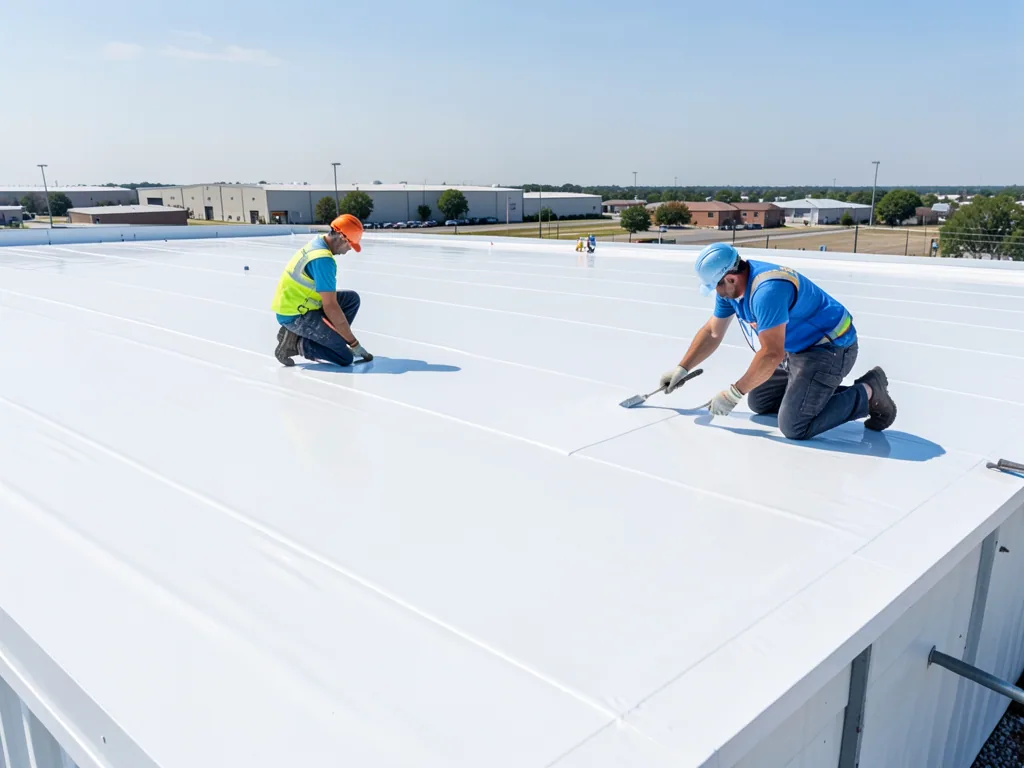
Seam leaks are fixed by cleaning, resealing or re-crimping the lock. Penetrations get a curb or a pipe boot that allows the panel to move. Fasteners that have been driven through the field of a panel in earlier repairs become leak points and are replaced with proper flashing.
Paint and coating wear is a slower problem. Chalking, fading and scratches expose the metal, and in a humid climate with about 47 inches of rain a year, bare spots rust. A coating or a repaint at the right time extends panel life. We note the finish condition in every report and give a window for recoating.
Cost: panel gauge, trim and access
Metal roofing costs more than most membranes up front and pays back in service life. Price depends on gauge, finish, panel profile, trim details and how hard the roof is to reach. Complicated rooflines with many valleys, hips and penetrations cost more than simple ones. We quote the panel gauge and trim in writing so two bids compare fairly.
Lead times for panels can be long after a storm line, because metal is rolled to order. A manager who plans ahead gets the job done before winter. The capital planning line should include the lead time as well as the price.
Thermal noise and oil-canning are cosmetic, and they do not by themselves mean the roof leaks. We tell the manager which marks matter and which are only cosmetic, so a repair budget goes to leaks first.
Questions About Standing Seam Metal Roofing
Records: panels, clips and fasteners on file
The file should state the panel gauge, the clip type and spacing, the finish and any warranty terms. A roof condition report adds photographs and a repair list. Wind and insulation details follow Arkansas's 2021 International Building Code, adopted through the fire prevention code effective January 1, 2023, with the energy listing still at ASHRAE 90.1-2007. The building official confirms both on a replacement.
Delivery needs space. Long panels arrive on trucks that need a wide turning path and a place to unload, and a crane or a panel hoist needs room. We lay out the staging area on a site sketch before panels are ordered.
Commercial Roofing Questions
Why do standing seam roofs leak if there are no exposed screws?
Leaks come from seams, penetrations and trim, not the field. A clip that binds, a seam that was poorly crimped or a pipe fixed through the panel will let water in. We find it by looking at movement marks and checking each detail by hand.
Can standing seam be repaired in place?
Usually. Seams can be cleaned, resealed or re-crimped, and penetrations can be reflashed. Panel replacement is possible when panels are bent or corroded, as long as matching profile and finish are available.
How does hail affect a metal roof?
Large stones dent panels, and dents can crack the coating. The roof may still shed water, but the finish and appearance suffer, and an adjuster may treat cosmetic dents differently from leaks. We document both with dated photographs and a roof plan, and we tell the manager which dents are likely to become leaks.
Do we need to worry about tornado winds?
No roof is rated for the winds of an EF3 tornado. For ordinary storm lines, proper clip spacing and edge trim matter most. We check both after each storm and fix loose trim before the next one.
How long does a standing seam roof last?
A good one can last a long time with periodic maintenance, but condition governs. Fading finish, binding clips, rusty trim and fasteners that have backed out tell us where it stands. We give the manager a rating by slope, since the south-facing sides age faster.
Related Commercial Roofing Pages
Read how we handle this work in Fayetteville, AR
Read how we handle this work in Fayetteville, AR
Read how we handle this work in Fayetteville, AR
Read how we handle this work in Fayetteville, AR
Read how we handle this work in Fayetteville, AR
Read how we handle this work in Fayetteville, AR