
Snow and Ice Roof Damage Repair in Fayetteville, AR
Repair snow load, ice and freeze-thaw damage on commercial roofs in Fayetteville, AR: frozen drains, split seams, cracked sealant and sagging decks.
Winter in Northwest Arkansas is short, and a roof can get through most of it without a problem. Then a freeze-and-thaw week arrives, the drains ice over, the melt backs up behind a parapet and a ceiling tile drops on Monday morning. The tenant's call comes in with a photo of a drip, and the property manager is left to figure out where the water entered while the roof is still half frozen.
Fayetteville averages about 6.5 inches of snow in a year and roughly ten days with highs below freezing, so snow loads and freeze-thaw cycling both reach roofs here. The numbers are small next to northern climates, but a roof sized for a mild winter meets a hard one with little margin, and the weak spots show fast.
February 2021: what a minus 20 reading does
On February 16, 2021, the temperature at Fayetteville's Drake Field fell to minus 20 F, tying for the eighth-coldest reading in Arkansas history. Cold that deep stiffens membranes, hardens sealants and makes plastics brittle. Seams that were flexible in October can crack, and a single-ply sheet pulled tight across a cold deck can split at a corner or a fastener. Pipes and drain lines can freeze and burst, and what looks like a roof leak may be a plumbing failure that ran down a wall.
After an extreme cold event we walk the roof, check the seams, look for cracked flashing and sealant and trace any leak to its source. We also check rooftop equipment, because freezing can split condensate lines and coils. The first question is always where the water came from, and the answer decides who fixes what. Photographs of the source, taken before anything is dried or removed, protect the owner in a claim. A roof leak and a burst pipe need different repairs and different claim paperwork.
Metal roofs and metal accessories react differently. Panels contract in the cold, and fasteners that were snug in summer can loosen or pull. Gutters pack with ice, and downspouts split at seams. We check ridge caps, laps and screws after a deep freeze and reseal what has moved. A standing seam metal roof has clips that allow for movement, and we confirm that the seams have not opened at their ends.
Ice at the drains: how melt finds a way in
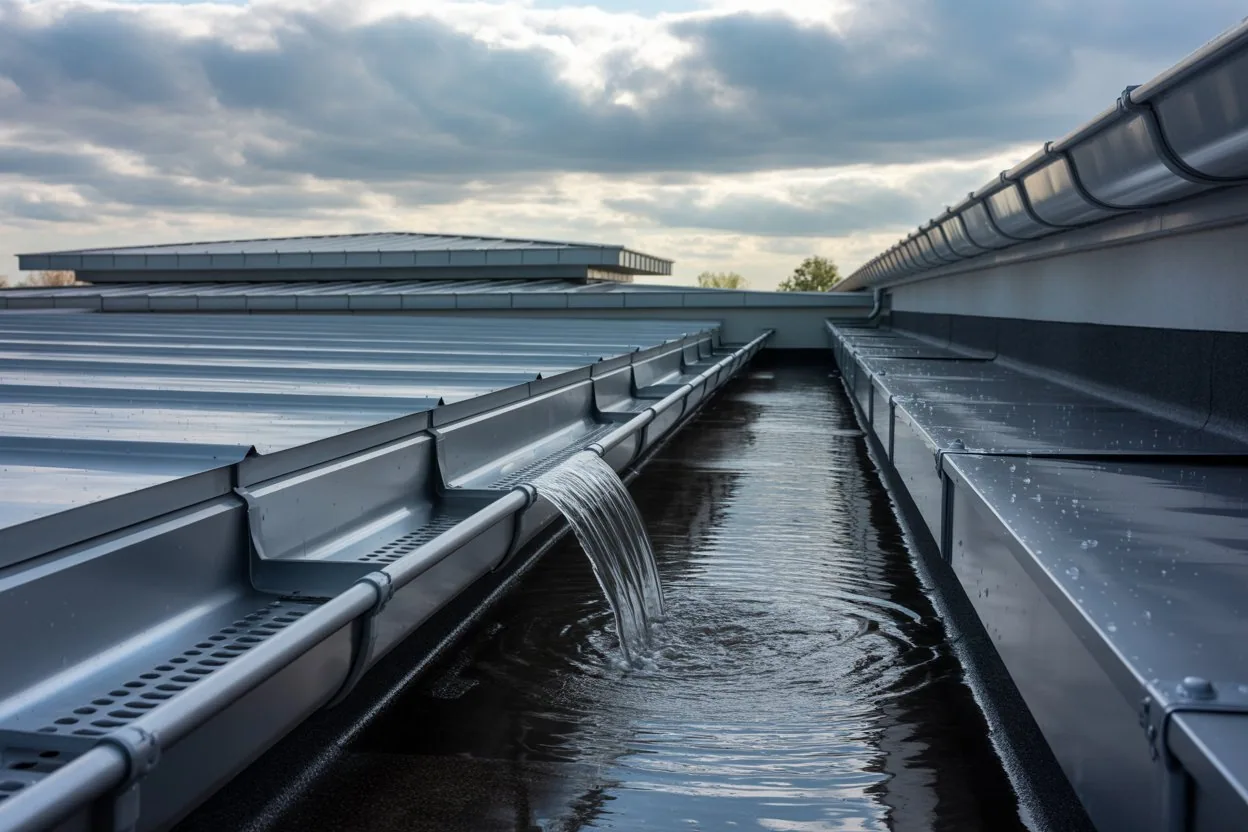
Ice dams on a sloped roof get the attention, but a flat roof has its own version. A drain bowl full of ice, a scupper plugged with frozen debris or a gutter packed solid leaves melt water nowhere to go. It backs up behind a parapet or against a curb and finds the lowest flashing or seam. Daytime sun melts the surface, the night refreezes it, and each cycle pushes water a little further under the membrane.
We clear drains and scuppers carefully, without tools that cut the membrane, and we check that the drain bowls and lines are intact. Where ice has already pushed water under a flashing, we dry the area, probe for soft insulation and plan the repair for the first mild day. A frozen line may need heat tape or insulation, and a drain that sits high may need a reset. Our roof drain and scuppers work includes testing the flow after the clean, so the next thaw has a clear path.
Snow load: weight, drifts and what to watch
Snow adds weight, and wet snow adds more. On a roof designed to code the load is allowed for, but drifts pile against parapets, equipment and upper roof edges, and those spots take more than the field does. Roofs with added equipment, extra layers or old damage have less margin. Signs of trouble are a sagging deck, doors that stick below a roof, ceiling cracks and deflection in framing.
If a building shows any of those signs, the owner should call an engineer. We do not shovel a roof of doubtful strength. For ordinary snow, we recommend clearing drifts at drains and rooftop units by hand and leaving a thin layer on the membrane to protect it. Metal shovels and ice scrapers cut membranes, so we use plastic tools and proper technique, and we mark any cuts we find for repair.
Equipment on the roof changes the picture. A unit that sits on a curb collects drifts on its windward side, and the melt from those drifts runs back toward the curb flashing. Condensate lines freeze and back up. Exhaust vents ice over at the cap. We check each unit after snow, free the vents and lines and look at the flashing for signs that melt water got in. Any unit that shows leakage goes on the repair list with a photo and the location.
Freeze-thaw: slow damage that shows up in spring
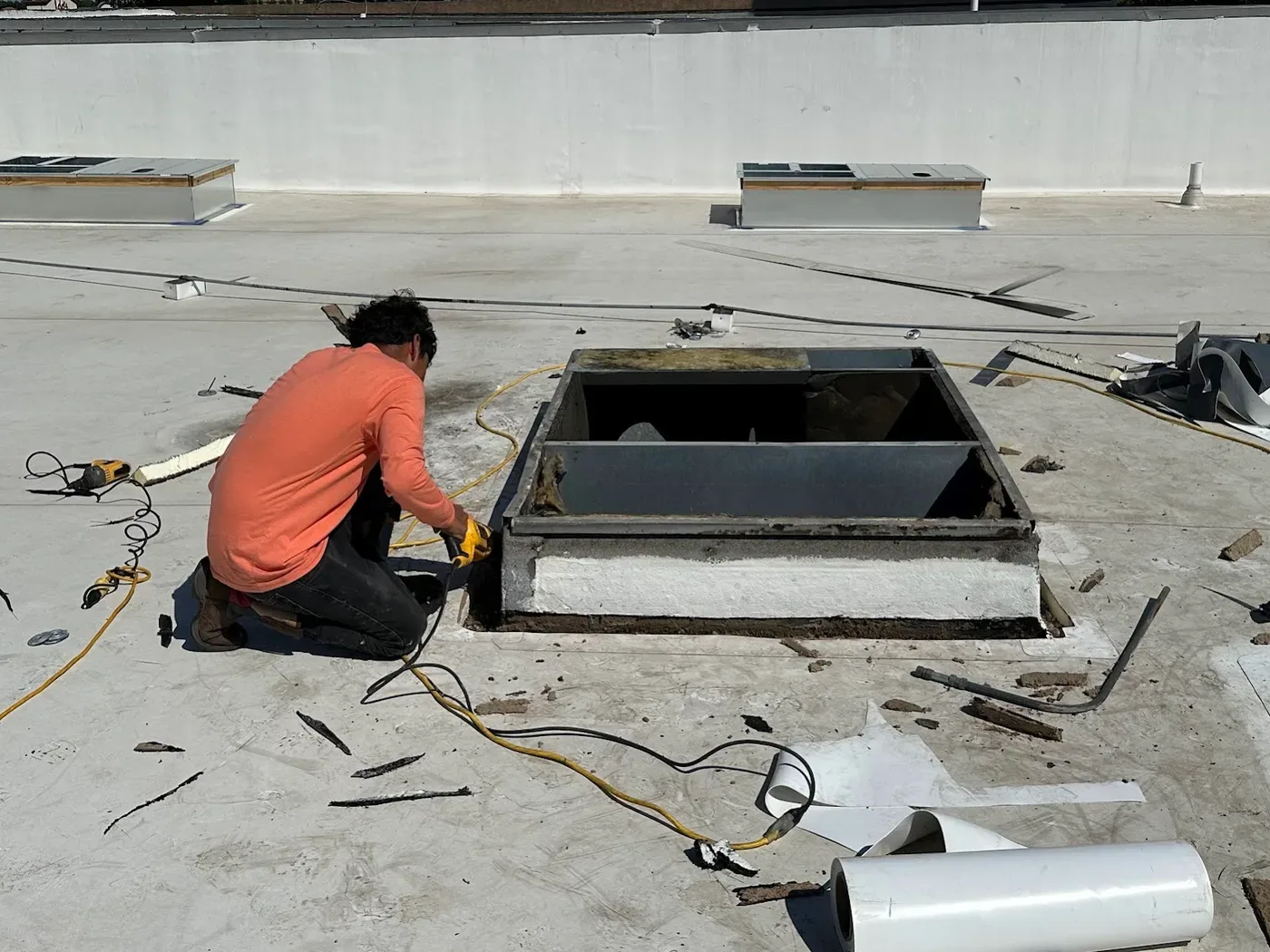
The cycle of freezing and thawing works on small gaps. Water enters a hairline crack in sealant, freezes, expands and widens it. Over a winter, a joint that seemed tight opens, and a flashing that was sound in November leaks in March. The damage is slow and shows at seams, flashings and penetrations.
A spring walk is the best response. We check flashings and seams for winter wear, press along edge metal, look at the drains and scan for moisture where leaks were reported. Repairs made in spring cost less than repairs made after summer storms find the same gaps, and mild days in spring let adhesives and sealants cure properly. Fayetteville also gets about 47 inches of precipitation a year, so the repaired roof is tested soon.
A winter plan: before the cold, during it and after
Before winter, clean the drains, tighten edge metal, reseal open joints and make sure rooftop equipment is secure. During a cold snap, keep an eye on drains and watch for new stains. After the thaw, walk the roof. That is the rhythm of preventive roof maintenance, and it fits well with the spring storm walk.
Older buildings, such as those on the historic Square, where structures date from 1886 to 1911, may have long runs of parapet and old flashings that suffer most from freeze-thaw. What those joints look like is known only after the caps come off, so we check them on site. Owners in Prairie Grove, Springdale and Fayetteville can call for a post-winter walk, and the route up I-49 covers Rogers and Bentonville in the same trip.
Questions About Snow and Ice Roof Damage Repair
Commercial Roofing Questions
Is a leak after a thaw a roof problem or a plumbing problem?
Either. We trace the water to its source. Roof leaks follow melt and rain and enter at seams and flashings. Plumbing leaks may come from frozen lines.
Should I remove snow from my roof?
Usually not, unless there is a structural concern. Clear drains and drifts by hand. A thin layer protects the membrane. If you see sagging or cracking, call an engineer first.
Can ice damage a flat roof?
Yes. Ice blocks drains and splits seams and sealant. Melt water then enters at weak points. A clean drain and sound seams are the best protection.
When should I schedule a winter damage check?
After any hard freeze and again in early spring. The first catches burst lines and open leaks. The second catches slow damage from freeze-thaw.
Do you repair in cold weather?
Emergency stops, yes. Many adhesives and sealants need moderate temperatures to cure, so permanent work may wait for a warmer day. We make the roof safe now and schedule the rest.
Related Commercial Roofing Pages
Read how we handle this work in Fayetteville, AR
Read how we handle this work in Fayetteville, AR
Read how we handle this work in Fayetteville, AR
Read how we handle this work in Fayetteville, AR
Read how we handle this work in Fayetteville, AR
Read how we handle this work in Fayetteville, AR
Read how we handle this work in Fayetteville, AR
