Hail Damage Roof Repair in Fayetteville, AR
Commercial hail damage roof repair in Fayetteville, AR: bruise mapping, moisture scans, repair-or-replace pricing and records ready before the next hard rain.
Hail is a spring problem in Northwest Arkansas, and the roof that gets hit rarely tells you right away. The membrane looks fine from the lot. The tenant has no stain yet. Then the next hard rain finds a bruise, and the ceiling tile drops. A property manager who waits for the leak pays for the repair and for the wet insulation too.
Hail is the storm damage that most rewards a quick, careful look. We walk the roof soon after the event, find the hits, sort them by how soon they will leak and put a price on each group. That list is what turns a storm week into a work order instead of a surprise.
Local hail: what the storm data shows
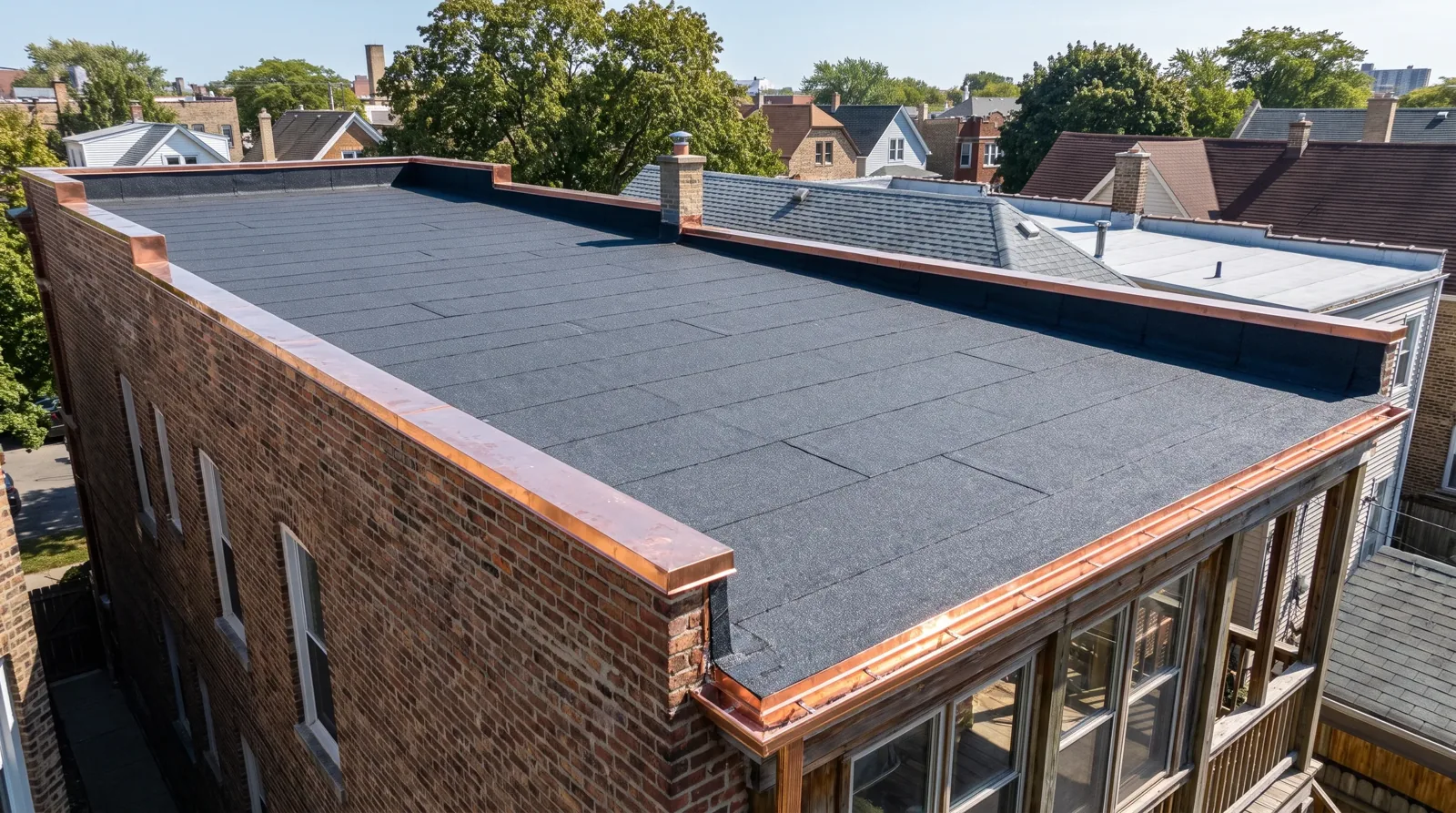
The May 2020 NWS Tulsa storm data includes a 3.00-inch hail report about a mile east-northeast of Fayetteville, plus 2.50-inch and 1.75-inch stones in the same area. Stones that large put any roof system to a hard test, and an aged membrane gives way first. Hail does not fall evenly, so one side of town can be hit hard while another gets little. We check each roof in a storm path and never assume a building is clear because the next one looks fine.
The pattern of damage tells us which way the storm moved. Hits cluster on the windward sides of rooftop units, around skylights and along parapets, depending on the wind that carried the stones. We mark them on the sketch and photograph each, with a scale in the frame. That record is the basis of the repair and the claim.
Stone size shapes the result. Small hail may only scuff a granulated surface, while stones near the size of those in the May 2020 reports can crush insulation, fracture a cap sheet and punch through thin or aged membranes. A brittle old membrane breaks more easily than a flexible new one, so the roof's age and type affect how we read the marks. We note the system, the age if known and the condition at each hit.
Finding damage: bruises, cracks and dents
On a single-ply membrane, hail leaves round marks, cracks and sometimes small tears. On modified bitumen and built-up roofs, it knocks granules loose and can fracture the felts. On coated roofs, it cracks the coating and exposes the layer under it. On metal, it leaves dents in panels and trim, and it can break sealant. Skylights, vents and rooftop units take hits too, with cracked lenses and dented housings.
The hidden part is the insulation. A stone can crush the board under a membrane and leave the surface unbroken. We check by pressing the roof, probing soft spots, cutting test openings and scanning for moisture. Where a scan shows wet insulation, we core to confirm. The infrared moisture survey shows the boundary of the wet area after sunset and keeps the repair no larger than it needs to be.
Rooftop glazing and plastics get a separate pass. Skylight domes crack or craze, and a hairline crack lets water through long before it shows as a hole. Vent covers, solar attachments and plastic roof accessories split in similar ways. We replace broken pieces, reseal the curb and check the flashing around them. These repairs are small and fast, and they close the most common hail leak paths on a flat roof.
Repair or replace: how hail changes the math
A roof with a few isolated hits and dry insulation is a repair job. We patch the membrane, re-seal cracked flashings, replace broken lenses and restore edge metal. A roof with hits across most of the surface, or with insulation crushed over large areas, may be past repair. In that case, the choice is between a roof recover and a full replacement.
A recover works only if the existing roof is dry and sound. Hail often breaks that condition. A cover board is a good addition on a new roof in hail country, because a harder layer under the membrane spreads impact and resists crushing. We price the repair path, the recover path and the replacement path, with the cost of waiting beside each, and the owner decides with the evidence on the table.
When a coating is already on the roof, hail cracks it and exposes the substrate. A localized recoat can close small areas if the base is sound and dry. Where cracking is widespread, the coating has served its life, and the restoration plan has to start over. A roof coating restoration can be an economical answer on a sound roof after repair, since it covers patches and reseals small cracks across the surface. The adhesion test and the moisture scan decide whether it is an option.
Timing: why waiting costs more
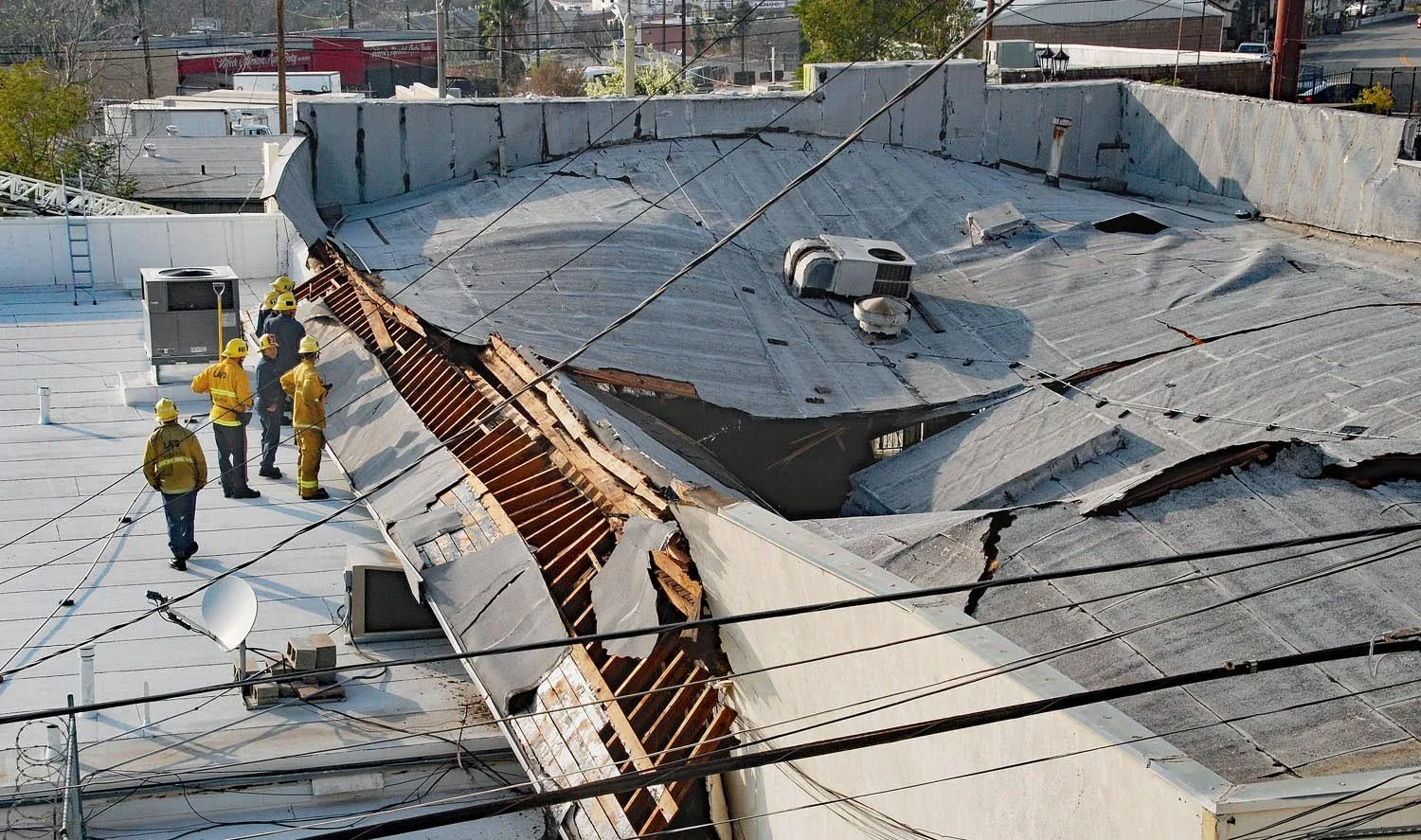
Fayetteville receives about 47 inches of rain a year, with May the wettest month, and hail season overlaps the wettest weeks. A bruise that is open to a downpour lets water into the insulation, and wet insulation loses its value and spreads the loss. Waiting through one more storm line often adds a layer of cost.
The survey is quick, the repairs are usually modest and the records are valuable. A hail puncture gets a patch and a moisture check, the same as any membrane puncture repair. We recommend a walk within days of a storm, a temporary seal on anything open and a recheck after the next heavy rain. For owners with many roofs, a list ranked by urgency gets the worst ones fixed first. Our storm damage roof repair response follows the same order after any hail event.
Large retail roofs: seen from the lot, hit from above
A wide single-level roof is a big target. At a single-level property like Pinnacle Hills Promenade in Rogers, roughly 934,000 square feet, or the Fayetteville mall at about 820,000, a grid walk is the only way to cover the whole roof. We run that walk by grid, zone by zone, so no section of the roof is skipped and no zone is counted twice.
We divide a large roof into zones, count hits in measured test areas and extend the count across the zone. The sketch shows the zones and the counts, and the scope prices each. Owners in Rogers and Bentonville can call after any storm. Wind-driven damage on the same roof follows the pattern of a wind damage roof repair, and the two are often found on the same walk.

Questions About Hail Damage Roof Repair
Commercial Roofing Questions
How do you know if hail damaged my roof?
We walk the surface, mark hits in measured areas, probe for soft insulation and scan for moisture. The photos and the sketch show what the storm did.
How soon after a storm should I call?
Within days. Hail damage may not leak until the next hard rain, and early repairs are smaller. If water is entering now, call the emergency line right away.
Is a roof with small dents on the metal still fine?
Dents alone may be cosmetic, but sealants and fasteners near them can be damaged. We check those details and tell you whether the dents affect performance.
Does hail always mean a new roof?
No. Many roofs need repair, not replacement. The extent of the hits, the condition of the insulation and the age of the system decide the answer.
What records help with an insurance claim?
Dated photos with a scale, a sketch of hits by zone, moisture findings and a priced scope. We prepare these during the survey.
Related Commercial Roofing Pages
Read how we handle this work in Fayetteville, AR
Read how we handle this work in Fayetteville, AR
Read how we handle this work in Fayetteville, AR
Read how we handle this work in Fayetteville, AR
Read how we handle this work in Fayetteville, AR
Read how we handle this work in Fayetteville, AR
Read how we handle this work in Fayetteville, AR
Read how we handle this work in Fayetteville, AR