
Skylight and Penetration Flashing in Fayetteville, AR
Skylight, curb, pipe and vent flashing repair for commercial roofs in Fayetteville, AR, built to handle hail, freeze-thaw weeks and spring rain.
A yellow ring on a ceiling tile directly under a skylight is a work order the property manager has seen before, and the cheap fix is usually a tube of sealant that holds until the next hard rain. The better fix starts one step earlier: find out whether the water came through the curb, the glazing or the flashing around it, and whether the insulation next to the opening is already wet.
Skylights, pipes, vents, hatches and curbs are all holes in the roof, and each one is a joint between materials that expand and shrink at different rates. In Fayetteville, AR those joints take frequent rain, a few freezing weeks and the occasional large hail event, so details fail before fields do.
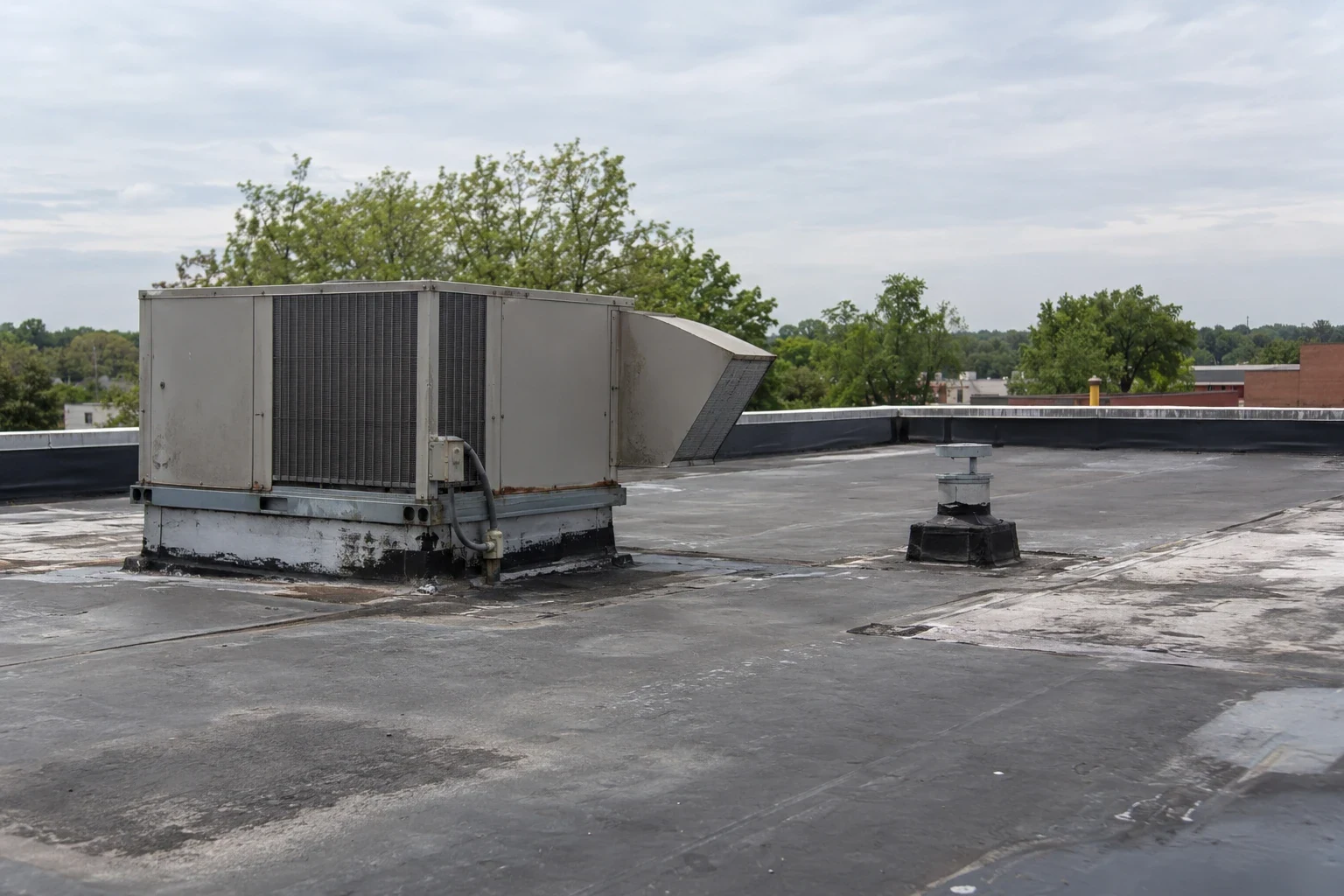
Trace: which part of the opening let the water in
We start inside, with the location of the stain and the last rain that triggered it, then go to the roof and work outward from the opening. A skylight can leak through the glazing seal, the frame, the curb corners, the counterflashing or the membrane turned up the curb. A pipe boot can crack, pull loose or have a gap at the collar. A vent can have a failed cap or a loose base flange.
Each detail is checked by touch and photographed, and a bucket of water poured at a suspect corner will sometimes settle a question that a visual check cannot. We probe sealant for brittleness, press the membrane up the curb for hollow spots and look at the fasteners. If the insulation near the opening is wet, a moisture scan or core shows how far. That finding sets the repair boundary: a flashing replacement, or a flashing replacement plus a section of dry insulation and new membrane around it.
Cold: freeze-thaw and the sealant joint
Winter adds roughly 10 days with highs below freezing and about 6.5 inches of snow in an average year, and Drake Field logged minus 20 F on February 16, 2021. Water that sits in a gap around a curb freezes, expands and pries the joint open. A skylight frame shifts a little with temperature, and sealant that is not flexible enough cracks within a few winters.
That is why we avoid relying on sealant alone. Mechanical flashing, counterflashing with a drip edge and base flashing lapped over the field membrane keep water moving off the joint. Sealant is the last line, not the first. A flashing failure repair made in October, before the cold weeks, holds through the winter, and one made in a freeze often has to be redone.
Hail and glazing: what a skylight takes
Hail of 3.00 inches, reported in May 2020 about a mile east-northeast of Fayetteville, shows what a skylight dome can face. Skylight glazing varies, and domes, panels and glass respond differently to impact. A stone can crack the dome, craze the surface or loosen the frame without breaking through, and a leak may appear weeks later.
After a hail event we inspect every skylight from the top and, where access allows, from below. Cracked glazing is replaced, crazed acrylic is monitored, and frames are checked for movement. A hail damage record covering skylights, vents and caps helps with a claim and with deciding whether to repair or replace a unit that is already near the end of its life. Replacing an old skylight with a better-flashed curb often costs less than repeated repairs.
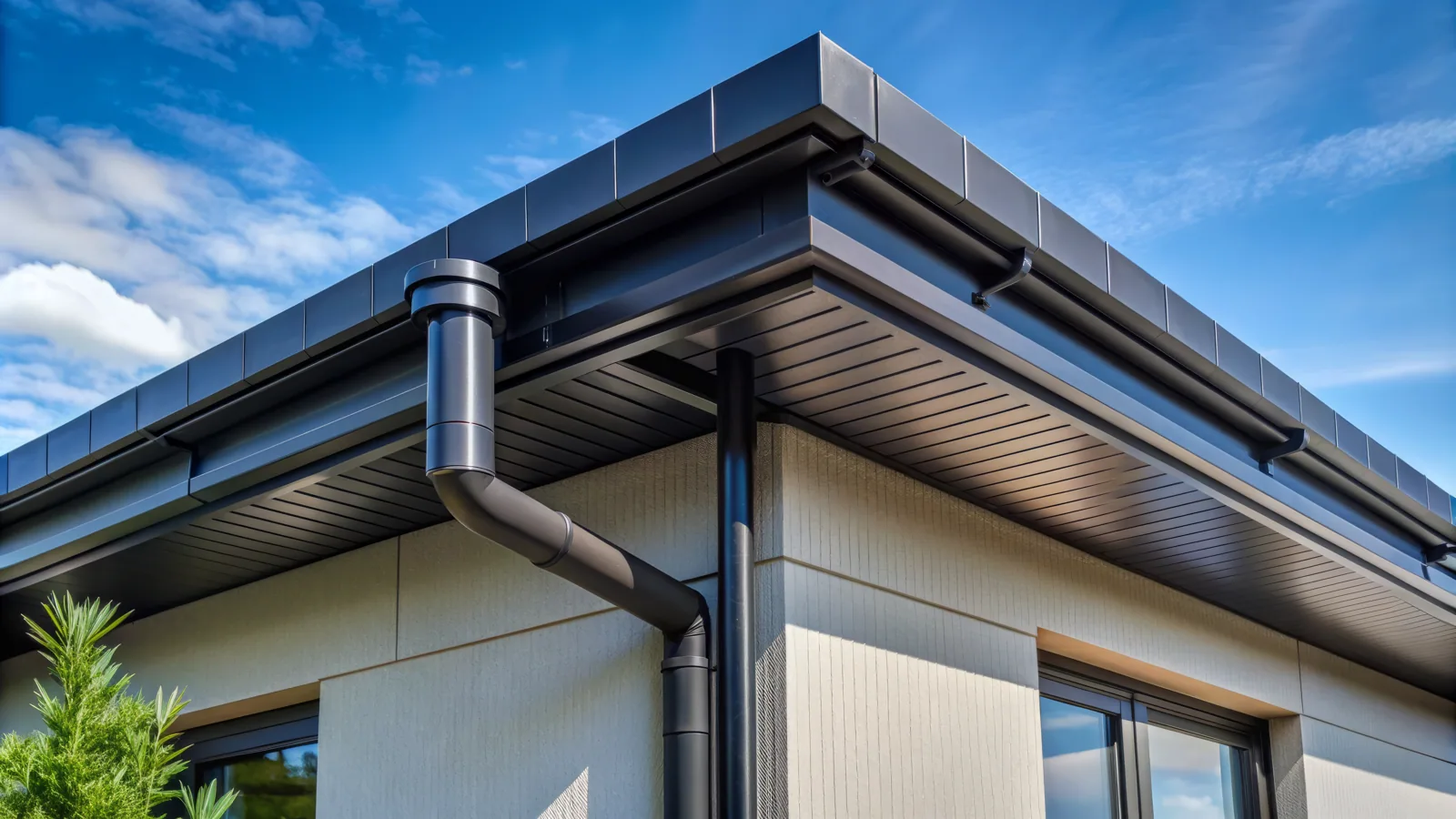
Pipes, vents and hatches: small holes with long histories
A roof may carry dozens of penetrations: plumbing vents, exhaust pipes, conduit, gas lines, roof hatches and drains. Each has a boot, a collar or a curb, and each ages at its own rate. Rubber boots crack in the sun. Metal collars loosen. Pitch pockets shrink and open. Added penetrations from later tenants are often the worst installed, with fasteners through the membrane and no flashing at all.
We inventory every penetration, mark it on the roof plan and rate its condition. Cracked boots are replaced with a longer-lived type, pitch pockets are reworked or replaced with a proper flashing, and abandoned penetrations are removed and patched. Heavy rooftop equipment and its pipes sit on curbs and supports of their own, and we price those with the flashing work when the roof has many units.
Cost: patch, rebuild or replace the unit
A patch is cheap and fits when the flashing is sound except for a small defect. A rebuild strips the old flashing, sets new base and counterflashing and ties them into dry membrane, which costs more and lasts far longer. Replacement of the skylight itself costs the most and fits when the glazing is crazed, the frame is racked or the unit leaks at the frame no matter what is done outside.
The quote shows all three for each opening where it makes sense, with the expected life of each. Photographs of each opening before and after the work go into the record, numbered to match the roof plan. The manager can choose a patch now and a rebuild at the next reroof, or decide to rebuild everything in one visit to avoid paying for mobilization twice. A roof with many small leaks around openings often needs a single leak repair visit that covers all of them.
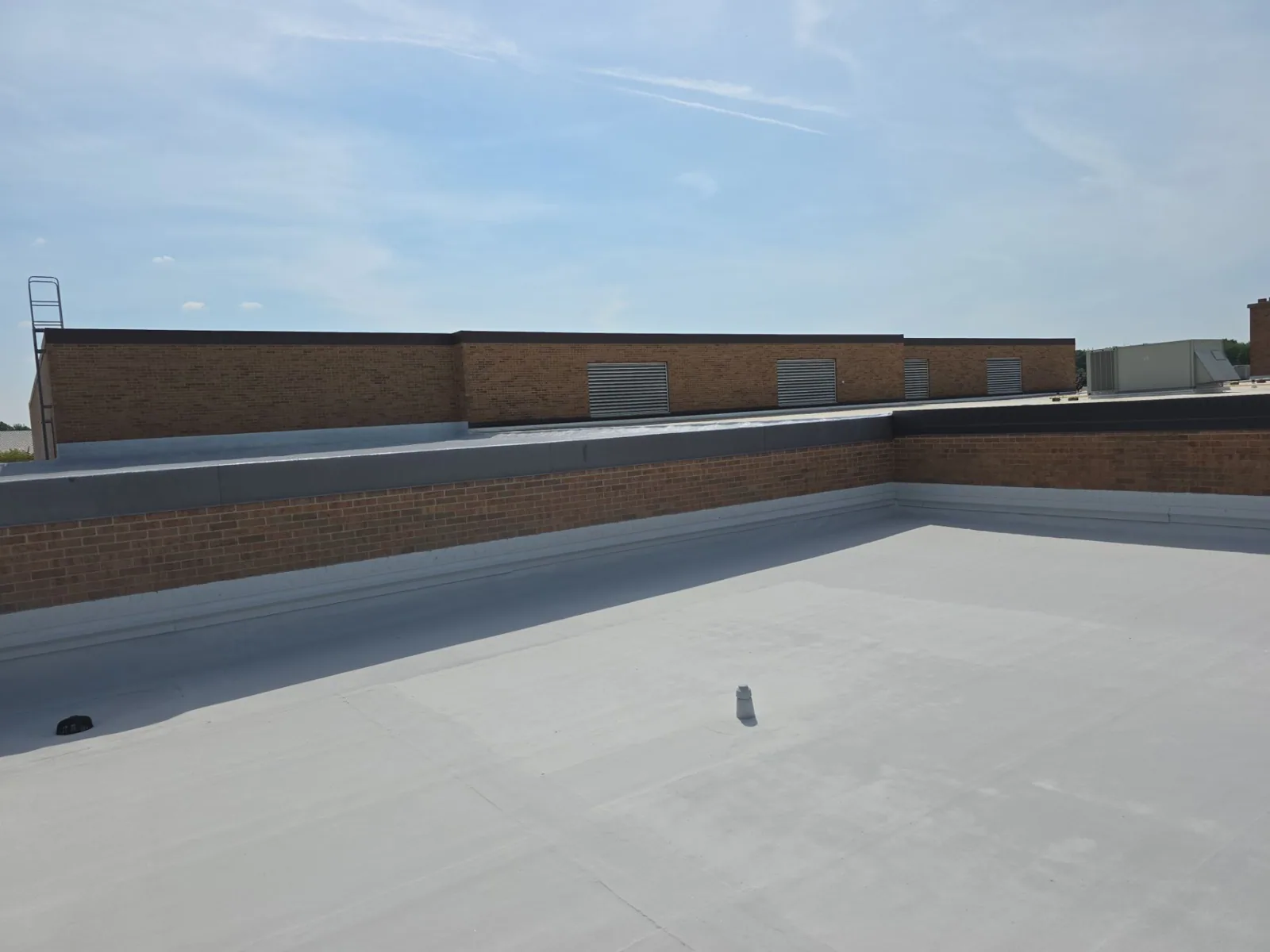
Questions About Skylight and Penetration Flashing
Local: openings on large single-level roofs
Pinnacle Hills Promenade in Rogers opened in 2006 as a single-level center, and a neighboring power center holds big-box retail. Wide single-level roofs generally carry plenty of penetrations, such as exhaust fans, vents and hatches, and each one is a place to check. The walk counts them opening by opening, and that count sets the size of the program.
For owners in Uptown Fayetteville, Pinnacle Hills and Bentonville, an inventory of every opening on the roof, with condition ratings and photographs, turns a stream of small calls into a planned program. The work can then be done in one pass during a quiet season.
Timing for this kind of work is forgiving compared with a membrane project. Flashing repairs need a dry day and moderate temperatures, and a crew can finish several openings in a day. The scheduling risk is the weather window around a hail event, when skylight and vent damage gets reported all at once and quote windows lengthen. A manager who has the inventory in hand before that happens can approve work from the list the same day and skip the wait.
Commercial Roofing Questions
Why does my skylight leak only in heavy rain?
Heavy rain pushes water past a weak counterflashing or a cracked corner that a light rain would not reach. Wind-driven rain also finds gaps on the windward side. We trace the opening on the roof to find which detail is open.
Is sealant enough to fix a skylight leak?
For a small gap it can hold for a season. Sealant alone fails at moving joints, so lasting repair adds mechanical flashing and counterflashing around the curb.
When should a skylight be replaced?
When the glazing is cracked or crazed, the frame is racked or it leaks despite good flashing. A new unit on a rebuilt curb costs more now and avoids a string of repairs.
Can penetrations be removed?
Abandoned ones can, with the deck patched and the membrane tied in. Removing unused pipes and vents is one of the easiest ways to reduce leak points.
How do I know which penetrations are leaking?
A moisture scan and a roof walk show wet insulation around the weak ones. We rate every opening so the worst are fixed first.
Related Commercial Roofing Pages
Read how we handle this work in Fayetteville, AR
Read how we handle this work in Fayetteville, AR
Read how we handle this work in Fayetteville, AR
Read how we handle this work in Fayetteville, AR
Read how we handle this work in Fayetteville, AR
Read how we handle this work in Fayetteville, AR
Read how we handle this work in Fayetteville, AR
