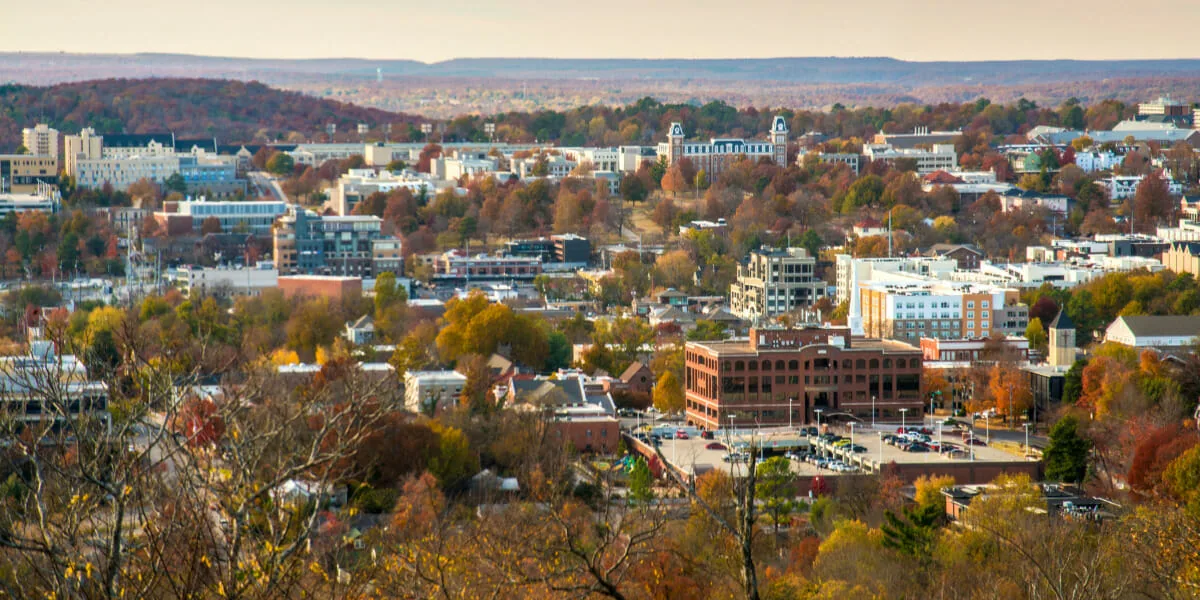
Commercial Roofing in Cave Springs, AR
Commercial roofing in Cave Springs, AR on the Highway 112 and 264 routes: roof inspections, leak repair, drainage work and replacement planning for owners.
With 1,729 residents in 2010 and 5,495 in 2020, Cave Springs grew quickly, and its commercial roofs are likely to be young ones with thin files. A property manager inheriting a small office or retail building in Cave Springs often has a lease, a tax bill and no record of who installed the membrane, what flashing went on the units, or whether anyone ever walked it. That is fine until a tenant calls about a stain. Then the question becomes how fast we can find the entry point and what the repair will cost.
We walk the roof, photograph what we find, and put each item on a ranked list with a rough budget range. Highway 112 puts Cave Springs about 8 miles from Bentonville and about 16 miles from Fayetteville, so one visit schedule can reach Bentonville and Fayetteville properties too.
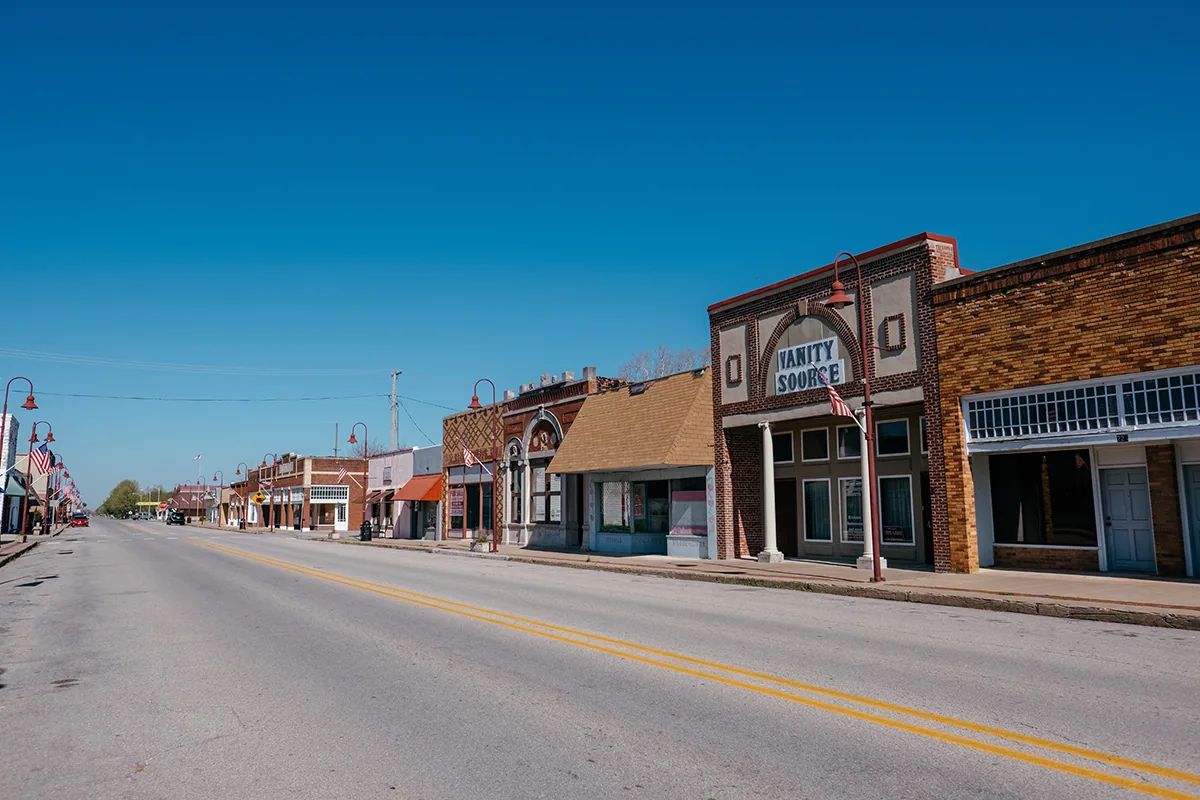
No roof file: what we build on the first visit
A roof with no history needs a baseline. On the first walk we draw a simple plan of the roof, count and locate every penetration, record the membrane type and condition, and photograph drains, curbs, edges and seams. If the system is a single-ply such as TPO roofing, we check seam welds and probe for gaps near flashing. If it is metal, we check fasteners, trim and end-wall closures.
That baseline is useful for three reasons. It tells the owner what is urgent. It gives a lender, insurer or buyer something to read. And it makes the next visit faster, because we can compare photographs rather than starting over. An owner who intends to sell or refinance can ask for a fuller due diligence roof survey that adds moisture findings and a cost forecast.
Highway 112 and 264: the commuter routes and the roofs beside them
Highway 264 runs about 6 miles east to Lowell, where J.B. Hunt Transport Services is headquartered, and Healing Springs Road carries Highway 264 about 5 miles west to Northwest Arkansas National Airport. Those two routes tie the town to a logistics headquarters on one side and the region's air terminal on the other. Both routes carry delivery traffic past the door of any roof job. A tenant's customers and deliveries arrive by highway, and a roof crew has to leave that access open.
We plan staging so the entrance stays clear, deliveries have a path and the lot is never blocked at the busiest hour. For a building near the highway, we also plan for traffic noise and dust during work, and we post notice to tenants ahead of time. If your portfolio reaches into Lowell, a Lowell walk can sit on the same day as a Cave Springs one.
Drainage: where a fast-built roof tends to fall short
Fayetteville's Drake Field averages 46.96 inches of precipitation a year across about 113 days of rain, and May alone averages 5.89 inches. A roof built quickly can leave small drainage errors that rain finds. Any drain set a little high, a tapered area that stops short, or a scupper that is partly buried under a parapet cap will each hold water after a storm.
Standing water is slow damage. It softens membrane seams, grows algae, adds weight and gives debris a place to collect. We measure how long water stays after rain, check drain baskets and sumps, and look for staining that marks where ponds dry. When the cause is a blocked outlet or a damaged ring, the fix is small. When the cause is a low spot in the deck, the discussion turns to added drains, tapered insulation or roof drains and scuppers work as part of a larger scope.
Tenant call to work order: how we keep the paperwork moving
A small property manager does not have a roofing department. The tenant calls, the manager phones us, and someone has to approve a work order before money is spent. We write the scope in plain terms: what we found, where it sits, what we propose, what it costs and how long it takes. For an emergency leak, we stabilize the roof first, often within the same day, and leave the larger scope for a written quote.
Where an insurance claim may be involved, we photograph damage, record dates and keep the notes in a form an adjuster can read. A roof insurance claim assistance request starts with that record. Storms in the region have ranged up to 3.00-inch hail in Fayetteville in May 2020, and the claim is stronger when the photographs are made before temporary repairs cover the damage.
Budget and reserve planning for young roofs
New roofs do not mean no budget. Membranes weather, sealants dry out, and rooftop equipment gets added or replaced. We suggest an annual look at each roof, with drains cleared, sealant refreshed and a short photo set added to the file. That routine costs far less than a replacement. It finds the one open seam, the cracked boot or the clogged outlet while it is still a patch, before it becomes wet insulation that has to be cut out and replaced. We also record the age of each repair, so a roof that keeps needing the same fix gets flagged for a larger conversation.
As the roofs age, we update the forecast and move buildings up or down the list. A preventive roof maintenance plan keeps those updates tied to real findings, and it lets an owner plan the capital line a year ahead instead of in the middle of a storm week.
Questions About Cave Springs
Commercial Roofing Questions
I just bought a small building in Cave Springs and have no roof records. What should be done first?
Have the roof walked and photographed before the next storm line. We make a plan of the roof, locate every penetration and note the membrane type, seams and drains. From that we draw a ranked list of repairs and a budget range. The report becomes the first page of your roof file.
How much of a roof leak is about the roof itself and how much is about the equipment on it?
Rooftop equipment causes a large share of leaks, because each unit adds curbs, penetrations and sealant joints. We trace the stain to its entry point, and it is often a curb corner, a refrigerant line or a conduit boot. Fixing the detail is usually less expensive than replacing a section of roof.
A new tenant wants extra rooftop units. Do I need a roof check first?
A check before the units are set is cheap, and it protects the landlord. We look at the deck and membrane where the curb will sit, mark the plan and inspect the flashing after the install. That way any leak that follows can be traced to a specific detail.
What do ponding marks on a membrane tell me?
They show where water sat long enough to leave residue, which suggests a low spot or a slow drain. One mark after a storm is not a crisis. Repeated marks in the same area mean the roof is holding water between rains, and we would measure the slope and consider a drain or a tapered repair.
Can a roof be repaired in cold weather, or should it wait for spring?
Many repairs can go in during a mild winter day, since a dry surface and the right temperature range are what matter. Fayetteville has seen minus 20 F, so we do not push adhesives and sealants on a freezing morning. For an active leak we stabilize the roof with a temporary seal and schedule the permanent fix for the first workable window, so the tenant is covered in the meantime.
Related Commercial Roofing Pages
Read how we handle this work in Fayetteville, AR
Read how we handle this work in Fayetteville, AR
Read how we handle this work in Fayetteville, AR
Read how we handle this work in Fayetteville, AR
Read how we handle this work in Fayetteville, AR
Read how we handle this work in Fayetteville, AR
Read how we handle this work in Fayetteville, AR
Read how we handle this work in Fayetteville, AR