Spray Foam Roofing in Fayetteville, AR
Spray polyurethane foam roofing in Fayetteville, AR: insulating roofs with protective coatings, plus the hail, wind and weather limits owners should know.
Spray foam is the roof that solves two problems at once and creates one of its own. It insulates and waterproofs in a single layer with no seams, which is attractive on a building with a tangle of curbs, pipes and odd corners. The problem it creates is that the foam itself is soft, and the thin coating on top is all that protects it from sun and hail. In Fayetteville, AR, with hail reports up to three inches in May 2020, that coating is the part of the roof a property manager should think about first.
We install, repair and recoat spray polyurethane foam roofs, and we tell the owner what the system gives and what it asks in return.
A manager whose membrane has leaked at the same curb three times will find a roof that flows around the curb appealing. The idea is sound. What comes with it is the coating cycle, the application window and the care a soft surface needs.
What it is: foam applied as a liquid
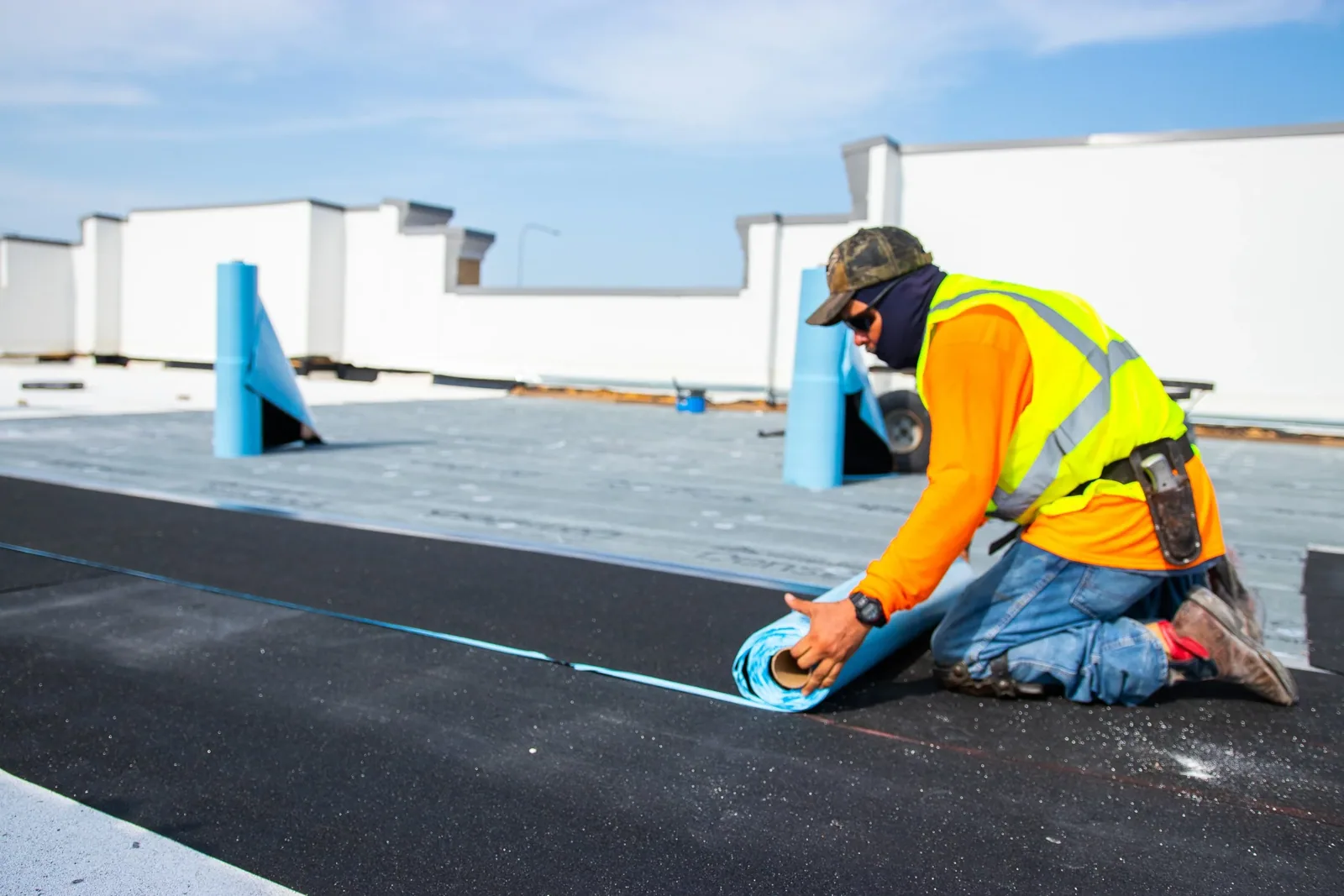
Two components, mixed at the spray gun, expand on the roof into a rigid closed-cell foam that bonds to the substrate. Crews build the foam in passes to the thickness the design calls for, which sets both the insulation value and the slope. A protective coating, silicone or acrylic, then covers the foam, often with granules scattered into it for wear and hail resistance.
With no seams to open, since the foam flows around curbs, pipes and drains, and the finished surface is a single piece. That is the main advantage on a complicated roof. The main limit is that foam cannot be applied in rain, wet substrate, high wind or cold, so the installation window is narrower than for a sheet membrane.
Density and thickness are the numbers to ask for. Roofing foam is a higher density than wall insulation and is built in layers, with each pass checked for rise and surface. A thin spot is a weak spot, so we measure thickness at a grid of points and record the readings.
Weather: the application window in the Ozarks
The wettest month at Drake Field is May, 5.89 inches, in a year that totals 46.96 inches over about 113 rainy days. A foam crew needs a dry substrate and calm air, and a rain forecast stops the job. The spring storm line that peaks in May is the worst time, so we aim for late summer and early fall, when the days are dry and the temperature is within range.
July highs average 88.7 degrees at Drake Field, with about three days a year above 100, and the all-time record is 111. Foam applies well in warm weather, though very hot substrates can change how it rises. In winter, with a record low of minus 20 degrees on February 16, 2021, the work stops entirely. We publish the schedule with those limits in mind.
Overspray is a hazard the weather makes worse. Wind carries a fine mist of foam onto cars, glass and neighboring roofs, and we set windscreens, cover vehicles nearby and stop when the wind rises. A calm morning is worth waiting for.
Hail and wind: where foam is weak
Foam is soft compared with a membrane, and a large stone can dent it and break the coating. Stones of 3.00 inches were logged east-northeast of Fayetteville in May 2020, with 2.50 and 1.75 inch reports in the same area. A roof that takes that kind of hit may show punctures that let water into the foam, where it can spread under the coating.
That is why coating thickness and granules matter, and why a roof that is not inspected after storms can quietly lose its waterproofing. After a hail week we walk the roof, probe dents, patch punctures and recoat damaged areas. A hail damage repair record gives the adjuster dated photographs and a plan of impact spots.
Wind is a quieter threat. A foam roof bonded to a clean substrate resists uplift well, but a poorly prepped substrate lets the foam peel at the edges, so we check the perimeter and the transitions after each storm line.
Fit: roofs with many details
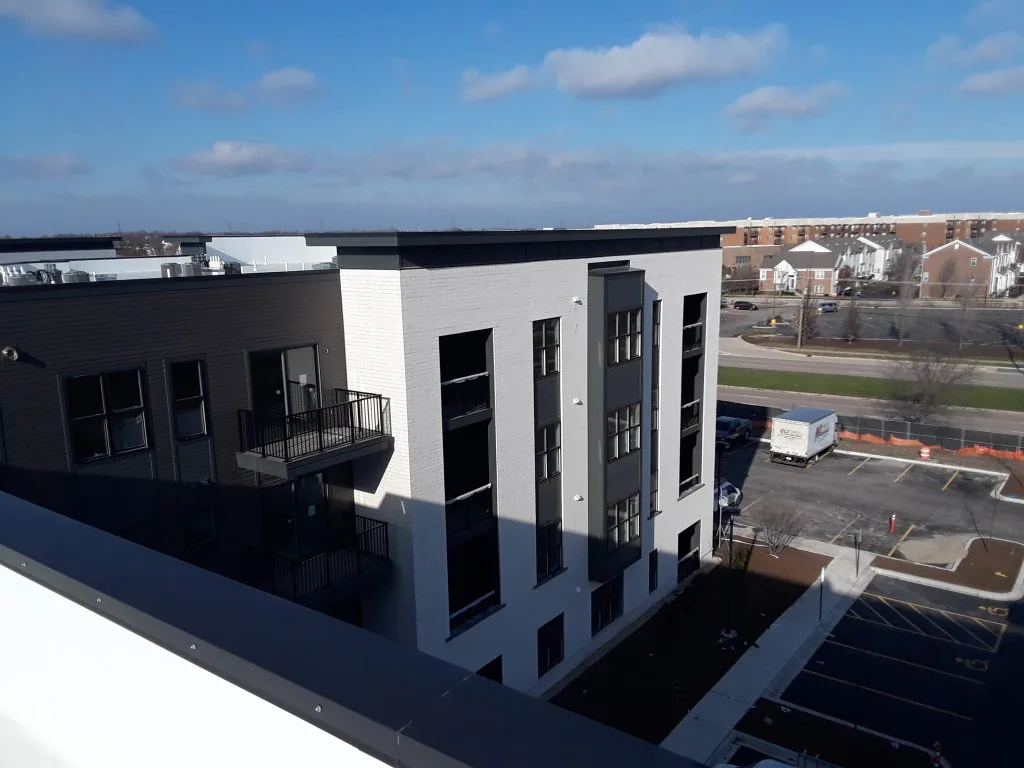
Foam suits roofs with lots of penetrations, irregular shapes or low spots that need slope. It also suits buildings where the owner wants added insulation without adding much weight. The Fayetteville Industrial Park, east of Fifteenth Street, and the retail around Pinnacle Hills in Rogers hold different building types, and foam fits neither by default. Each roof is judged on its own.
It is a poor fit where foot traffic is heavy or where trades visit the roof often, since foam and coating wear under boots. Walkway pads are a must on any foam roof with rooftop equipment. A silicone coating and an acrylic coating are the two top-coat choices, and we explain the difference in the quote.
Rooftop equipment sits on curbs or rails that the foam can be sprayed around, which reduces penetrations. Service techs still need a path, and we lay walkway pads from the access point to each unit before the coating is finished.
Cost: foam, coating and recoat cycles
Spray foam costs more up front than basic membranes and delivers insulation value in the same price. The recurring cost is the recoat. The protective coating wears and is typically renewed on a cycle, and a roof that misses a recoat loses the foam under it to sun. A budgeted recoat is much cheaper than a section replacement.
We give the manager a first-cost number and a recoat schedule, so the capital planning line shows the full life of the roof. Quotes requested ahead of the dry season lead to a better choice of dates.
A foam roof also changes the energy bill, since the insulation is built into the roof. The effect depends on thickness and use, so we describe the likely range without promising a number.
Questions About Spray Foam Roofing
Records: thickness, coating and inspection log
The file should state the foam thickness, the density, the coating type and thickness and the date of each recoat. A roof condition report after each storm season keeps the log. Foam's insulation value counts toward code. The 2021 International Building Code governs through Arkansas's fire prevention code, the energy listing remains ASHRAE 90.1-2007, and the building official confirms what the foam thickness must meet.
Commercial Roofing Questions
Can spray foam be applied in the rain or in winter?
No. Foam needs a dry substrate, mild temperature and low wind. Rain stops the work, and a Fayetteville winter with a record low of minus 20 degrees rules it out. We plan for late summer and early fall and keep a rain-day plan on every job.
What happens when hail hits a foam roof?
Large stones can dent the foam and crack the coating. Granules and a thicker coating help. After a storm we probe dents, patch punctures and recoat damaged areas, and we document each one with dated photographs so the adjuster can see what changed.
How often does the coating need renewing?
On a cycle set by the coating type, exposure and wear. We inspect each year and recoat when the surface shows thinning or damage. Skipping a recoat puts the foam under it at risk, and that is the expensive mistake.
Does foam need a cover board or other protection?
Foam bonds directly to a clean, dry substrate and needs no cover board. Walkway pads protect it where trades visit the roof, and we place them before the final coat so the pad is bonded into the system.
Can foam go over an old roof?
In many cases, if the old roof is dry and well attached. Wet insulation has to be removed first. We test with a moisture scan and core cuts and price the preparation separately so the owner sees it.
Related Commercial Roofing Pages
Read how we handle this work in Fayetteville, AR
Read how we handle this work in Fayetteville, AR
Read how we handle this work in Fayetteville, AR
Read how we handle this work in Fayetteville, AR
Read how we handle this work in Fayetteville, AR
Read how we handle this work in Fayetteville, AR