Acrylic Roof Coatings in Fayetteville, AR
Acrylic roof coatings in Fayetteville, AR: water-based reflective coatings for well-draining roofs, with prep, weather limits, recoat cycles and cost explained.
An acrylic coating is the budget-friendly way to put another stretch of life into a sound roof, and in Northwest Arkansas it comes with a weather caveat that every property manager should hear before signing. The coating is water-based, so it needs a stretch of dry, mild days to cure, and the spring storm line and the freeze-and-thaw weeks both work against it. In Fayetteville, AR the application window is real, and a coating put down at the wrong time can wash out or peel.
We apply acrylic coatings on roofs that drain well and can take them, and we tell the manager when silicone, a recover or a replacement is the better buy.
The first question is almost always about the budget: what does it cost compared with a new roof, and what does it buy. An acrylic job costs a fraction of replacement and buys time, and the useful question is how much time the roof underneath still has. A moisture scan and a few core cuts answer it in a morning, and the answer drives the rest of the plan.
What it is: a water-based reflective skin
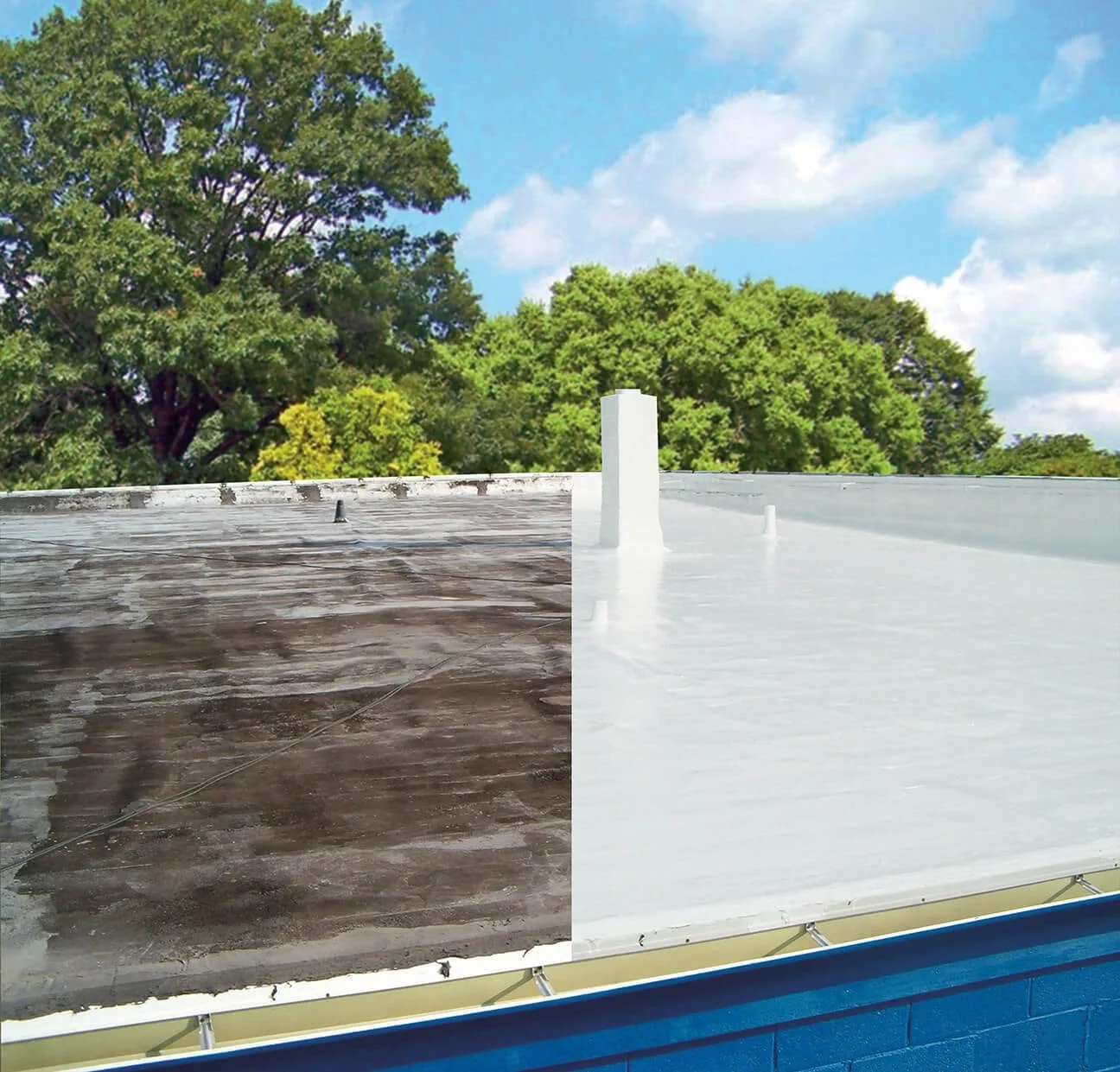
Acrylic roof coating is a liquid polymer in water, rolled or sprayed in coats over a cleaned roof. As the water leaves, the coating cures into a flexible white or light-colored film that reflects sunlight, seals small cracks and covers fasteners and seams. Reinforcing fabric is embedded at seams and flashing for extra strength.
It bonds to many substrates, including metal, modified bitumen, built-up roofs and some single plies. It costs less than silicone and is easy to touch up or recoat, since new acrylic bonds to old acrylic. The tradeoff is that it does not like standing water, so roofs that pond are not good candidates.
Solids and elongation are the two numbers on the data sheet worth reading. Higher solids mean more film per gallon, and higher elongation means the coating stretches with a roof that moves. A cheap product with low solids needs more coats to reach the same thickness. We name the product and the thickness in the proposal so the comparison is fair.
Weather: curing in the Ozarks
Acrylic needs temperatures above freezing for the application and the cure, with a dry stretch afterward. Fayetteville sees roughly 10 days a year with highs below freezing, about 6.5 inches of snow and a record low of minus 20 degrees on February 16, 2021. A coating applied in late fall and hit by a hard freeze before it cures can fail. Spring brings another threat: May is the wettest month at Drake Field, with 5.89 inches.
Late summer and early fall are the best windows. July highs average 88.7 degrees, and the days are mostly dry. We watch forecasts hourly, stop before a front arrives and keep coating covered if a shower threatens. A coating that gets rained on before it cures is a recoat, and that costs the owner.
Dew and humidity matter as much as rain. A coating applied on a roof with morning dew can trap moisture and blister, so crews wait until the surface is dry and finish early enough for the film to skin over before evening. In the Ozarks, that can mean a start around mid-morning and a finish by late afternoon.
Fit: roofs that drain and are dry underneath
The best candidates are roofs with good slope, working drains and dry insulation, such as pitched or lightly sloped metal and lightly sloped older built-up or mod bit roofs. Older downtown buildings and industrial buildings in Fayetteville Industrial Park are the kind of property where a coating question arises, and each one needs its own test. A moisture scan, a few core cuts and a pull test on a trial patch settle it.
Roofs that pond are better served by a silicone coating or by fixing the drainage first. On older metal roofs with tired fasteners, a retrofit starts with repairs and then a coating.
Metal roofs are a common candidate, since acrylic seals fasteners and laps and reflects heat. Rust has to be treated and fasteners replaced first. A coating over loose screws only hides the problem for a season, and the screws keep backing out as the metal moves.
Prep: cleaning, repairs and primers
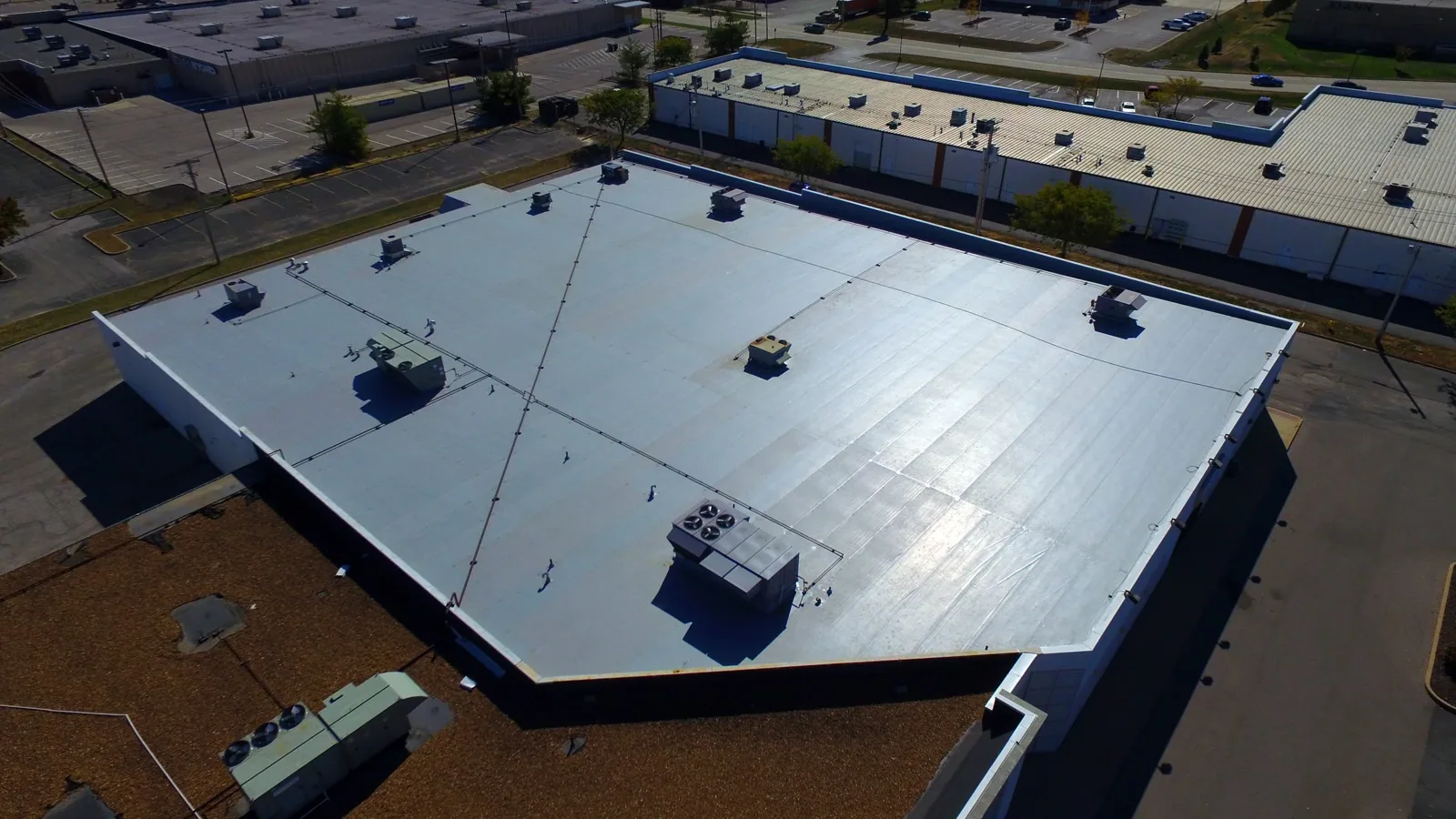
As with any coating, preparation determines how long it lasts. The roof is washed, loose material and rust are removed, cracks are repaired, flashing is reinforced and primers are applied where required. Fabric is embedded at seams and penetrations in a base coat before the top coats go on.
We record thickness in mils across the roof, with readings logged by area and date. A thin coat is the usual reason for early failure. Quotes should state the thickness and the number of coats, and bidders that do not are pricing a thinner job.
Edges and flashings get extra care. The coating is brushed into corners, around pipes and along curbs, with fabric where movement is likely. Those details fail first on an uncoated roof, and they are the details a reinforced coating protects.
Cost: the cheapest option, and its limits
Acrylic costs less than silicone and far less than replacement. It earns its place on roofs with several years of life left that need sealing and reflectivity. It wears faster than silicone and needs more attention over time, and a recoat cycle belongs in the budget from day one.
We give the manager a first-cost number, an expected life and a recoat plan, so the capital planning line shows the real cost across the life of the roof. For a roof with a few years left, coating can defer a replacement. For a roof at the end of its life, it only delays the inevitable.
Tenants rarely feel a coating job. There is no tear-off and little noise, and the schedule is a few days for a typical roof. Walkways and entrances stay open, and a work order tells the building which section is wet.
Questions About Acrylic Roof Coatings
Records: coat counts and inspection dates
The file should hold the coating product, the number of coats, the thickness, the batch numbers and the dates. A roof condition report after the work, and a yearly look afterward, show wear and storm damage. A coating job rarely triggers energy rules, but a recover can. Arkansas lists the 2021 International Building Code and ASHRAE 90.1-2007 for commercial energy, and the building official says which applies.
Owners in Downtown Fayetteville and Springdale can use one file format for all of their roofs.
Commercial Roofing Questions
Why does acrylic fail on a roof with ponding water?
Water-based acrylic can soften and wash out when it sits wet for long periods. If the roof holds water for a day or more after rain, silicone or a drainage fix comes first. We note the depth and area of each pond on the roof plan before choosing a coating.
What temperature does acrylic need?
Above freezing during application and cure, with a dry stretch afterward. We plan for late summer and early fall and avoid the freeze-and-thaw weeks. If a front comes in early, the crew stops and covers the work.
How often should an acrylic coating be recoated?
On a cycle set by the product, thickness and exposure. We inspect each year and recoat when the surface thins or cracks. Skipping a recoat shortens the roof's life, and the cost of catching up grows each year the recoat is put off.
Does acrylic make the building cooler?
A white film reflects sunlight and lowers roof surface temperature, which can reduce cooling load. July highs average 88.7 degrees at Drake Field. The savings depend on insulation and building use, and we describe the range without promising a number.
Can acrylic go over an old built-up roof?
Often, if the roof is dry and the surface is sound. We test adhesion with a trial patch and repair blisters and splits first. Gravel must be removed or the surface prepared in a way the coating maker allows.
Related Commercial Roofing Pages
Read how we handle this work in Fayetteville, AR
Read how we handle this work in Fayetteville, AR
Read how we handle this work in Fayetteville, AR
Read how we handle this work in Fayetteville, AR
Read how we handle this work in Fayetteville, AR
Read how we handle this work in Fayetteville, AR
Read how we handle this work in Fayetteville, AR