School Roofing in Fayetteville, AR
School roofing in Fayetteville, AR: summer-window reroofs, hail checks and leak repair planned around the school calendar, bond money and Ozark weather.
A school roof problem usually shows up on the worst possible day: a stained ceiling tile above a third-grade reading corner, a bucket in a hallway, a principal asking the facilities office what it will cost. Schools run on a calendar that does not bend. The school year gives a roofer very few quiet weeks, and a district's money is set long before the leak. In Fayetteville, AR the work comes down to two questions: what can be fixed by the time students return, and what belongs on next year's capital line.
Summer window: the weeks that matter
The best roofing weeks at a school are the ones when the building is empty. Late May through early August gives crews open parking lots, no buses at the door and the longest run of workable days. It also gives every other school roof in the region the same idea, so quote windows fill early. A district that asks for bids in March gets a better price and a better start date than one that asks in June.
We write a school schedule in blocks. Each block covers one roof area, with a start date, a dry-in point and a punch list walk. If a storm line crosses the Ozark hills in June, a block that is open gets covered first, and the rest waits. Students never see a crane, a hot kettle or an open deck, and the facilities director gets a date for each block in writing. If rain pushes a block, the date moves in writing too, with the new target.
Money: what a school roof really costs to put off
Deferred roof work is the most expensive line in a school budget, because it comes back bigger. A small leak at a drain wets the insulation under the membrane, and wet insulation cannot be dried in place. The patch becomes a section replacement, and the section replacement becomes a full reroof sooner than the reserve budget allowed. Fayetteville averages nearly 47 inches of rain a year at Drake Field, so a leak that waits one winter has plenty of water to work with.
We help districts put a number on the choice. A repair now, a recover next summer or a full replacement in two years each carry a cost and a risk, and we lay them side by side. The roof capital plan that results gives the board a sequence it can fund over several years, not a single large request.
Hail and freeze: what the Ozark weather does to a school roof
Northwest Arkansas hail is large. The National Weather Service logged 3.00 inch stones about a mile east-northeast of Fayetteville in May 2020, with 2.50 inch and 1.75 inch reports nearby. A roof that took that kind of hit may look fine from the lot and still hide bruises. After a hail event we walk the field, press the suspect spots and photograph each one against the roof plan, which is the evidence a school's insurer will want. Our hail damage repair work starts with that walk.
Winter is the other test. Snow averages about 6.5 inches in Fayetteville, and about ten days a year never get above freezing, so each thaw and refreeze works on weak seams. A February reading of minus 20 F in 2021 showed what a hard cold snap can do to flashings and drains, so we check both before the first freeze.
Roof types: gyms, wings and flat mechanical rooms
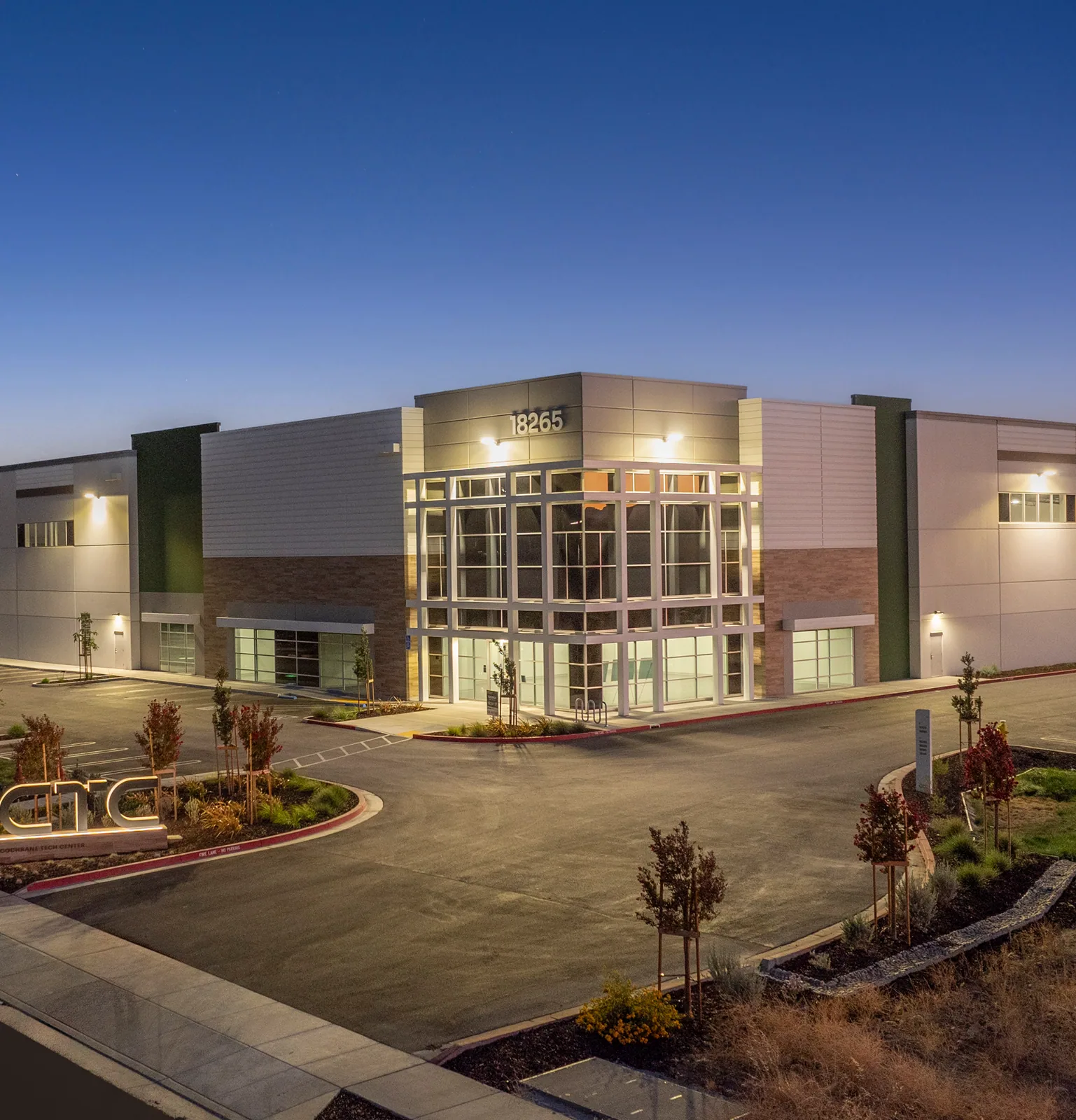
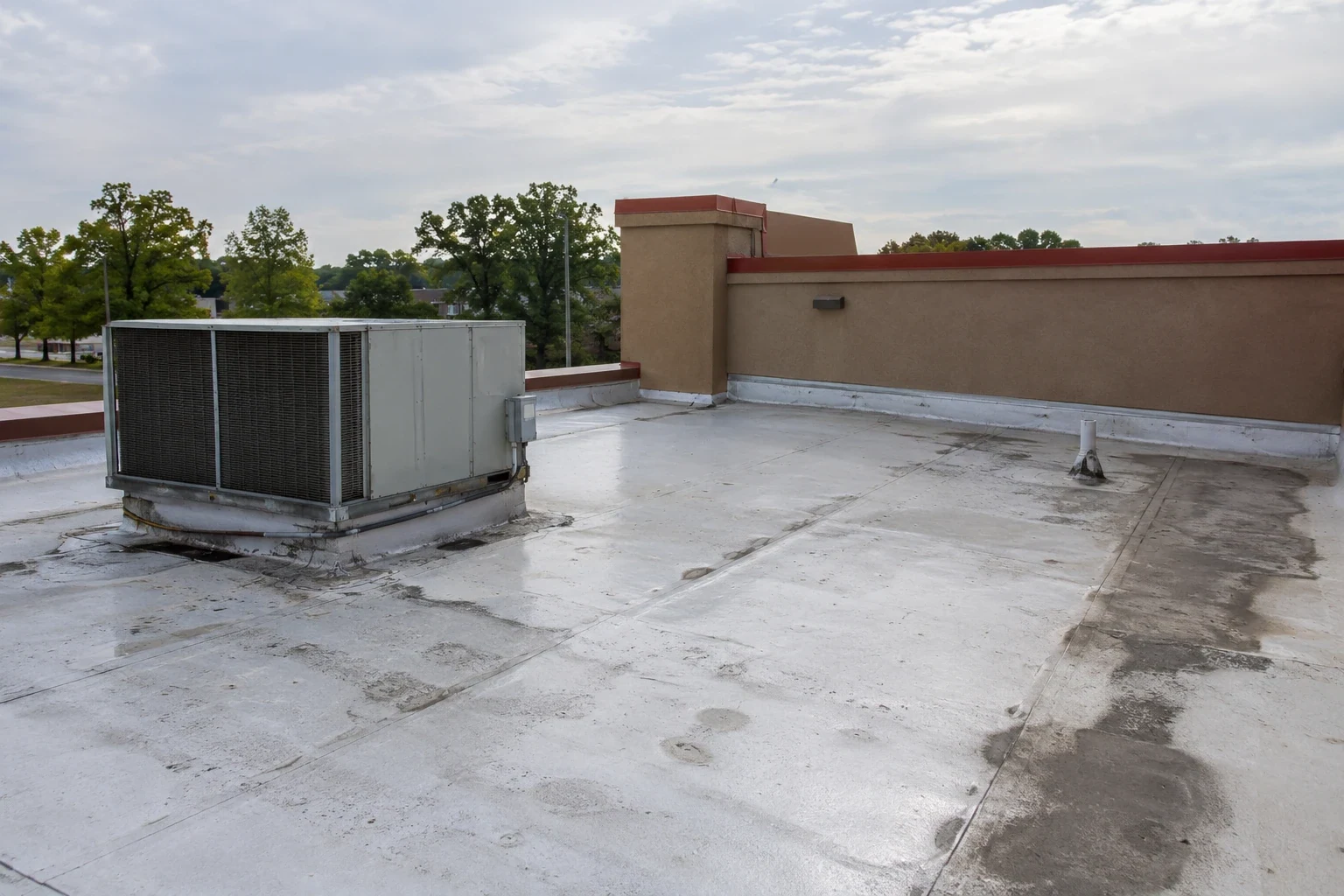
A school campus is rarely one roof. A gym has a long span over open floor. A classroom wing may carry a low-slope membrane with rooftop units. A cafeteria has kitchen exhaust, and an older wing may have a built-up roof that has been patched several times. Each roof type has its own repair habits, and we plan the sequence building by building. TPO and EPDM sit on many flat school roofs, while gyms and shops can carry metal.
Across the Fayetteville School District, Springdale Public Schools, the Bentonville School District and smaller districts such as Lincoln Consolidated and West Fork, the buildings differ by age and design, so the first walk tells us what each campus actually has. A college or university building runs on a semester calendar instead, and a city-owned annex or office raises the same budget questions as a government building. Whatever the owner, the campus gets a roof-by-roof list with ages, repair history and an estimated remaining life, so the board sees every line at once.
Safety and access: keeping students and trucks apart
On an occupied campus, the hoist, dumpster and material drop are placed away from pick-up lines, playgrounds and entrances. Fencing, flaggers and a written access route go in before the first load arrives. During the school year, repairs are done in off hours when the work is noisy or when it needs ladders near a doorway. Any roof work near an open classroom gets a notice to the teachers, the same way a reroof over an occupied building gets a tenant notice.
We also keep fasteners and debris off the ground. A magnetic sweep goes over the lot and drop zone at the end of each shift, because a screw in a parking lot costs a tire and a phone call.
Questions About School Roofing
Records: what the board and the adjuster will ask for
Districts answer to boards, auditors and insurers, and they need paper. We provide a written scope, photographs of the roof before and after, the products used and the dates each block was finished. When a storm claim is involved, the file also shows where damage was found and how it was repaired, which helps with the insurance claim. The state follows the 2021 International Building Code through the Arkansas Fire Prevention Code, so the submittals reference the edition in force. For campuses in Fayetteville and the surrounding towns, the record becomes the starting point for the next inspection.
A short closeout note after each block, with the date, the area and the product used, lets the next facilities director pick up the thread without a call to the last contractor.
Commercial Roofing Questions
When should a district ask for bids on a summer reroof?
Early in the year, ideally by March for a June start. Roofers fill their calendars through spring, material lead times stretch, and the summer window is short. An early bid also leaves time to fix surprises found in core cuts before the school year ends.
Can repairs be made during the school year?
Yes, for small work. Patching a seam, resealing a flashing or replacing a drain strainer can be done on a dry day outside class hours. Larger tear-offs wait for summer. We tell the principal which repairs are safe to do now and which should be held.
What does hail do to a flat school roof?
Large stones can bruise the membrane, crush insulation and crack coatings without leaking right away. The leak shows up months later at the weak spot. A walk after the storm, with photographs, protects the district's claim and catches damage while it is small.
How do we budget for several school roofs?
Rank each roof by age, condition and leak history, then spread the work across years. The oldest or worst roof goes first. We build the list from inspections, price each roof, and give the board a plan it can adopt in stages.
Is metal or single-ply better for a gym roof?
Gyms with a pitched roof often take standing seam metal well, because it sheds water and lasts. A low-slope gym roof is better served by a single-ply membrane. The deck, slope and local wind exposure should guide the choice, with the budget alongside.
Related Commercial Roofing Pages
Read how we handle this work in Fayetteville, AR
Read how we handle this work in Fayetteville, AR
Read how we handle this work in Fayetteville, AR
Read how we handle this work in Fayetteville, AR
Read how we handle this work in Fayetteville, AR
Read how we handle this work in Fayetteville, AR
Read how we handle this work in Fayetteville, AR
Read how we handle this work in Fayetteville, AR