
Occupied Building Reroofing in Fayetteville, AR
Reroofing Fayetteville, AR buildings while tenants stay open, with phased sections, game-day and spring-storm scheduling, interior protection and a daily seal.
Nobody wants to call tenants and say the roof is coming off next week. Property managers do it anyway, and the first question they get is when the noise starts and whether the lobby will smell like tar. A reroof on a building that stays open is a scheduling problem more than a roofing problem, and the answer to most tenant questions is a calendar.
In Fayetteville, AR that calendar has more than the usual constraints. Spring storm lines run March to May, football Saturdays crowd the streets near campus, and some tenants cannot tolerate a day of dust. We build the schedule around those first, then price the roof.
Plan: sections, dry-in and the daily close
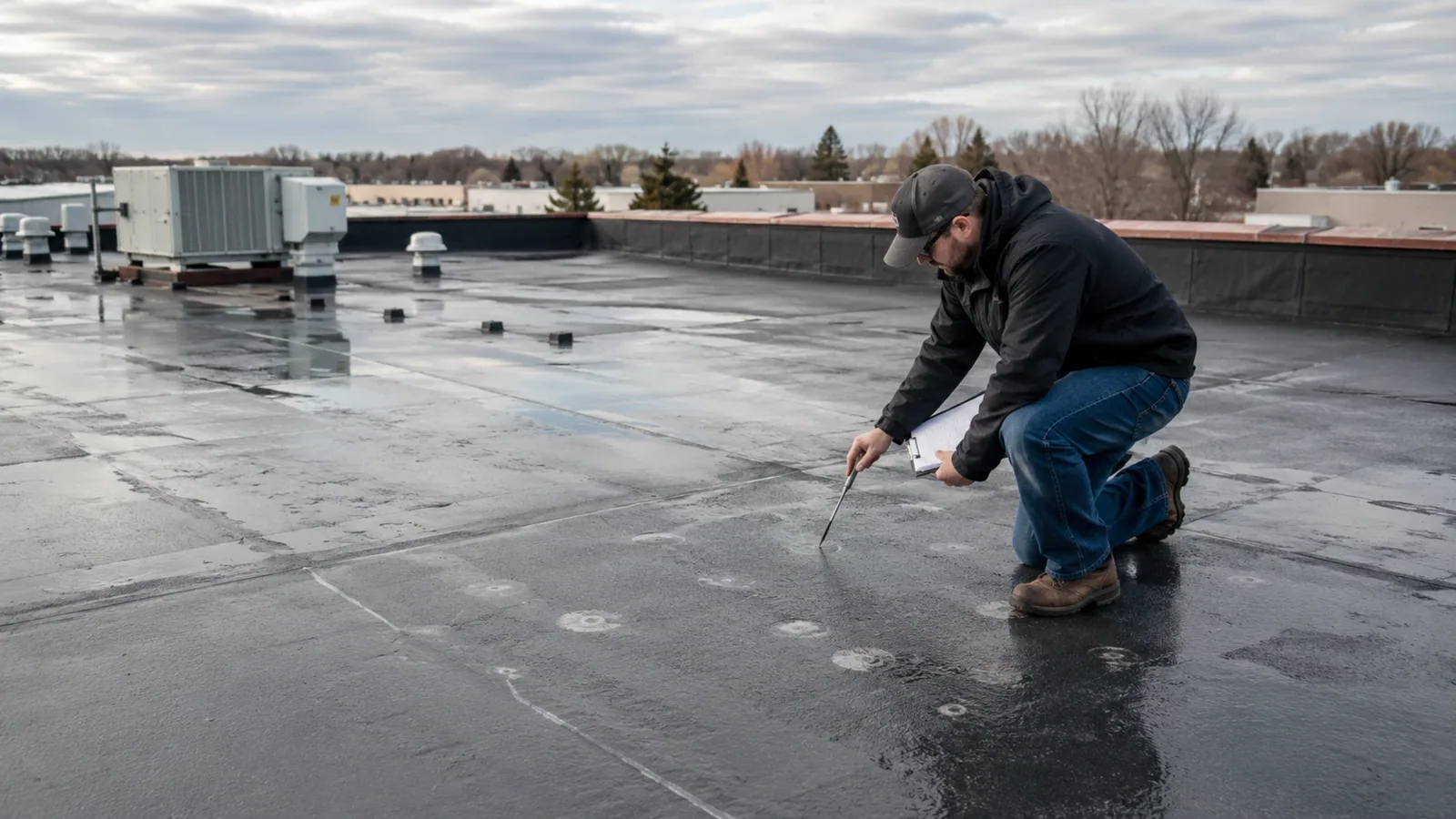
The roof is divided into sections small enough to open and close in a day. Each section has a dry-in point: the line where new membrane ties into old, sealed so a sudden storm cannot get under it. The crew opens only what it can close, and the last hour of the shift goes to the seal, not to more tear-off.
The order of sections follows the building. Areas over storage, mechanical rooms and corridors go first. Areas over offices, classrooms or clinics go in the quietest weeks, or at the hours when those rooms are empty. A written plan shows each section, its date, its protection and who to call, and a copy stays posted at the roof access so any foreman or tenant contact can find the next step. That plan is what a manager hands to tenants, and it is what keeps a three-week job from becoming a three-week argument. Full tear-off and replacement follows the same sectioning, and the replacement quote lists each section by number with its dates.
Staging deserves its own paragraph. A crane or hoist, a dumpster, a materials pile and a place for the crew to park all compete with the tenants' own parking and loading. We draw them on the site plan, agree on gate and lane use with the manager, and set delivery times for hours when the lot is quiet. A truck that arrives early and blocks a dock costs more than the delay it was meant to avoid.
Tenants: what to tell them and when
Tenants accept noise they know about and resent noise they do not. A notice a week ahead, a reminder two days before and a call on the morning of loud work cover most of the ground. The notice names the days, the hours and the area of the roof being worked, and it lists a contact who can answer questions that day.
Odor is the other worry. Adhesives and primers can reach the air handlers on the roof, so we plan temporary intake covers with the mechanical contractor and choose low-odor systems where the building asks for them. Schools, clinics and offices across the metro stay open through most roof work, so we ask every manager what the rooms below need before any date is set.
Protection: what is covered before a cut
Under the work area we cover ceiling tiles and equipment, seal gaps around penetrations and post the corridors. Debris falls through any hole in a deck, so gaps get closed before tear-off, and a vacuum or broom crew follows the tear-off to keep the roof surface clean for the next section. We walk the rooms with the manager before each phase to learn what is on the desks, what is in the cabinets and what cannot get wet.
Fire safety has its own plan. Where heat or an open flame is used, fire watches and extinguishers are set, and we confirm what the insurer and the fire authority expect first. If a leak starts during the job, the plan names who calls whom and who may stop work. A same-day dry-in is available throughout, and temporary protection is staged beside every opening.
Calendar: storm weeks, game days and the Square
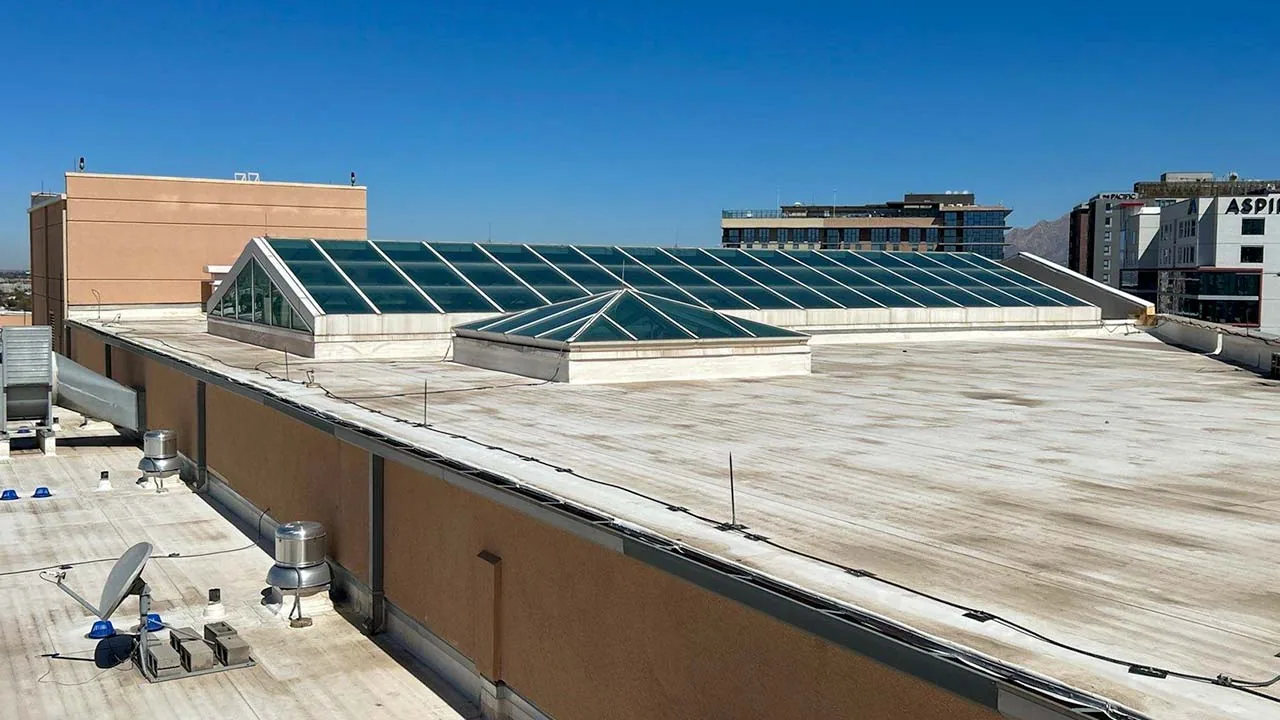
The year brings rain on roughly 113 days, and May 2020 saw 3.00-inch hail east-northeast of Fayetteville. Spring is the hard season for an open roof, so large phases are kept short, sections are small and forecasts are checked each morning. The best work windows are often late spring dry spells, summer and early fall.
Football Saturdays change traffic and parking near campus. The Razorback Stadium site at the University of Arkansas has a 76,212-seat capacity, and delivery routes near it need planning around game days. The historic Square holds buildings from 1886 to 1911, around a downtown street grid, so lifts and dumpsters there are planned with the city and the building owner, and early starts help. Both are calendar items, not afterthoughts, and we ask for the manager's event calendar at the first meeting. Where a building sits in a tight street, we also confirm sidewalk protection and any permit for a lift before the schedule is published.
Cost: what phasing adds and what it saves
Phasing adds some cost: more mobilization, temporary protection, extra supervision and more tie-in work. It saves money elsewhere. A building that stays open keeps its rent, and a lease that would have been disrupted does not need a concession. We show the cost of the phased plan against a closed-building plan, when closing is possible, so the manager can compare, and we say so when a few days of closure would cost the owner less than weeks of phasing.
The quote separates tear-off, insulation, membrane, flashing and edge metal from the phasing items: protection, intake covers, notice, extra crew time and night or weekend premiums. The manager sees what is roofing and what is accommodation. Some buildings can go faster with a recover that leaves the old roof in place, and we price that route when the roof allows it.
Questions About Occupied Building Reroofing
Local: occupied buildings across the metro
Clinics, schools, offices and retail all stay open during a reroof, and a metro of 546,725 residents in 2020 keeps those doors busy from morning to close. Rogers and Springdale hold their own mix of retail and industrial buildings.
For owners in Fayetteville, downtown Fayetteville and Rogers, the plan changes with the building but keeps its structure: sections, notice, protection and a daily close. We write it in a few pages that a manager can hand to tenants and an owner can approve, with a closeout set of photographs for each section so the file is complete when the job ends.
Commercial Roofing Questions
Do tenants have to leave during a reroof?
Mostly no. Phasing keeps the floor below working, and the manager and we settle notice for the noisiest days ahead of time. Now and then a room is vacated for an hour or two when protection cannot go in around people.
How is the building kept dry if a storm hits?
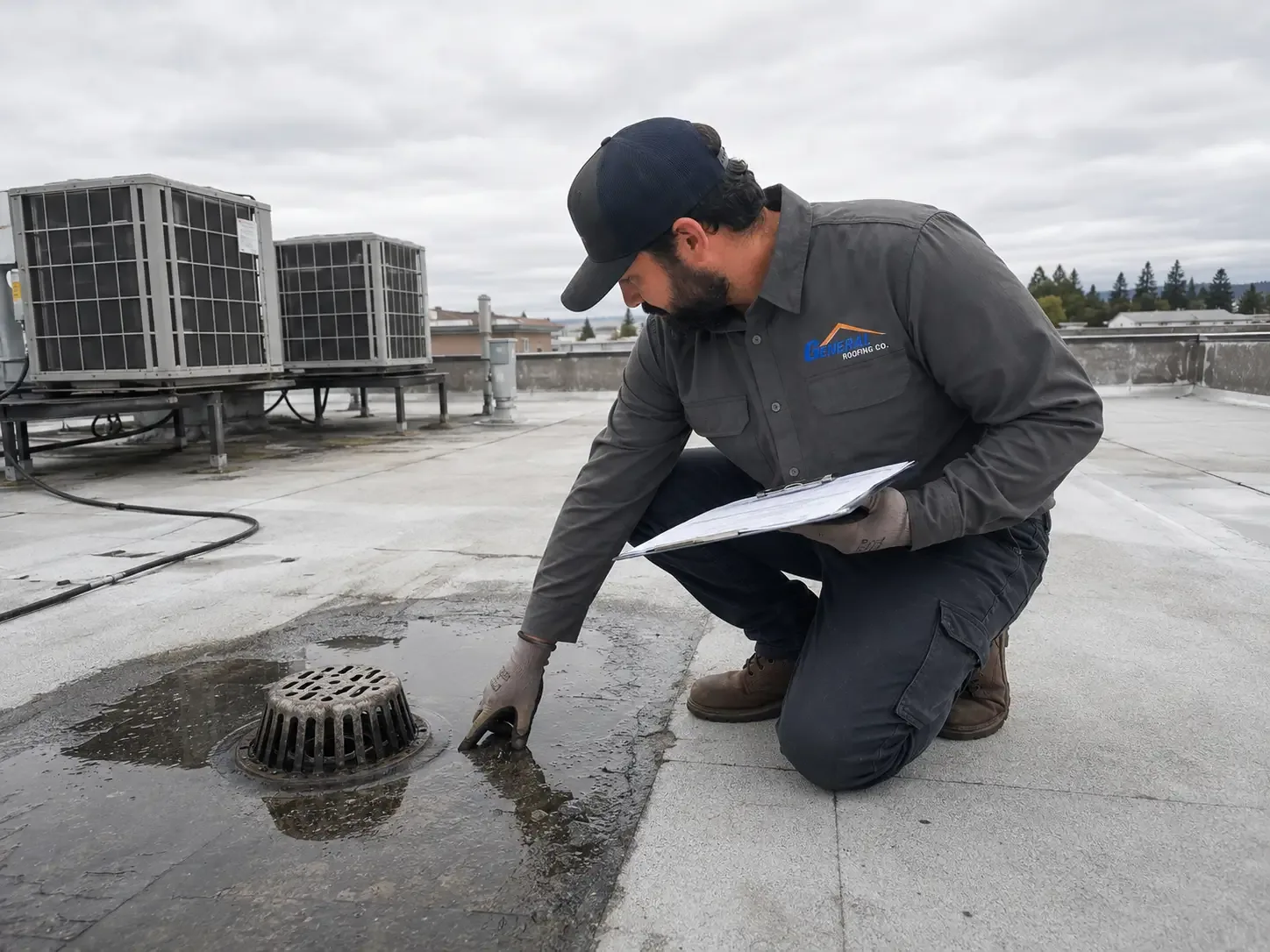
Each open section is tied into the old roof with a temporary or permanent seal, and cover is staged next to every opening. We check the forecast each morning and stop early when a line approaches.
Can work be done at night or on weekends?
Prep and staging can be, within noise limits. Membrane work is best in daylight, and weekend premiums show up as a separate line.
What about odors?
Low-odor systems and temporary intake covers handle most of it. We coordinate with the mechanical contractor and give tenants a schedule for adhesive days.
Who talks to the tenants?
Notices go out under the property manager's name. We hand over the schedule, the loud-work dates and a phone contact for questions.
Related Commercial Roofing Pages
Read how we handle this work in Fayetteville, AR
Read how we handle this work in Fayetteville, AR
Read how we handle this work in Fayetteville, AR
Read how we handle this work in Fayetteville, AR
Read how we handle this work in Fayetteville, AR
Read how we handle this work in Fayetteville, AR
