Restaurant Roofing in Fayetteville, AR
Restaurant roofing in Fayetteville, AR: grease-resistant membranes, exhaust fan flashing and leak repair timed around lunch rush, dinner and weekends.
A restaurant roof gets the worst of two worlds. It sits over a hot, wet kitchen that is working through the lunch and dinner rushes, and it carries the exhaust fans that send grease up and onto the surface. A leak above the dining room costs a table turn. A leak above the line costs a night. In Fayetteville, AR a restaurant owner or landlord who gets the roof looked at in the slow weeks, before the spring storm line, saves a repair bill and a lost weekend.
Grease: the slow damage that hides in plain sight
Exhaust fans drip. Even a well-kept hood sends a thin film of fat across the roof around the fan, and grease softens many roofing membranes, swells seams and loosens flashing. The damage is slow, and it looks like ordinary wear until the membrane suddenly gives way near the fan. Grease also attracts debris, which holds moisture on the sheet.
We look at the roof under the fans first. Where there is staining, we test the membrane, replace damaged sections and flash the fan curb properly. On a roof that is being replaced, a grease-resistant sheet such as PVC is worth pricing, because ordinary membranes can break down beside an exhaust fan. A grease containment tray under the fan and a regular cleaning schedule do as much as the membrane choice. We ask the kitchen manager how often the hood is cleaned and where the fan drains. Fans that discharge straight onto the sheet get a drip pan or an extended spout, and the sheet below gets a walk pad so the cleaning crew does not grind grease into the surface. That small change often adds years to the sheet near the fan.
Service hours: working around lunch, dinner and weekends
A restaurant's busiest hours are the roof crew's worst. Loud work above the dining room during the lunch rush costs the owner money, and fumes near an air intake can empty a patio. We plan around service. Early morning is usually the best window, before the kitchen starts prep, with repairs finished by the time the first delivery arrives.
Fridays and Saturdays are off limits for anything noisy or smelly. If a weekend leak forces an emergency visit, we dry in and come back on a slower day for the permanent repair. The foreman also checks with the kitchen before any torch, adhesive or hot work, because a flame near an open vent is not a risk worth taking. A roof hatch over a dining room gets a floor protection plan and an escort, so no tools or debris drop through the opening. If a patio sits under the work area, tables are cleared and the area is roped off before the first tool comes out. We also keep our trucks out of the delivery lane so the food supplier is not blocked, and our hoist time is set for the hour after the morning delivery is done.
Older blocks: restaurants on the Square and Dickson Street
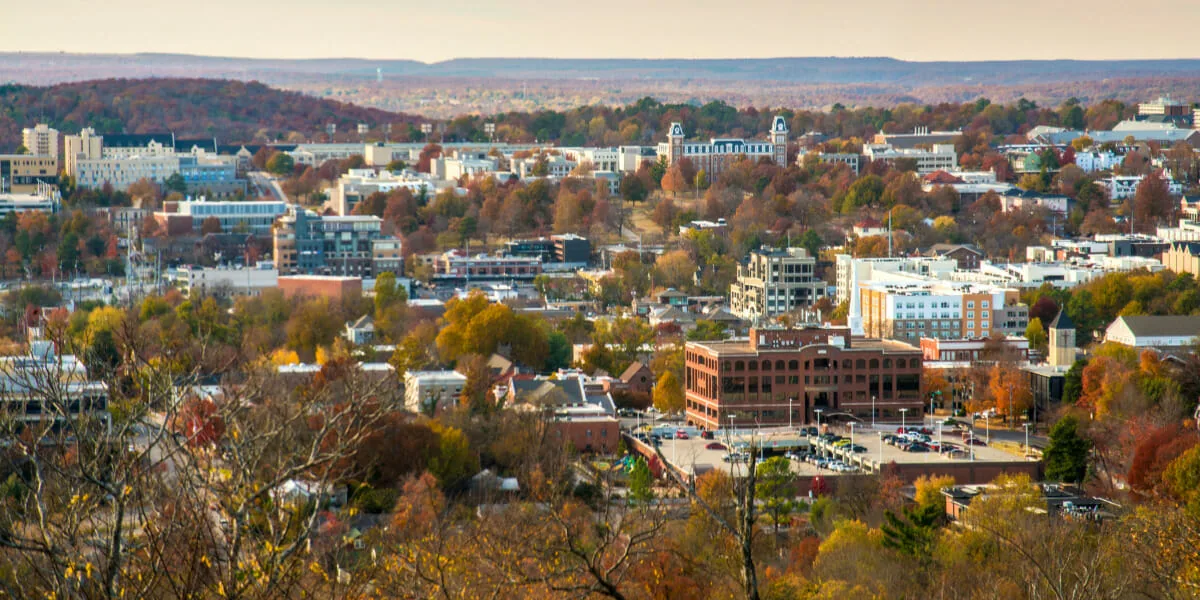
Restaurants on older downtown blocks may be working under older roofs than the city's newer construction. The Downtown Fayetteville Historic Square holds buildings dating from 1886 to 1911, including the 1911 Old Post Office and the 1908 Lewis Brothers Building, and Dickson Street is the city's main entertainment district. A roof on one of these blocks may sit behind a parapet, be reached by an interior ladder and share walls with a neighbor.
That changes the work. Access can mean a lift on a narrow street, a closure permit and a crane lift on a Sunday morning. Parapets and shared walls make flashing details more important than the field of the roof. Older roofs may also have layers that have been patched many times, so a roof survey comes before a promise. A restaurant on the Square or Dickson Street can also be one of several tenants under one roof, so a repair for one may need a conversation with all. Restaurants in the other Northwest Arkansas downtowns, such as Bentonville with its town square, run into the same constraints.
Spring storms: what a restaurant should do after hail
Hail season arrives with the spring line of storms. The May 2020 report of 3.00 inch hail a mile east-northeast of Fayetteville shows the size of stone this area can see. Small restaurant roofs are exposed, and a single bruised seam or cracked skylight can let in water at the worst moment.
After a hard storm, walk the dining room and kitchen for stains, then call. We inspect the roof, photograph every mark and dry in what is open. The file helps with the insurance claim, and we can usually give the adjuster a dated record. For roofs that took a hit but are not leaking, we recommend repairs before the next heavy rain, since small openings grow in a freeze-and-thaw week.
Cost: patch, coat or replace a restaurant roof
A patch is the cheapest answer and the shortest. It makes sense for an isolated puncture on a dry roof. A roof coating can renew a sound roof, but it needs a clean surface, and grease makes preparation harder. Replacement costs the most and fixes the roof as a whole, including curbs and fan flashings.
We price all three in writing and show the repair history beside each one. A landlord and a tenant often share the bill, so the estimate separates exhaust-related work from general roof work. A restaurant that rents its space needs to know what the lease says; one that owns its building can fit the work into a capital line. Either way, a quote window opens when the owner sends the address, the roof age and a photograph of the fan area, and a rough range comes back before the next storm week. A hotel with a restaurant on the ground floor splits its roof costs the same way.
Questions About Restaurant Roofing
Maintenance: the cheap visit that prevents the weekend call
A twice-a-year visit costs little against a lost Saturday night. We check fan flashings, clean drains, tighten loose edge metal and look for new grease staining. A preventive maintenance report goes to the owner with photographs. For restaurant groups with several locations, the same checklist travels from site to site, so one report format covers the whole portfolio. A bakery or deli inside a grocery store carries the same exhaust questions, and the same checklist applies. Spring and fall are the two best months for the visit, with the second one timed ahead of the first freeze, when clogged drains turn into ice dams at the roof edge.
Commercial Roofing Questions
Does grease from exhaust fans void a roof warranty?
It can. Many membrane warranties exclude damage from grease or chemicals unless the membrane is rated for them. Read the warranty terms before work, and tell us about the exhaust so the right membrane and the right flashing details go on.
Can a restaurant roof be repaired during business hours?
Small repairs can be done early in the morning or between service periods. Anything noisy, smelly or involving flame waits for a time the kitchen is closed. We coordinate with the manager so no work happens over the dining room at peak.
How do I find a leak that only shows up in a heavy rain?
Mark the location and date of each stain and send photographs. We trace the water path across the roof and test suspect details. Hose testing in sections is sometimes the only way to catch an entry that appears in rain.
What is the best time of year to reroof a restaurant?
Spring and early fall, outside the weeks with the biggest crowds and away from the storm peak. A quote window in winter gives time to order materials and schedule the kitchen's slow days.
Should the landlord or the tenant pay for exhaust-related roof damage?
Most leases address it, and the property manager reads the language. We split the estimate by cause so each party sees its share, and photographs of the roof at each visit show when damage began.
Related Commercial Roofing Pages
Read how we handle this work in Fayetteville, AR
Read how we handle this work in Fayetteville, AR
Read how we handle this work in Fayetteville, AR
Read how we handle this work in Fayetteville, AR
Read how we handle this work in Fayetteville, AR
Read how we handle this work in Fayetteville, AR
Read how we handle this work in Fayetteville, AR