Roofing for Insurance Adjusters and Restoration Contractors in Fayetteville, AR
Storm damage documentation, temporary repairs and permanent roof work for insurance adjusters and restoration contractors in Fayetteville, AR.
After a storm, an adjuster has a stack of claims and a short list of questions for each roof. What was damaged by this event, what was already worn, what must be done now to stop further loss and what will the permanent repair cost. A roofer who can answer those in writing, with dated photos, saves the adjuster a trip and the claim a week. That is the role we take on storm claims in Northwest Arkansas.
The area gives plenty of practice for the questions. In May 2020 the NWS Tulsa log put three-inch hail east-northeast of Fayetteville. Then, on March 30, 2022, Springdale took an EF3 tornado along a 5.2-mile path as wide as 350 yards. Those are different kinds of loss, and each needs a different file.

First visit: stop the loss and start the file
The first trip does two jobs. We stop water from entering the building with a temporary repair, such as a tarp, a patch or a sealed edge, and we begin the record. Temporary work is limited to what prevents further damage, and we keep receipts and photos of each step. A tarp that is sized, secured and photographed supports the mitigation duty without turning into a permanent repair that the carrier has not yet seen.
Documentation begins before any cleanup. We take wide shots to place each photo, close shots of damage with a scale and a note of the roof section, and a sketch with marks matching each photo. The date and time are recorded, and so is the weather. If the carrier's adjuster wants to meet on the roof, we set the time and have the roof ready, with safe access and the damage marked.
Owners and managers are part of the file. A property manager can supply the tenant's report, the date water was first seen and any earlier repair invoices, and an investor owner can supply the lease terms that say who handles the roof. We fold those items into the record so the adjuster sees the whole picture in one place.
Hail: finding bruises that do not leak yet
Hail damage on commercial roofs is often hidden. A stone can crush insulation under a membrane, crack a coating and leave a round bruise that looks like nothing from the ground. The leak may not show until a later rain. So we walk the roof in a pattern, count and mark hits in measured test areas, check metal for dents and look for cracked or displaced granules on cap sheets. A moisture scan helps find saturated insulation beneath a clean-looking surface.
We separate what the storm did from what the roof already had: blisters, old patches, ponding stains and worn seams. That distinction keeps a claim from stalling on a dispute and keeps the owner from paying to repair what the storm did not cause. Our hail damage roof repair scopes list each item with its cause and its price.
Wind and tornado: edges, panels and debris
Wind damage looks different. It lifts edge metal, peels membrane back from the perimeter, pulls panels loose and drives debris into the roof. The Springdale tornado destroyed a large metal building near Highway 412, and at the airport it destroyed a hangar and tore into a city maintenance shop. A loss like that is a structure question first, and the roof comes second.
For lesser wind events, the record has to show where the uplift began. We trace the pattern from the edge and note fastener condition, lap condition and any loose or missing metal. A wind damage roof repair may be a re-secure and reseal at the perimeter, or it may call for replacing a section. We explain the difference and give the cost of each.
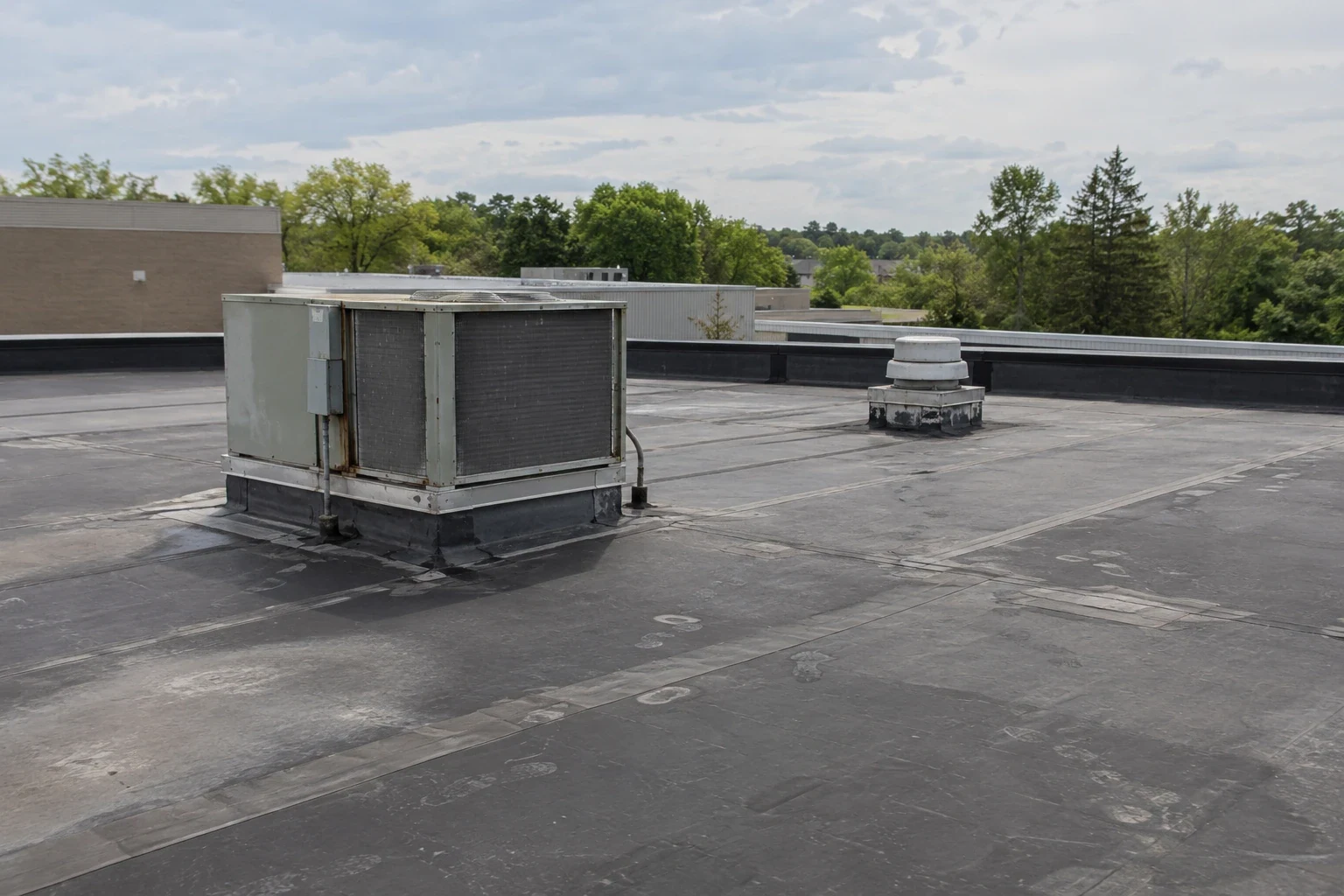
Debris is its own category. Branches, signs and loose rooftop material can puncture a membrane and leave a hole that looks like a wind tear. We photograph the object where it landed, measure the damage and trace the line of travel. If a rooftop unit moved on its curb, we check the lines and the flashing underneath, because a shifted unit can leave a gap that leaks long after the storm is over.
Scope and supplements: keeping the estimate factual on both sides
A carrier's estimate is a starting point. Once the roof is open, conditions can change: wet insulation, rusted deck, code-required upgrades. A replacement can pull in code items the first estimate left out, since the state's fire prevention code applies the 2021 International Building Code to fastening and insulation. When that happens we write a supplement with photos, a description and a price, so the adjuster has facts to review.
For a restoration contractor handling interior drying and rebuild, the roof is the first dependency. We coordinate so the roof is dry before the ceilings go back up, and we share dates so the drying crew does not wait on us or we on them. A roof insurance claim assistance file kept clean from day one avoids rework at the end.
Pricing follows cost drivers, not rules of thumb: the roof system, the deck, the depth of insulation, the roof shape, the number of penetrations and the access. We list each in the scope so the adjuster can check it against the carrier's line items and see where the numbers differ. When a price is high because the roof has an unusual edge or a difficult lift, the scope says so, with a photo.
Cold snaps, records and the next claim
Not every loss comes from a storm line. The minus 20 F reading at Fayetteville on February 16, 2021 is a reminder that cold can crack sealants, split seams and burst drain lines. Water from a frozen line can look like a roof leak. We trace the source before we price a repair, because the cause changes both the repair and the paperwork.
After the claim, the owner has a record to keep. We hand over the photos, notes and invoices, and we suggest a recheck after the first big rain. Owners with several buildings can move into a roof condition report program, so the next event starts from a known baseline. Adjusters and contractors working in Springdale, Fayetteville or Rogers can call for a joint walk.
Questions About Insurance Adjusters and Restoration Contractors
Commercial Roofing Questions
How fast can you get on a roof after a storm?
Call our emergency line at any hour. Water entry is the first priority, and a crew goes out as soon as access is safe. Same-day temporary work is the goal when the damage is open.
Will you meet the adjuster on site?
We can. We set the time, prepare access and have the damage marked with the photo log in hand. If the adjuster has questions, we answer them with measurements and pictures.
How do you tell hail damage from old wear?
By pattern and age. Hail leaves fresh, round marks across a wide area, while wear shows as blisters, ponding stains and seam failure in specific places. Moisture scans back up what we see.
What does a supplement include?
A description of the new condition, photos with location, the reason it was not visible at first and a price by cost driver. It goes to the adjuster as a single package.
Can you repair temporarily before approval?
Yes, to stop further loss. We keep it limited, document it and save receipts. Permanent work waits for approval unless water is still entering.
Related Commercial Roofing Pages
Read how we handle this work in Fayetteville, AR
Read how we handle this work in Fayetteville, AR
Read how we handle this work in Fayetteville, AR
Read how we handle this work in Fayetteville, AR
Read how we handle this work in Fayetteville, AR
Read how we handle this work in Fayetteville, AR
Read how we handle this work in Fayetteville, AR
Read how we handle this work in Fayetteville, AR