Ponding Water Roof Repair in Fayetteville, AR
Fix standing water on flat commercial roofs in Fayetteville, AR: clogged drains, low spots, tapered insulation and added drains, priced by cause.
Two days after the last rain, the puddle by the east parapet is still there, and the property manager wants to know whether to worry. Water that stays on a flat roof is more than a stain. It adds weight to the deck, wears the membrane faster than a dry surface and finds any weak seam or flashing. A puddle that sat for a week in the heat of July is already working on the roof.
Northwest Arkansas gives a roof plenty to shed. Precipitation at Drake Field adds up to about 47 inches a year over roughly 113 days, and May alone averages 5.89 inches. A roof with a low spot gets tested often, so we treat ponding as a repair question with a cause behind it.
Cause: why the water stays
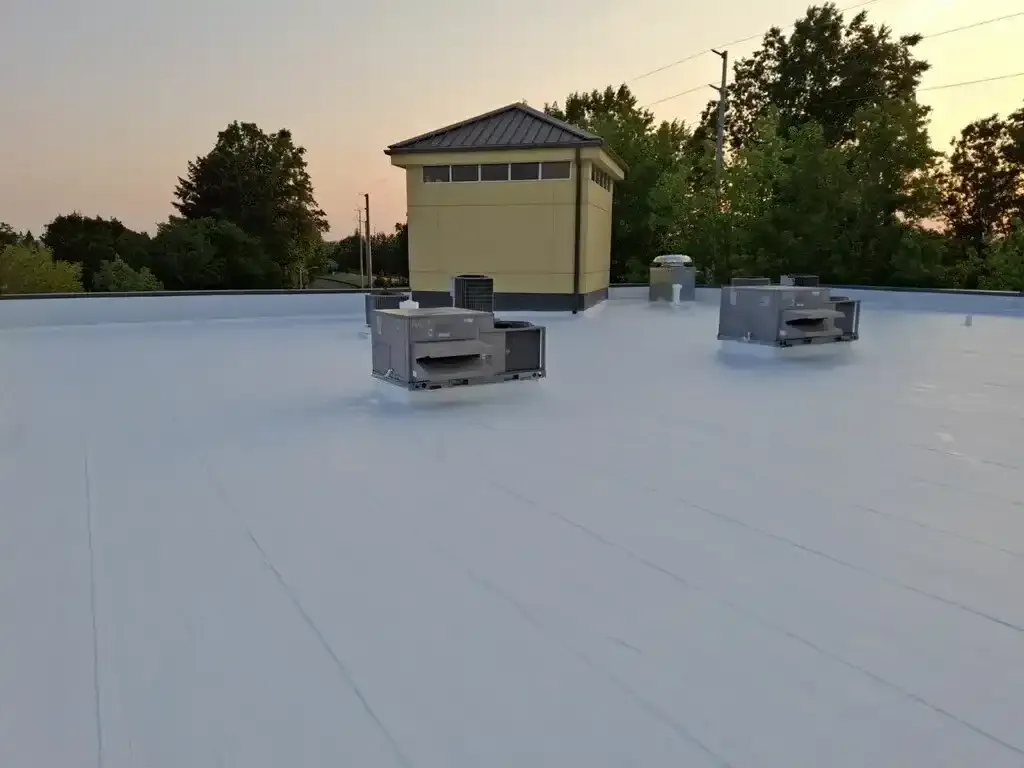
Standing water has a short list of causes. The drain may be blocked by leaves, grit or a loose basket. The drain may sit higher than the surrounding membrane, so water cannot reach it. The deck may have deflected under load or equipment, creating a dish. The insulation may have compressed, or the slope may never have been enough. Each cause calls for a different fix.
We find the cause with a walk, a level and a hose. After rain, we mark the ponded area, measure its depth and extent and trace the flow to the nearest drain. A bucket of water poured at the edge of the pond shows where it goes. We check the drain bowl, the clamping ring and the pipe, because a drain that does not drain looks the same as one that sits high. The report names the cause and the fix.
An infrared scan helps when the ponded area is large or the insulation is in question. Wet insulation holds heat differently from dry insulation, and the scan shows the shape of the wet area after sunset. An infrared moisture survey gives the boundary of the problem so the repair cuts out only what is needed. Cores confirm the findings and show the layers, which helps choose between patching and replacing the area.
Quick fixes: drains, scuppers and debris
The cheapest fix is often a cleaning. A roof drain or scupper that is packed with debris will back water onto the roof in the next rain. We clear the basket and the line, flush the pipe, check the overflow and test the flow with a hose. If a drain has settled or the bowl is cracked, we reset or replace it.
Scuppers deserve a look at the sill height. A scupper cut too high leaves a permanent pond behind it. We can lower the opening and flash it properly, or add a second scupper nearby. For a roof that ponds because of a clog, a cleaning and a recheck settle it. For a roof that ponds in clean conditions, we move on to the next step.
Gutters and downspouts on edges that shed onto a lower roof can make a pond too. A downspout that empties onto a membrane without a splash pad wears the surface and can leave a permanent wet spot. We follow each downspout to its outlet, add splash pads or extensions and make sure water reaches the ground or a proper drain instead of a lower roof.
Slope and taper: building water a way out
If the roof is simply too flat in an area, we add slope. Tapered insulation, installed under a new or recovered membrane, creates a gentle pitch toward the drain. Crickets behind curbs and units direct water around obstacles. A saddle at a low spot can lift the surface, and a new drain at the lowest point can take the water away directly.
These fixes are done with the roof system in mind. On a roof near the end of its life, a taper job is best combined with a roof recover or replacement, so the slope and the new membrane go in together. On a roof with years left, a localized taper and a patched membrane may be enough. We give both prices and the cost of waiting, which is wet insulation and a growing pond.
Pipes and penetrations that sit in a pond fail first. A vent boot, a conduit support or a curb flashing under standing water is under constant pressure, and a hairline gap that would shed rain will leak under a pond. During the walk we look at each of these and mark any that sit in a low area. A flashing failure repair done at the same time as the slope fix keeps the repaired area from being tested again the next week.
What ponding does to a membrane over time
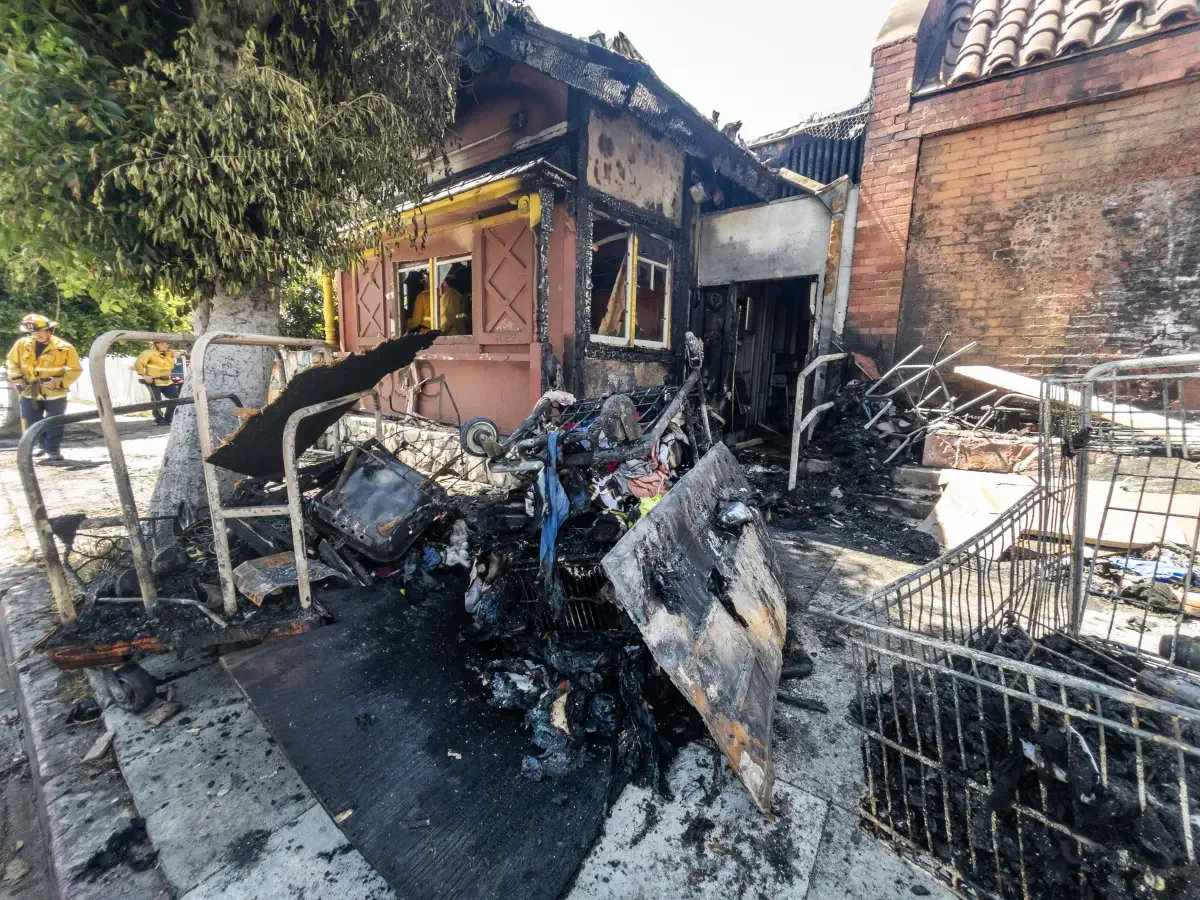
Standing water speeds the aging of most membranes. It holds dirt and algae on the surface, softens some seam adhesives and puts extra stress on welds. In winter, Fayetteville sees about 10 days a year with highs below freezing and around 6.5 inches of snow, so a pond can freeze, expand and lift a seam. In summer, water heated on the surface cooks the membrane beneath it. Over seasons, these cycles open the seams that fail first.
Wet insulation under a pond loses its insulating value and its strength. A moisture scan shows how far the water has spread, and a core sample confirms it. If the insulation is saturated, we replace that area before restoring slope. The seam failure repair that follows is smaller when the pond is caught early.
Large flat roofs: malls, centers and warehouses
Big single-level roofs have more places for water to hide. Broad single-level retail, from the Fayetteville mall that opened in 1972 to Pinnacle Hills Promenade in Rogers, depends on drains and slope to shed all of its water. Walking a wide, flat area after a rain shows the whole drainage pattern at once. What a wide flat area does mean is that drains, scuppers and slope carry the whole job of shedding water, and a map of drains against low spots is the quickest way to find trouble.
For owners with several large roofs, we put ponding on the standard survey so that every roof is checked after a rain. A ranked list shows the worst ponds first. Owners in Rogers and Fayetteville can call us to schedule a post-rain walk, which is the best time to find the problem.
Questions About Ponding Water Roof Repair
Commercial Roofing Questions
How long can water sit on a roof before it matters?
Water that remains more than about 48 hours after rain is a flag. The membrane may tolerate it for a while, but the deck, seams and insulation do not benefit. Heat and freeze make it worse.
Can you fix ponding without replacing the roof?
Often. A cleaned drain, a reset drain, a new scupper or localized taper may solve it. If the membrane or insulation under the pond is failing, we repair or replace that area first.
Why does water pond near a drain?
The drain may sit high, the bowl may have settled or the area around it may be dished. We check with a level and a hose and adjust the drain or add taper.
Is ponding covered under a roof warranty?
Warranty terms differ by maker. Some limit coverage for ponded areas. We read the terms before any repair and document the condition so the file is accurate.
When should I schedule a ponding check?
The day after a good rain is best, because the ponds are visible. We also check after snowmelt, since a freeze-thaw week can show where water sits.
Related Commercial Roofing Pages
Read how we handle this work in Fayetteville, AR
Read how we handle this work in Fayetteville, AR
Read how we handle this work in Fayetteville, AR
Read how we handle this work in Fayetteville, AR
Read how we handle this work in Fayetteville, AR
Read how we handle this work in Fayetteville, AR
Read how we handle this work in Fayetteville, AR