
Multi-Site Commercial Roof Programs in Fayetteville, AR
Coordinate inspections, repairs and capital planning across Fayetteville commercial properties with building-specific scopes and a shared roof program.
Ten buildings, ten work orders and whoever called last gets the crew. That is how a property team ends up sorting roof urgency by volume instead of by risk. A multi-site roof program puts every building on one calendar for inspections, repairs and budget reviews, while keeping each roof's condition and scope its own.
We start with the property list, the records on hand and the access rules, then set an order that puts active water ahead of routine visits. The program gives the manager one process without forcing every roof into the same repair, and it works for a regional group in Fayetteville, AR as well as for an owner with three strip centers along Highway 112.

Register: one sheet that starts the program
Build the register from addresses, roof sections, system types where known, access points, leak history, prior repairs and warranty papers. Gaps stay visible. A new manager should be able to see at a glance which buildings need a first inspection, which have a repair in progress and which already have a current report.
The register is a control sheet, not a replacement for the roof. We set the baseline with hands-on inspections and attach a condition report to each property, then add an infrared moisture survey where wet insulation is the open question. Buildings with no usable roof plan or an unclear system history get flagged, assigned to a person and given a due date.
Cost shows up in the register early. A building that has had three leak calls in a year and a roof of unknown age is a bigger line than one with a clean report, and the sheet lets the manager see that before the first invoice arrives. The first pass is usually the cheapest money a portfolio spends on roofs, because it replaces guessing with a ranked list.
Route: group the trip, not the findings
Visits can be grouped by geography, access window or operating calendar. The I-49/US 71 corridor ties Fayetteville to Springdale, Rogers and Bentonville and is the only fully controlled access route through the metro, so one crew can work up the highway in a day while giving each building the time its roof needs. A school or hospital with limited hours may need a separate date.
Routing saves travel and helps staff plan, but it never decides priority. An active leak or an open edge moves ahead of a convenient cluster of routine walks. We confirm the address, hatch or ladder location, key holder and any operating restriction before dispatch, and the work order carries all of it. Owners with buildings in Springdale and Bentonville as well as Fayetteville see the savings first.
Triage: active water before the cycle
A program needs a direct path for new leak calls. The manager records the room, the timing, the weather and any equipment or tenant affected. We inspect the likely area, find the opening and write a scope. If the cause is unclear, we say which test or access would settle it. That path keeps a building with water coming in from waiting behind a scheduled visit to a stable one.
Afterward the file gets the work done, the photographs, the invoice and what remains. A planned repair can be grouped with others for pricing where the scopes allow, while each quote stays tied to its roof. If a same-day visit cannot reach a section, the record says so and a follow-up is booked, instead of closing the call as complete.
Tenant impact goes into the same entry. A leak over a clinic suite, a restaurant kitchen or a stockroom with inventory is ranked by what the water can reach, not only by how big the stain is, and the entry says who was told and when.
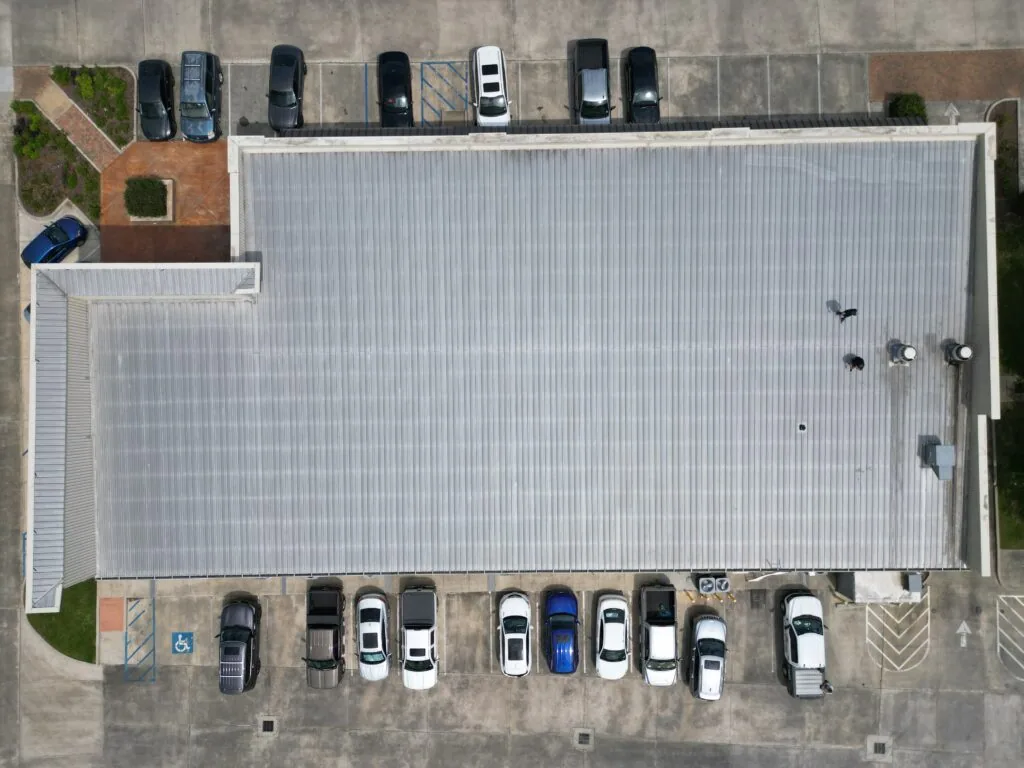
Budget: sort findings into four piles
Once the baseline is done, every finding goes into one of four piles: immediate repair, maintenance, investigation and capital replacement. Each line carries a reason, a timing window, scope assumptions and what could change the number. A wet area that needs testing is not priced like a confirmed replacement, and a stable roof does not drop off the calendar either; it gets a review date.
A capital plan sequences the larger work across budget years, and roof asset management keeps condition history in step across the buildings. Metal panel work and single-ply repairs involve different materials and details, so we keep those scopes apart and compare the funding decisions at the portfolio level.
The result is a table a finance team can read: building, finding, reason, timing window and cost range, with a next review date. Owners who hold property near the Fayetteville Industrial Park, east of Fifteenth Street, and a retail center near Pinnacle Hills in Rogers can see both rows on one page and move money between them as conditions change.
Cadence: who sees what, and when
Choose who receives inspection findings, who approves repairs and who updates the record. A short monthly check closes urgent work orders and a quarterly review handles the longer list. The property contact confirms access, the manager closes completed items, and the budget owner reviews projects that need funding. That division keeps roof observations tied to decisions without turning every building into a long meeting.
After severe weather, the program sends a walk only to the properties with a reason to be inspected, then records the result. A tornado like Springdale's EF3 of March 30, 2022 follows a narrow path, and a hail line like the one logged in May 2020 east-northeast of Fayetteville can miss one building and strike the next. The team can track actual visits in its maintenance schedule and carry the work into the next capital review.
Questions About Multi-Site Commercial Roof Programs
Commercial Roofing Questions
Can one program cover buildings with different roof systems?
Yes, as long as the record keeps each system and its condition. The program shares inspection dates, priority labels and budget fields, while the Diligence Notes describe the membrane, metal panels or coating on that property. That lets the manager compare decisions without applying one repair method to every building.
How do you handle a leak reported between scheduled visits?
The property contact records the location, the interior effect and the timing, then we inspect the roof area and name a repair or a follow-up test. Active water entry moves ahead of routine work. The findings go into that building's record and the calendar is updated so the next review reflects what changed.
What should we provide before launching a program?
A property list, known roof systems, access contacts, available warranties, prior reports and open leak work orders. We will mark where records are complete and which buildings need a baseline inspection. A phased start is workable when access or budget limits the first round, as long as the schedule shows what has been inspected and what remains.
Does grouping visits lower the quality of each inspection?
It lowers repeated travel, but each building still needs enough time for its roof sections and details. We plan the day around roof size, system, access and operations. If a route cannot support a complete inspection, that building gets a separate visit rather than a shortened one.
How does the program help with capital decisions?
It brings current condition, open repairs and next inspection dates into one review, so the manager can compare funding urgency across buildings. The sequence shows which roof is ready for pricing and which needs another inspection first, and it is updated after every repair or replacement.
Related Commercial Roofing Pages
Read how we handle this work in Fayetteville, AR
Read how we handle this work in Fayetteville, AR
Read how we handle this work in Fayetteville, AR
Read how we handle this work in Fayetteville, AR
Read how we handle this work in Fayetteville, AR
Read how we handle this work in Fayetteville, AR
Read how we handle this work in Fayetteville, AR
Read how we handle this work in Fayetteville, AR