Commercial Roof Asset Management in Fayetteville, AR
Track roof condition, urgent repairs and replacement timing across Fayetteville properties with a practical asset view for annual capital decisions.
The same leak comes back on three work orders, filed by three people, and nobody can say which of the owner's buildings should get the next dollar. That is what a roof portfolio looks like without a record. Roof asset management is the fix: one file per roof holding its system, its repair history, its remaining life and the work planned for it, kept current so the answer to "what does this building need" takes a minute instead of a week.
We build the file from the roof itself, not from a spreadsheet of guesses. A walk, a sketch, photographs and a few cores give the property manager in Fayetteville, AR a view of every building that an owner, a lender or a board can follow.
Inventory: what goes in each roof file
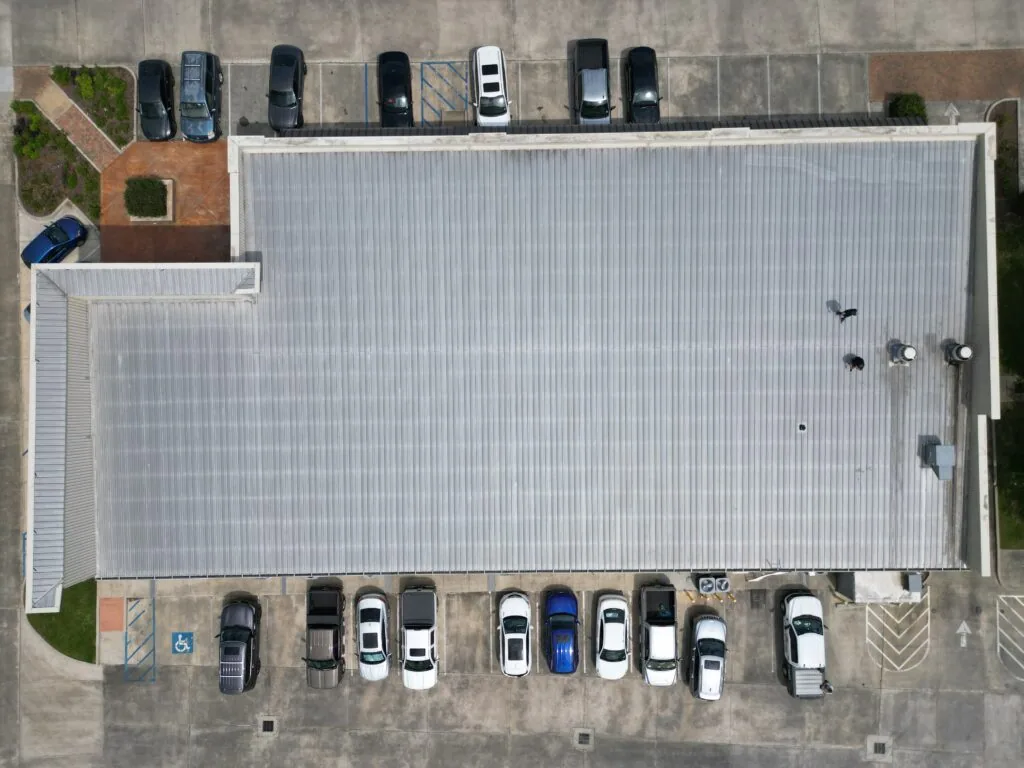
Each file starts with the building, the roof sections and the system on each one. A 1990s addition on a 1970s building is two roofs with two ages, and the file keeps them apart. We record the drains, the major penetrations, the rooftop units and the last work done. Where an installation year is known from an invoice or a warranty, it goes in with its source. Where it is not known, the file says so and we estimate from condition.
A photographed condition report is the first entry, and every repair, storm walk and coating afterward adds a dated line. After a few seasons the file shows which details keep failing, which sections age fastest and where the maintenance dollars are really going.
Ranking: which building gets the next dollar
Age alone does not set the order. A small opening over a pharmacy stockroom outranks a larger blemish over an empty storage bay. We weigh active water entry, wet insulation, seam and edge condition, drainage and what sits under the roof, then rank the buildings so the worst combination of risk and cost comes first.
The ranking comes with a reason beside each building, such as "third patch at the same curb in two years" or "insulation wet across the north bay." When a tenant moves out or a budget gets cut, the manager can reorder the list and still explain every position on it.
Cost enters the ranking too. A roof that needs a full tear-off next year is planned differently from one that needs a coating and a drain reset, so each line carries a range and the condition that would move it, such as wet insulation found at the next leak call. Nothing in the file is a promise about how long a roof will last; it is a working estimate that the next walk either confirms or moves.
Maintenance: small work, logged
Most roofs reach the capital line early because small defects were left alone. A scheduled maintenance visit before the March to May storm stretch and another before the first hard freeze clears drains, reseals penetrations and refastens loose edge metal. Each visit adds photographs and a note on what changed.
The log pays back at renewal time. A roof with five years of dated visits shows the buyer, the lender and the insurer a building that was looked after, and it shows the owner exactly what a repair cost against what the replacement would have. With 46.96 inches of precipitation falling at Drake Field in a normal year, a roof that holds water between visits gets flagged for a drain and scupper fix before the wet month arrives.
Storms and claims: before and after on one record
In May 2020 hail reached 3.00 inches near Fayetteville, and in March 2022 Springdale's tornado damaged the airport's maintenance shop, tearing away a wall and a section of roof. After weather like that, an owner with a current file can hand the adjuster the roof as it stood last season and the roof as it stands now.
We add the storm walk to the same record, with new bruises, lifted trim and displaced covers marked against the old sketch. That separates event damage from age, which keeps a claim from stalling over what was already worn.
Local mix: campus, plant and strip center
The buildings an owner holds around the metro rarely match. Campus and health owners in Fayetteville, where the University of Arkansas, Washington Regional Medical Center and the VA Medical Center sit among the biggest employers, carry many roof sections with long histories. Poultry plants and trucking yards in Springdale, J.B. Hunt's headquarters in Lowell and Pinnacle Hills Promenade in Rogers, which opened in 2006, round out the mix.
A plant roof with process exhaust, a retail roof with tenant rooftop units and an office roof with a single mechanical yard each get their own checks inside the same file format. Owners with sites in Springdale and Rogers as well as Fayetteville can see all of them in one ranked table.
Older stock matters as well. Fayetteville's Square holds buildings dating from 1886 to 1911, and Northwest Arkansas Mall opened in 1972, so an owner with long-held property may carry roofs that have been patched, recovered and added to more than once. The file records each of those layers as it is found.

Questions About Commercial Roof Asset Management
Review: the spring check
Once a year, before the budget is set, we go through the file with the manager. Open repairs get closed or carried forward, roofs near the end of their life get a priced replacement range and a target year, and roofs that are holding get a note on why and a date for the next look. The result feeds roof capital planning directly.
If a building changes hands or a new manager takes over, the file goes with the keys. It is the one document that tells the next person what is on the roof, what has been done to it and what to do next.
We also use the review to retire old assumptions. A roof once marked "replace in three years" that has stayed dry and sound through two wet springs earns a later date, and the money moves to the building that needs it. That kind of change is the point of keeping the file at all.
Commercial Roofing Questions
What goes into a roof file besides photographs?
The roof sections and systems, the sketch with every penetration and drain marked, the layer count where cores were cut, repair and warranty paperwork, moisture findings and a ranked list of work with cost ranges. Unknowns are marked as unknown, so nobody mistakes a guessed installation year for a documented one.
How do you decide which building to repair first?
By risk and consequence together: active leaks, wet insulation, loose edges and anything over a sensitive room move a roof ahead of an older but stable one. We write the reason beside each position so the owner can reorder the list when tenants, funding or weather change.
Can one file hold both metal and membrane roofs?
Yes. Each system is recorded on its own terms, with fastener, lap and finish checks for metal and seam, flashing and drainage checks for single ply. The shared fields cover condition, urgency and funding year, which lets the owner compare buildings without treating unlike roofs as the same asset.
How often should the file be refreshed?
After every inspection, repair, recover or replacement, and again before the annual capital budget is set. A hard storm is another trigger. If nothing changed, the refresh is a short entry that says so, and that quiet entry is useful evidence too.
What should I bring to a first portfolio review?
The property list, any roof plans, past inspection reports, repair invoices, warranties and the current leak log. We will mark what is dependable and what needs a field check, then set the first round of walks in order of risk.
Related Commercial Roofing Pages
Read how we handle this work in Fayetteville, AR
Read how we handle this work in Fayetteville, AR
Read how we handle this work in Fayetteville, AR
Read how we handle this work in Fayetteville, AR
Read how we handle this work in Fayetteville, AR
Read how we handle this work in Fayetteville, AR
Read how we handle this work in Fayetteville, AR