Solar-Ready Roofing in Fayetteville, AR
Preparing commercial roofs in Fayetteville, AR for solar arrays, and roofing around existing panels, with hail, wind, snow and drainage planned in advance.
The solar contractor sends a layout, the owner signs a lease, and then someone asks how old the roof is. That question should come first. An array is a long commitment sitting on a surface that may have fewer years left than the lease, and replacing a roof under panels costs far more than replacing it before they go up. The property manager's job is to line up the roof calendar with the energy calendar.
Northwest Arkansas adds its own conditions: large hail, spring wind, freeze-and-thaw weeks and snow in some winters. A roof that carries panels in this region has to handle all of it, with fewer places to inspect and less room to work.
Roof age: the sequencing question
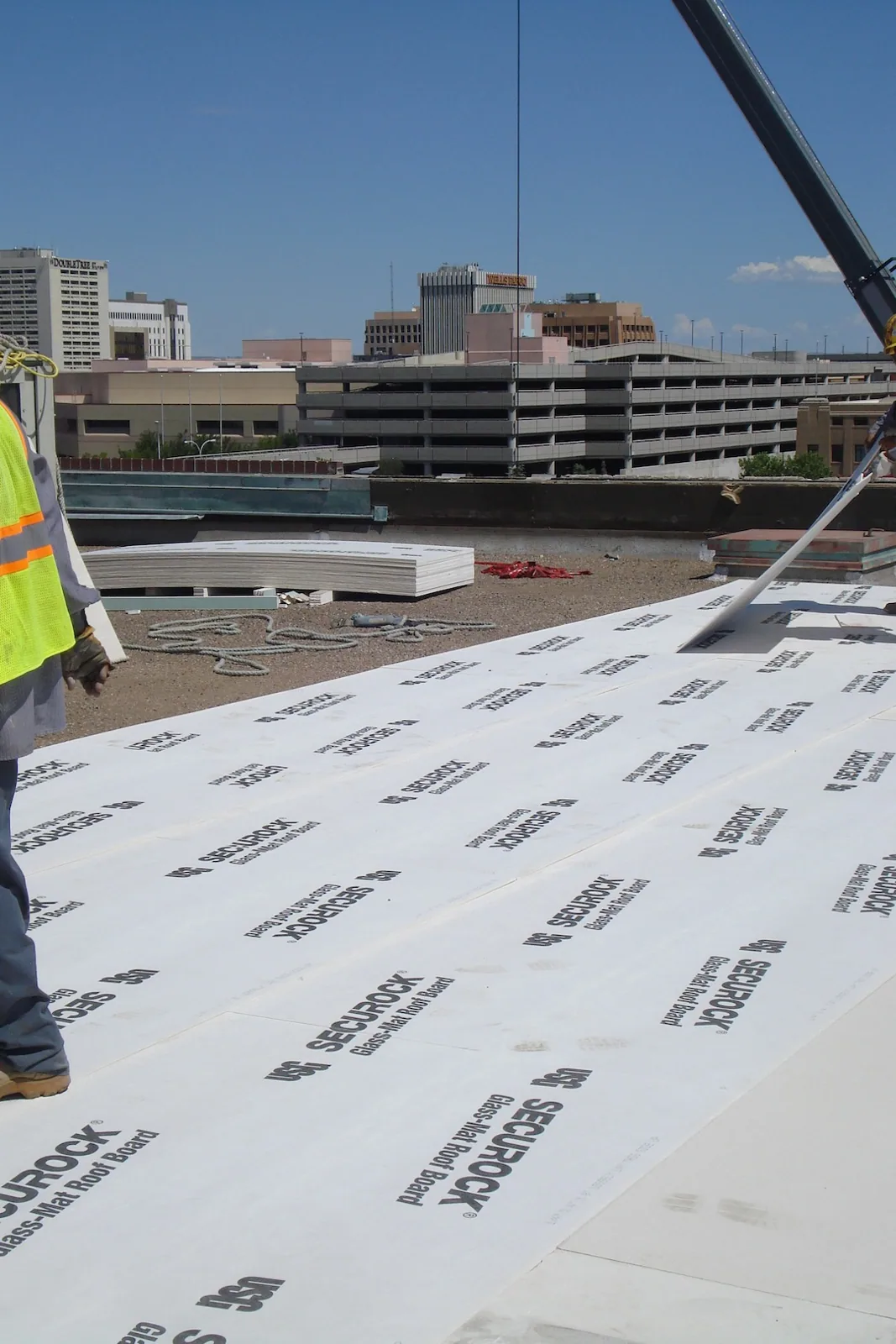
We start with the roof, not the array. A walk, a moisture scan and a few cores tell us the type of membrane, the state of the insulation and how many years of service remain. A roof with a short horizon gets replaced or restored before panels arrive, and the new roof can be built to carry them: thicker insulation, a cover board for load spreading and drains set away from planned rows.
The cost logic is simple. Removing and resetting an array during a reroof is a project in itself, with electrical shutdown and storage, and it does not pay for any new roof. Doing the roof first lets the array stand for its full term, and the savings come from skipping a second shutdown, not from the roofing itself. Our replacement scope for a solar-bound roof lists the added items so the owner can see what readiness costs.
Hail: the roof under the panels
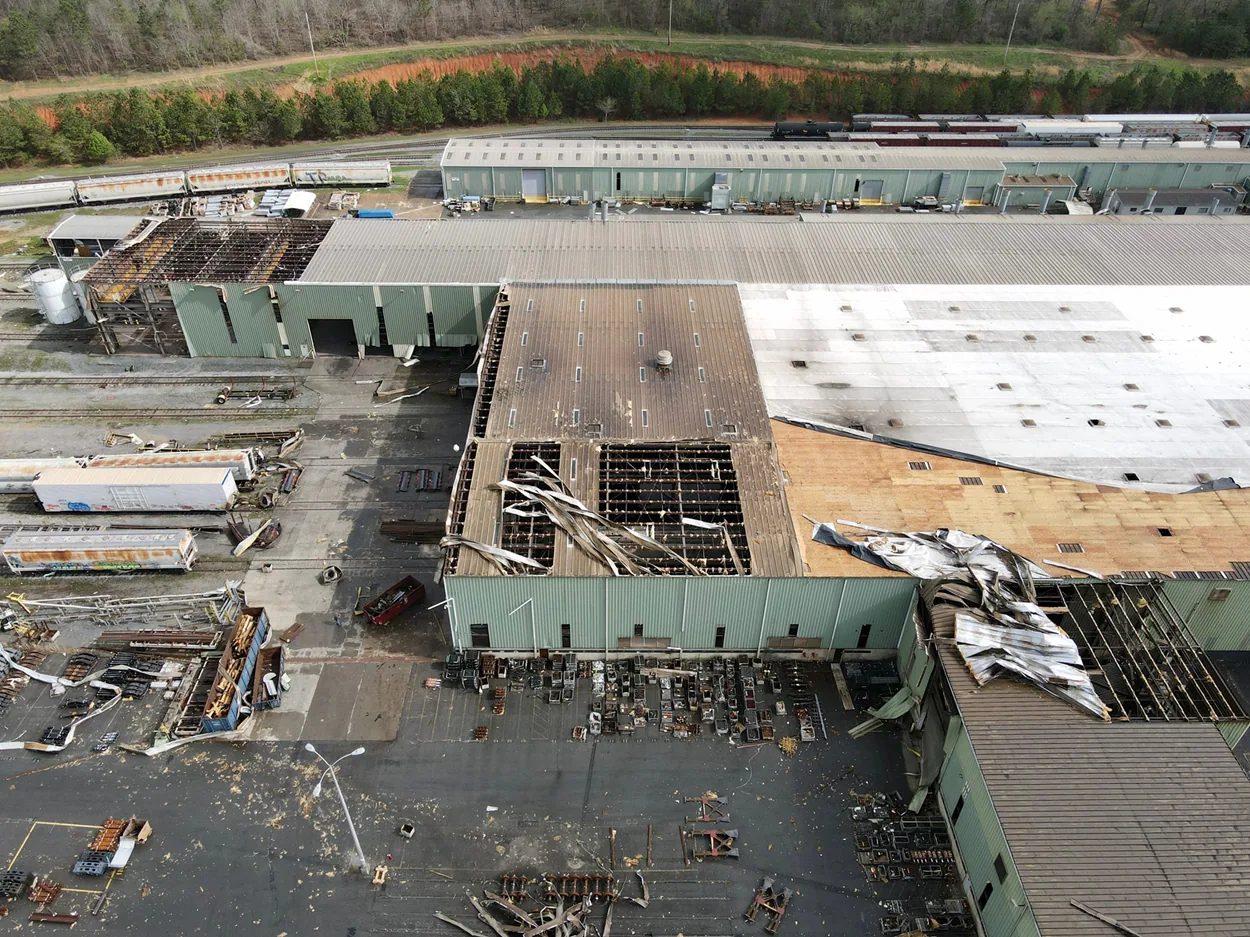
A mile east-northeast of Fayetteville, May 2020 brought 3.00-inch hail, the largest stones in the NWS Tulsa storm log for that month. Panels carry impact ratings and manufacturers publish them, and the membrane beneath still needs attention. A stone can pass through a gap between rows, strike the roof and bruise it, and the damage is hard to see once panels are in place.
We keep a record of the roof before panels go on, with photographs and a moisture map. After a hail event, we inspect the open field, the array edges and, where the panel owner allows, the lanes between rows. A hail damage record comparing before and after is the strongest basis for a claim on the roof, and it helps the panel owner separate array damage from roof damage.
Wind and attachment: ballast, mounts and the edge
Springdale's March 30, 2022 EF3 tornado, with an estimated peak wind of 145 mph, is an extreme case, but spring wind makes attachment a first-order question for any array. Ballast and mounts both load the edge zone, where uplift runs highest, so the perimeter gets checked before anything is laid out. Ballasted systems rest on the roof by weight and need protection pads and a structure that can carry them. Mounted systems fasten through the membrane to the deck, and every footing is a flashing detail.
The wind design of an array is an engineer's call. What we add is the roof side: perimeter condition, edge metal, fastener spacing in the field and whether the deck can hold a mount. If we find a weak edge before the array is laid out, we say so and price the fix. A wind damage repair at the edge of a finished array is far harder than the same repair before it.
Snow, rain and drainage under rows
Snow, freezing highs and the minus 20 F record of February 16, 2021 all reach roofs here, and May rain averages 5.89 inches. Snow slides off tilted panels in clumps and refreezes at the low edge. Rain runs along row footings and finds its way to whichever drain it can. A layout that blocks a drain path or drops the lowest panel edge onto a drain turns a normal storm into ponding.
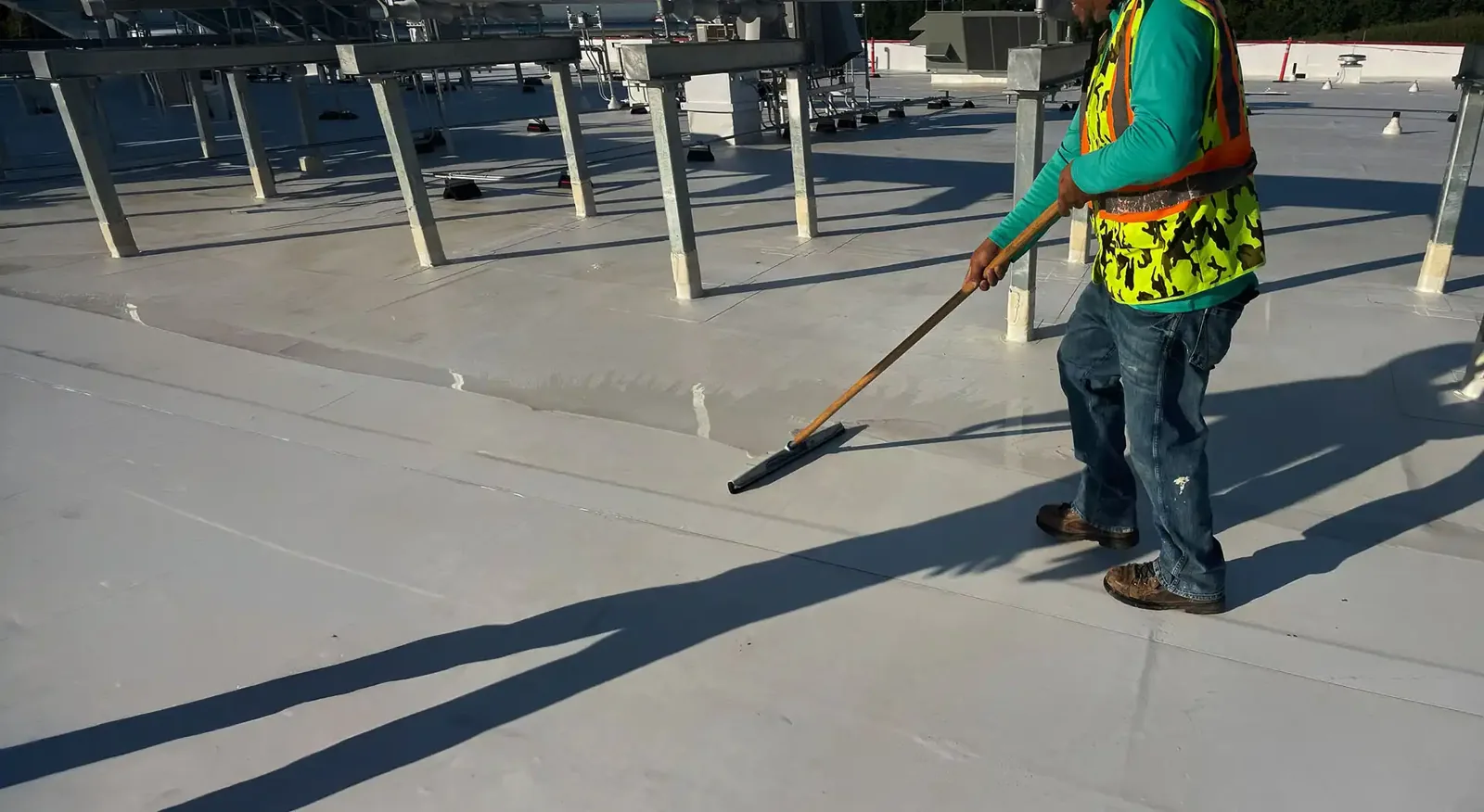
We review the layout against the drain map, flag rows that sit across a flow line and recommend crickets or a taper where needed. Lanes between rows get marked as walk paths with protection, so cleaning and service crews do not wear through the sheet. The roof plan we hand the solar contractor shows drains, penetrations, safe walking lanes and the lanes we want left clear.
Timing helps the budget here. Roof work done in the dry months before the installer's schedule starts can be finished without pressure, and the installer then works on a surface that is dry, flat and documented, which shortens the installer's own schedule as well. A solar start date that lands in the middle of storm season is a schedule risk for both trades, so we ask for the date early and plan the roof backward from it, with a margin for weather.
Wiring routes and equipment pads
Panels need conductors, inverters and disconnects, and the path from the array to the equipment crosses the roof somewhere. Conduit laid on the membrane wears it and traps debris; a support that lifts the line clear solves that. A penetration through the roof needs a curb with proper flashing, one entry point agreed in advance. Inverter pads and combiner boxes need their own protected footings.
We settle these with the installer before work begins, and the details go on the roof plan. The pad and pipe supports are the same items that come up with curb and support work, priced by the count. Making these decisions early avoids the common problem of a roof opened three times by three trades.
Questions About Solar-Ready Roofing
Local: new campuses and older roofs
Owners along the I-49 corridor in Rogers and Bentonville who are weighing an array face the same first question: how many good years does the roof under it have left? Two buildings of the same size can carry roofs in very different condition, so each roof gets its own walk, scan and cores. Newer campuses and older retail strips both draw solar proposals, and the roof calendar has to fit whichever one the owner holds. The condition report is written for the installer as well as the owner.
For owners in Bentonville, Rogers and Fayetteville, a written roof condition report before the solar lease is signed answers the question every installer will eventually ask: what is this panel going to sit on, and how long will it last? We also confirm what the permit office asks for on the roof side, since an array on a replaced roof can trigger review of both.
Commercial Roofing Questions
Should the roof be replaced before panels go on?
If the membrane has fewer years left than the array's term, yes. Removal and reset of panels for a later reroof is expensive and avoidable.
Do solar mounts void a roof warranty?
They can, depending on the warranty language. We read the terms before the layout is set and flash each mount to the manufacturer's detail.
Is ballast easier on the roof than mounts?
It avoids penetrations but adds weight and rubbing points. The structure must carry the load, and pads under the ballast keep movement from wearing the sheet.
What happens to a leak under an array?
It has to be traced through lanes between rows, often with a panel row lifted. A pre-array moisture map and regular inspections catch trouble while a spot repair is still enough.
Who is responsible if hail damages both the panels and the roof?
The contracts and policies answer that, and a before-and-after roof record helps separate the damage. We document the roof condition so the question has evidence behind it.
Related Commercial Roofing Pages
Read how we handle this work in Fayetteville, AR
Read how we handle this work in Fayetteville, AR
Read how we handle this work in Fayetteville, AR
Read how we handle this work in Fayetteville, AR
Read how we handle this work in Fayetteville, AR
Read how we handle this work in Fayetteville, AR
Read how we handle this work in Fayetteville, AR