Roofing for Cities, Counties and Public Agencies in Fayetteville, AR
Roof inspections, repairs and replacements for city, county and state buildings in Fayetteville, AR, with clear scopes for procurement and public records.
Taxpayers fund these roofs, and taxpayers ask where the money went. A city hall, a fire station, a library, a maintenance shop or a county office all sit on a roof that has to be funded, bid, installed and documented in a way that survives a records request. That shapes how we work with agencies: the scope is written down, the cost drivers are explained and the file is complete.
The City of Fayetteville is among the town's largest employers, alongside the University of Arkansas, Washington Regional Medical Center, Walmart, the school district and the VA Medical Center. Public work spreads across towns, and a county or state agency may hold buildings from Fayetteville to Bentonville. We plan for that spread from the first survey.
Procurement: writing a scope that bids cleanly
Competitive bids work best when every bidder prices the same thing. We help agencies build that scope from the roof itself. A walk, a set of cores and a moisture scan give you the existing layers, the condition of the insulation and the number of drains, curbs and penetrations. With those facts, a bid document can say what is being removed, what is being installed and how details such as edges and flashings are to be handled.
The agency's architect or engineer writes the formal specification, and the state's 2021 building code adoption, with State Fire Marshal amendments, frames what the design must meet. We supply field facts and flag any condition that changes the work, such as wet insulation or a rusted deck. That keeps change orders small and keeps the file clean for the auditor. Public work also means prevailing rules on insurance, bonding and site safety, and we confirm those with the agency's purchasing office before the start date so no part of the paperwork holds up the crew. A commercial roof replacement bid with a solid field survey draws tighter prices than one written from a drawing alone.
Alternates are worth a line. A bid can ask for the base work and list alternates such as added insulation, new curbs, extra walk pads or a recoat of an adjoining section. That lets the agency compare prices for choices it might want and decide with the numbers in hand, instead of reopening bids later. We price alternates by cost driver so they compare fairly across bidders.
Emergency response: keeping essential buildings dry
Some public buildings cannot close. A fire station, a dispatch center or a water utility office has to operate through a storm, so a leak above equipment is an emergency. Our line answers at any hour, holidays included, and the first job is to stop water entering the building and protect the equipment inside. We ask for the location of electrical panels, servers and radio gear on arrival, so covers go over them before anything else. Documentation starts at once, with dated photos and notes, because the agency may need them for a claim or for a board report.
Springdale's March 30, 2022 tornado tore into the airport's city maintenance shop and wrecked a hangar at the municipal airport. A single event can take out a municipal building in minutes, and the recovery starts with a record of what stood before. After any storm, our storm damage roof repair teams survey affected roofs, report what is open and give the agency a list it can use with its insurer.
Mixed portfolio: offices, shops, garages and armories
Public agencies seldom own one kind of building. An office has a membrane roof with rooftop units. A shop or garage may be metal. A fire station may combine both. The Arkansas Army National Guard has units in Fayetteville, Bentonville, Rogers and Siloam Springs, and state facilities like those carry their own access and scheduling rules. We look at each building on its own terms and note what the structure needs.
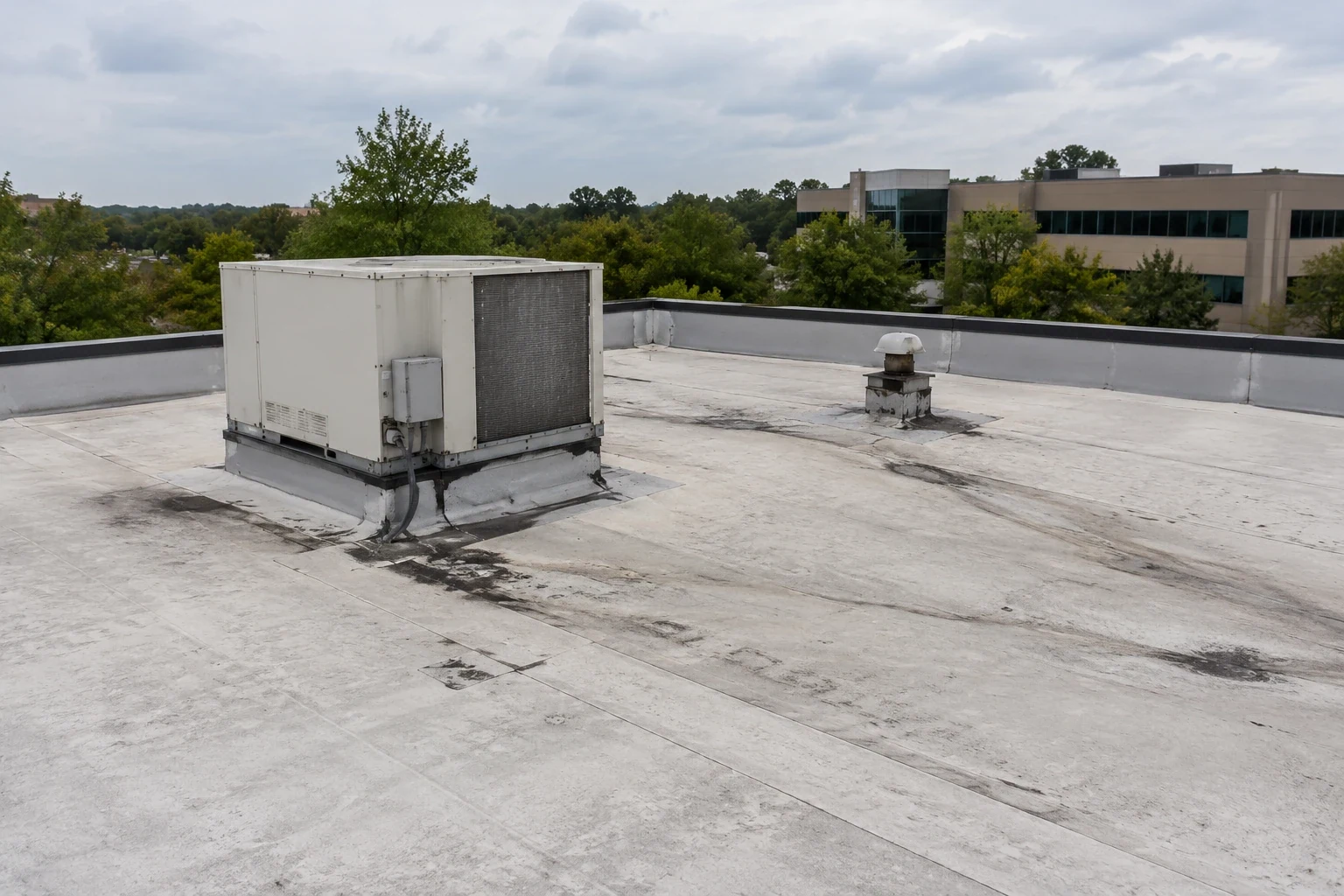
Metal roofs call for fastener checks, sealant at laps and attention to gutters and downspouts. Membrane roofs call for seams, flashings and drains. A standing seam metal roof asks a different set of questions from a low-slope single-ply, and a portfolio report that tracks both gives a manager a clear view of which buildings come first.
Weather on public roofs: rain, ice and hail
Fayetteville records about 47 inches of precipitation a year, and the winter brings some snow and about ten days where the high stays below freezing. Freeze-thaw swings open seams and loosen sealants on exposed roofs, and long runs of edge metal and parapet joints feel it most. We check those details each spring and list what needs repair before summer storms.
Hail is the other recurring risk. A May 2020 report east-northeast of Fayetteville put a 3.00-inch stone on the ground. A building with a membrane that took a hit like that may look unharmed, but bruised insulation can fail in the next hard rain. Early surveys protect the public's investment, and the photos support any claim the agency decides to file.
Budget and records: planning across fiscal years
An agency cannot always replace a roof in the year it fails, so it needs a plan that spreads cost across fiscal years. A roof asset management file for each building tracks condition, repairs and expected life, and a ranked list helps staff request funds with evidence. It also shows the council or board why one building comes before another.
For investor-owned buildings that lease space to agencies, the same file serves both sides. A landlord can show a public tenant the roof's condition, and the tenant can see what repairs are planned. Real estate investors and REITs keep the same kind of record, since their questions about condition and reserve match the agency's.
School buildings follow similar rules, and a school district plans its roof program the way many municipal owners do. When a building shares a campus with other facilities, we coordinate the roofs so work happens once. Agencies in Fayetteville and nearby Springdale can call for a first survey at any time of year.
Each year's walk adds a dated entry, so a council member asking why one roof moved up the list can be shown the photographs from the last two visits instead of being asked to take it on trust.
Questions About Cities, Counties and Public Agencies
Commercial Roofing Questions
Can you help us prepare a bid package?
We supply the roof survey, the layers found in cores, the drain and penetration counts and a list of details that need attention. The agency's architect or engineer adds the formal specification.
How do we handle an emergency leak on a public building?
Call our emergency line. We stop the water first, protect equipment and records inside and document the damage. The permanent repair is bid or approved afterward under the agency's rules, and the temporary work is priced separately so it can be tracked as an emergency expense.
Do you follow public records and audit needs?
We keep dated photos, written findings and repair logs for every visit, and we organize them by building so they are easy to produce for an audit or a records request. Each entry names the date, the roof section and the work done, so a question months later has a quick answer.
Can you work around public hours?
Public hours, council meetings and events set the plan. Noisy work goes to times the building is quiet, and entrances stay open and clear.
What if funding is short this year?
We rank the work. Urgent repairs go first, a monitored schedule covers roofs that can wait and a capital line anticipates replacement. That lets the agency ask for funds in a clear order.
Related Commercial Roofing Pages
Read how we handle this work in Fayetteville, AR
Read how we handle this work in Fayetteville, AR
Read how we handle this work in Fayetteville, AR
Read how we handle this work in Fayetteville, AR
Read how we handle this work in Fayetteville, AR
Read how we handle this work in Fayetteville, AR
Read how we handle this work in Fayetteville, AR
Read how we handle this work in Fayetteville, AR