Fire Damage Roof Repair in Fayetteville, AR
Commercial fire damage roof repair in Fayetteville, AR: temporary protection, deck and insulation checks, vent holes, smoke and water damage, and claim records.
After a fire is out, the building is not safe yet. The deck may be weakened, the insulation may be burned or soaked, and the fire department may have cut vent holes through the roof. The owner's first questions are practical: can anyone go up there, how do we keep rain out tonight and who writes down what happened for the insurer. The answers come in that order.
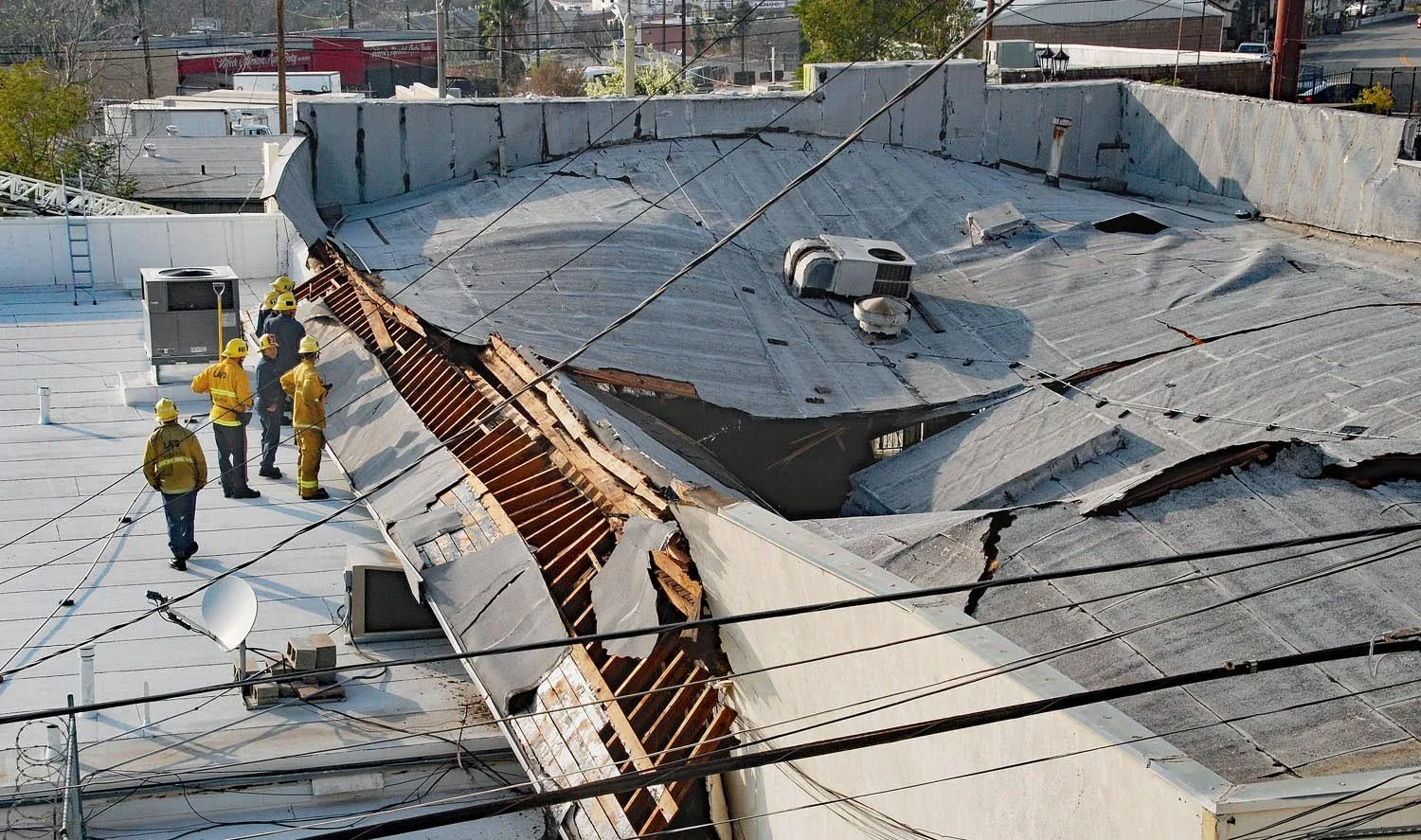
Fire damage to a roof is rarely uniform. One end may have melted membrane, another may be charred to the deck, and a third may look fine and carry heat damage underneath. We start by confirming the roof is safe to walk, then protect the building and document the damage before anything is removed.
Safety first: who clears the roof and when
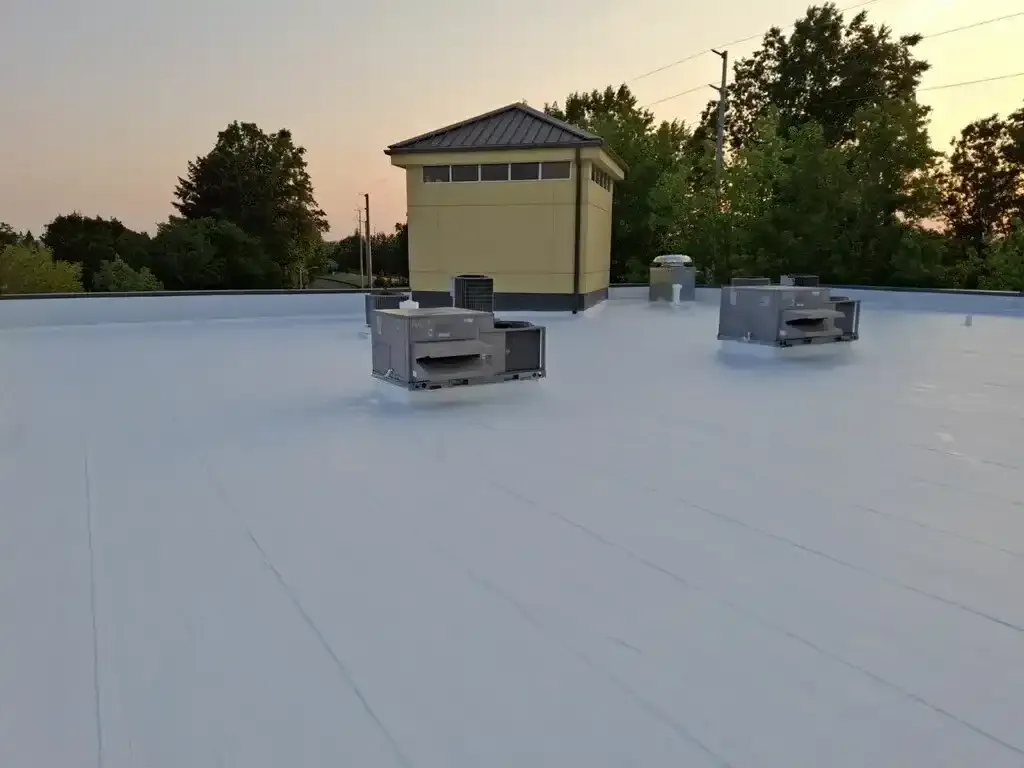
A fire-damaged deck can fail under a person's weight. We do not go on a roof until the fire marshal or the building official has cleared the structure, and in many cases a structural engineer is needed to confirm the deck can carry a crew. Where access is limited, we start from a lift or the ground, using a drone for a first look at the extent of damage.
Once the roof is cleared, we mark safe paths with boards or planks and keep the crew off questionable areas. The same discipline applies to utilities. Rooftop units, gas lines and electrical conduit may have been damaged, and a technician needs to confirm they are safe before roofing begins. A good plan sets the order: structure, utilities, then roof.
Debris removal comes next. Burned insulation, charred deck pieces and melted membrane have to leave the roof carefully, because some of it can be brittle, slippery or contaminated with soot. We bag and haul it in controlled loads, protect drains from debris and watch for hot spots that can reignite in hidden layers. If older material may contain asbestos, testing comes before any removal, and the owner's environmental consultant sets the rules.
Dry-in: keeping rain out of a burned building
Rain after a fire adds to the loss. Fayetteville records about 47 inches of precipitation in a year over roughly 113 days, and May is the wettest month. A burned roof with open holes can take a lot of water in one storm. So the first job is a temporary cover: heavy tarps secured to sound framing, sheet material over holes or a temporary membrane over large areas.
Temporary protection is limited to stopping further damage. We keep photographs of each step, record the materials and save receipts for the claim file. Firefighters often cut ventilation holes to release heat and smoke, and those holes need covering too. Emergency roof repair after a fire begins with this cover, and it happens at any hour, holidays included.
Layers: what fire and water do to the roof system
Different roof systems fail differently in a fire. Single-ply membranes can melt, shrink or char. Built-up and modified bitumen roofs can burn or blister. Foam and some insulation boards can burn, melt or release smoke. Metal roofs can warp, discolor and lose coatings, and fasteners can loosen when the deck heats. Water from firefighting soaks insulation beneath, even in areas the fire never touched.
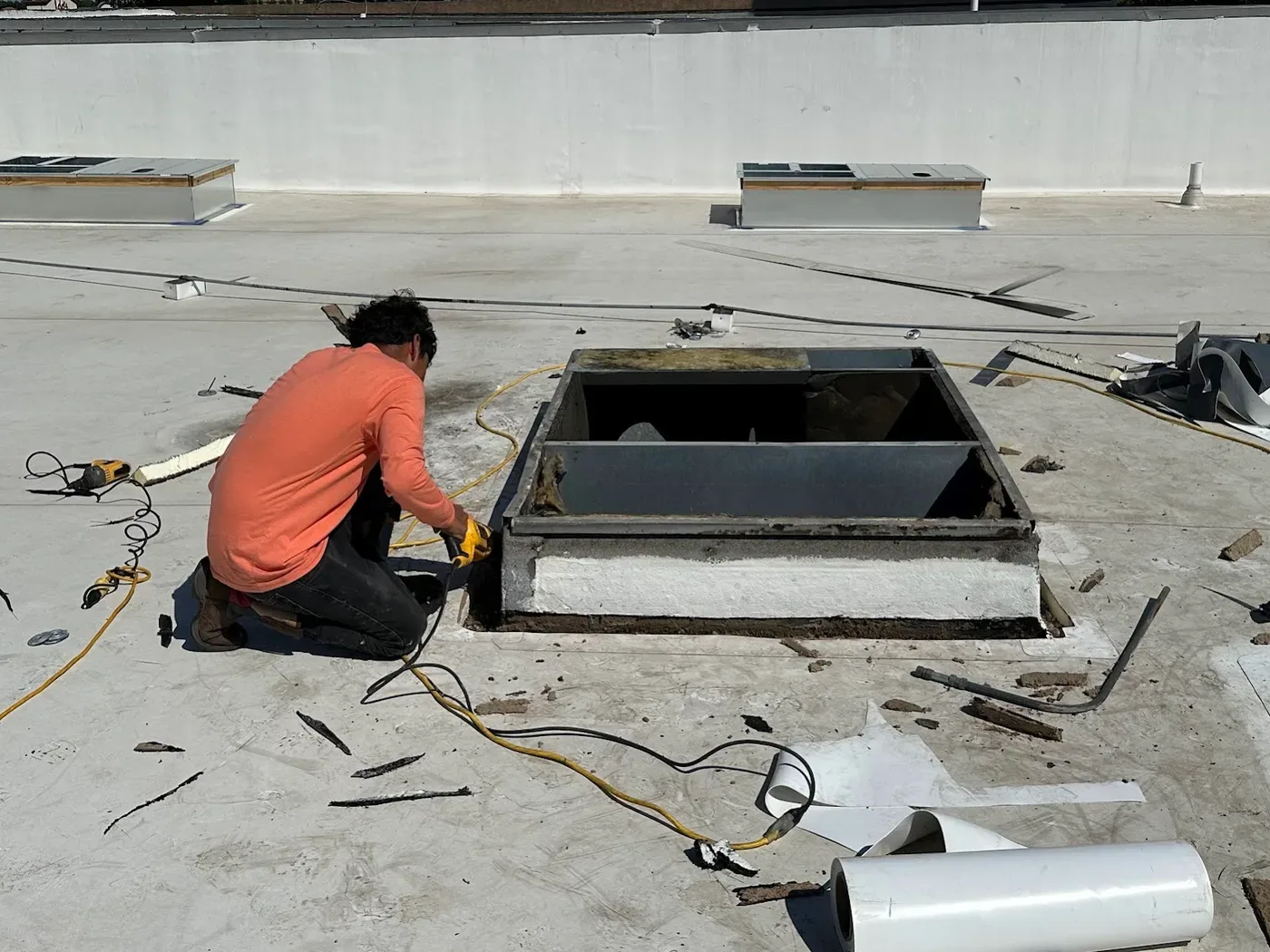
We check the deck for charring, warping and rust, probe the insulation for softness and scan for moisture. We cut test openings to see the layers, and we mark the extent of damage on a sketch. In many cases, the right answer is replacement of the affected section down to the deck, with new insulation and membrane tied into the sound area. A commercial roof replacement is the answer when damage spreads across large areas.
Heat without flame also leaves its mark. Radiant heat from a fire below or beside a roof can blister membranes, soften adhesives and shrink flashings far from the burned area. These changes look minor, and they show up later as seam failures and open flashings. We inspect the roof well beyond the visible fire damage and compare the condition with the same type of surface in an unaffected area. The comparison tells us where heat reached, and we cover those areas in the seam failure repair or flashing scope as needed.
Code and permits: what rebuilding triggers
A repair after a fire is usually a permitted job. The state's fire prevention code took in the 2021 building and fire codes, with State Fire Marshal amendments, from January 1, 2023, and a rebuild may need to meet current rules for fastening, insulation and fire classification. The local building office confirms what applies, and the roof plan follows its direction.
Rooftop equipment is part of the rebuild. Units damaged by fire or water are replaced by the mechanical trade, and their curbs may need to be rebuilt or raised. We coordinate the sequence: curbs first if they are being replaced, roof second and equipment last. Setting a unit onto a new roof and then cutting the curb would put the membrane at risk. A written order of work, shared with the general contractor, keeps each trade from undoing another's work.
The fire rating of the roof assembly matters. A replacement system must meet the class required for the building, and the manufacturer's tested assembly must match what goes on the deck. We confirm that before we order material. If a roof is partly burned, a mixed repair may need a different approach than a full replacement. We check with the building office and the architect when a design change is likely.
Claim records: photos, dates and a clean scope
Fire claims are large, and good records make them smoother. We take dated photos of the roof before and after temporary work, mark damage on a sketch and list items by cause: fire, heat, smoke, water or firefighting. The scope lists what is needed to restore the roof, with cost drivers, and separates items that were present before the fire.
We work with adjusters and restoration contractors so roof and interior work do not collide. The roof must be dry before ceilings are rebuilt. Our roof insurance claim assistance keeps the file in order for owners in Rogers, Springdale and Fayetteville along the I-49 corridor. A record that is complete on day one saves weeks later. Where the roof also shows membrane punctures from falling debris or firefighting tools, we list them separately so the claim shows each cause and its cost.
Questions About Fire Damage Roof Repair
Commercial Roofing Questions
How soon can the roof be covered after a fire?
As soon as the building official clears access. We carry tarps and sheet material, and we cover open holes the same day when conditions allow. Call at any hour.
Do firefighter vent holes need special repair?
Yes. They cut through the membrane, insulation and sometimes the deck. We cover them at once, then repair them as part of the scope, restoring the deck, insulation and membrane.
Is smoke damage a roof problem?
Smoke settles on membranes and can stain or affect coatings, but the larger concern is odor and soot inside the building. We note surface contamination in the report and leave interior cleaning to the restoration team.
Can part of a fire-damaged roof be saved?
Sometimes. If the deck is sound and the insulation is dry, undamaged areas can stay. We test before deciding, since a roof that looks fine may be heat-damaged beneath.
What records does the insurer want?
Dated photos, a sketch of damage, a written description by cause and invoices for temporary work. We prepare these as we go.
Related Commercial Roofing Pages
Read how we handle this work in Fayetteville, AR
Read how we handle this work in Fayetteville, AR
Read how we handle this work in Fayetteville, AR
Read how we handle this work in Fayetteville, AR
Read how we handle this work in Fayetteville, AR
Read how we handle this work in Fayetteville, AR
Read how we handle this work in Fayetteville, AR
Read how we handle this work in Fayetteville, AR