
Roofing for General Contractors in Fayetteville, AR
Roofing subcontract support for general contractors in Fayetteville, AR: dry-in dates, curb coordination, submittals, punch lists and closeout paperwork.
For a general contractor, the roof is a milestone. Until the building is dry, the interior trades cannot finish, and every week of delay at the top pushes the whole schedule. So a roofing sub on a Northwest Arkansas job is judged on three things: whether the crew shows up when the deck is ready, whether the roof is tight when it is done and whether the closeout paperwork arrives without a chase.
We work that way. We read the plans, flag questions before the bid goes out, order material to land when the deck is ready and keep the superintendent informed through daily notes on what was installed and what is next. When the roof is finished, the warranty documents and the punch list are in your hands, not on a to-do list.

Bid review: questions to ask before the number goes in
Many roofing problems begin on the drawings. We read the roof plan for drain count against area, overflow routes, curb locations, parapet heights, tapered insulation layout and details at walls and penetrations. When a detail does not work, we write a request for information with a sketch and a proposed fix, so the architect can respond before the roof is built.
We also check the specification against the code, and we list every substitution request with the reason and the cost effect. On code, Arkansas works from the 2021 International Building Code by way of its fire prevention code, while the commercial energy entry still reads ASHRAE 90.1-2007. The designer sets the insulation value and the local office confirms the permit pathway, and we price what the documents call for. Where the documents disagree with each other, we say so in the bid instead of guessing.
Owners sometimes arrive at the table before the GC does. A property management company with a tenant build-out coming will ask for a roof opinion first, and a real estate investor may want a roof condition read before signing a construction contract. We give both a written assessment the GC can use as a baseline, with existing conditions marked, so surprises at tear-off become priced items on a list.
Dry-in: hitting the date the schedule depends on
The dry-in date is the one that matters. We back-schedule from it: material order, delivery, deck inspection, insulation, membrane, flashing and final check. The Ozarks weather adds risk, because Fayetteville averages around 47 inches of rain a year over about 113 days and May is the wettest month. We keep a rain plan, with covers on site and a way to close in any open area by the end of each shift.
Deck readiness is the usual friction point. The roof cannot start until the deck is clean, fastened and free of other trades, and rooftop units must be set or their curbs placed. We walk the deck with the superintendent before mobilizing, list what remains and agree on a start date. A short call the day before a crew mobilizes saves the cost of a standby day for both sides. The same sequence applies to a commercial roof replacement on an existing building.
Trade coordination: curbs, penetrations and who cuts the roof
Mechanical, electrical and plumbing trades all want holes in the roof. Each hole is a place for water to enter. We ask for a penetration schedule early, set sleeves and curbs on the sequence and flash each one as it goes in. Later cuts by other trades should be flagged to us in advance so the flashing is done properly and the warranty stays intact.
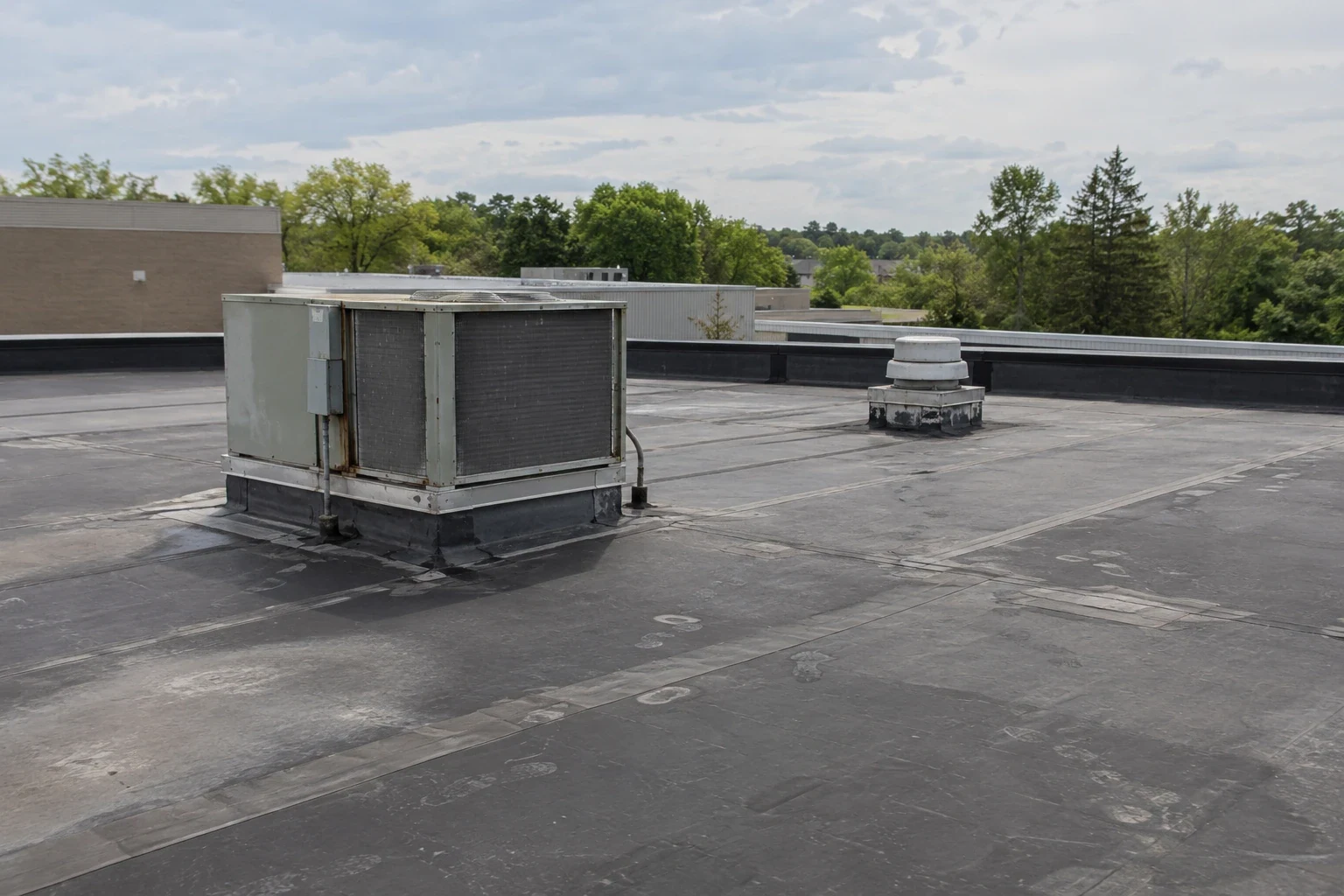
Detail work at rooftop equipment curbs and supports deserves attention at the start. Curb height, clearances and support spacing are easier to set before the membrane than after. When a roof has heavy equipment, we mark the walk routes and protect the membrane with temporary boards during installation. A scuffed or punctured membrane right after install costs more to fix than the protection costs to lay down.
Hail and wind shape the plan too. A May 2020 storm dropped three-inch stones just east of Fayetteville. A new roof that is exposed to a spring storm line before the final layer is on can take damage, so we plan the order of work to close in the roof as fast as the weather allows. If a storm hits a half-finished roof, we document the condition for the GC and the insurer and fix what is open before anything else moves.
Additions and tenant improvements: tying new roof to old
Not every job is ground-up. Many are additions or renovations where a new roof must meet an existing one. The tie-in is a risk: two systems, two ages and perhaps two warranties. We survey the existing roof, check its condition at the joint and design a transition that sheds water and can be maintained. If the old roof is near the end of life, we tell the owner and the GC early, so the decision to replace more than planned is made on paper.
Scale varies. Walmart's new Bentonville campus covers 350 acres, its first portion opening in January 2025 in place of a home office that sprawled across more than 20 buildings on Walton Boulevard. A program of that scale can involve a great many roofs at once. Smaller jobs in Bentonville and Rogers benefit from the same discipline.
Closeout: warranty files, punch lists and what the owner receives
At the end, the owner gets a binder: product data, installation records, photos, warranty documents and a maintenance guide. The GC gets a punch list that is short because we inspected as we went. We walk the roof with the superintendent and the owner's rep, resolve what is open and sign off, with photos of every item attached to the closeout record. Any warranty that requires an inspection is scheduled before the notice date, and the maker's representative is invited to the walk when the terms call for it.
After handover, the roof is the owner's to maintain, and without a plan small problems grow unnoticed through the first few seasons. We suggest a first-year walk to catch settlement and small leaks and an annual visit afterward. The roof warranty management file we hand over makes those visits straightforward. Owners can also add preventive roof maintenance to protect their investment.
Questions About General Contractors
Commercial Roofing Questions
Can you take roof work on a fast-track schedule?
We can, if the deck, curbs and material line up. We ask for the order dates early and keep a close check on the calendar. A late deck pushes the roof, so we flag it the moment it happens, with a revised sequence and the dates that move because of it.
How do you handle changes in the field?
We document each condition with photos and a sketch, price it by the cost drivers and send it for approval before work proceeds. That keeps change orders factual and quick.
What do you need at the bid stage?
The roof plan, specifications, details, the structural notes that affect the deck and the target dry-in date. Addenda should come as they are issued.
Who handles the warranty?
We prepare the paperwork and schedule the required inspections. The warranty terms come from the system maker, and we follow them in installation.
Will you coordinate with the other trades?
Yes, through the superintendent. We attend coordination meetings, share the penetration schedule, tell each trade how to protect the roof and report any damage the day it is found.
Related Commercial Roofing Pages
Read how we handle this work in Fayetteville, AR
Read how we handle this work in Fayetteville, AR
Read how we handle this work in Fayetteville, AR
Read how we handle this work in Fayetteville, AR
Read how we handle this work in Fayetteville, AR
Read how we handle this work in Fayetteville, AR
Read how we handle this work in Fayetteville, AR
Read how we handle this work in Fayetteville, AR
